Mastering the Sweet Science
Advanced Combinations
Beyond the 1-2
You already know the jab-cross. It's the bread and butter of boxing for a reason. But predictable patterns are easy to defend. Advanced striking is about breaking those patterns to create openings where none exist.
The most effective way to do this is by changing levels. Attacking the head and body within the same combination forces your opponent to constantly adjust their guard. A high guard can't block a body shot, and a low guard leaves the head exposed. By mixing your targets, you overload their defensive processing, making it easier to land clean, powerful shots.
A common sequence is to throw a jab-cross to the head to draw their hands up, then immediately follow with a hard hook to the body. The goal is to make their defence reactive, not proactive.
The Art of the Setup
Not every punch in a combination needs to be a knockout blow. Some are designed as setups. These are often called 'throwaway' punches. They aren't meant to do damage, but to provoke a specific reaction from your opponent, creating a window for your real attack.
A classic example is using a blinding jab to set up a power shot. Instead of a stiff, snapping jab, you throw a faster, lighter one—sometimes with an open glove, flicked towards their eyes. The goal is to momentarily obscure their vision and trigger a defensive reflex. While they're blinking or parrying the nuisance jab, you follow up with a hard right cross or a rear uppercut that they never see coming.
The lead-hand uppercut is another punch that relies heavily on a setup. It’s a risky punch to lead with cold. Instead, you can use a jab to the head to make your opponent raise their guard. This creates a perfect channel up the middle for your lead uppercut to slice through, landing under their chin.
Weight Transfer in Long Volleys
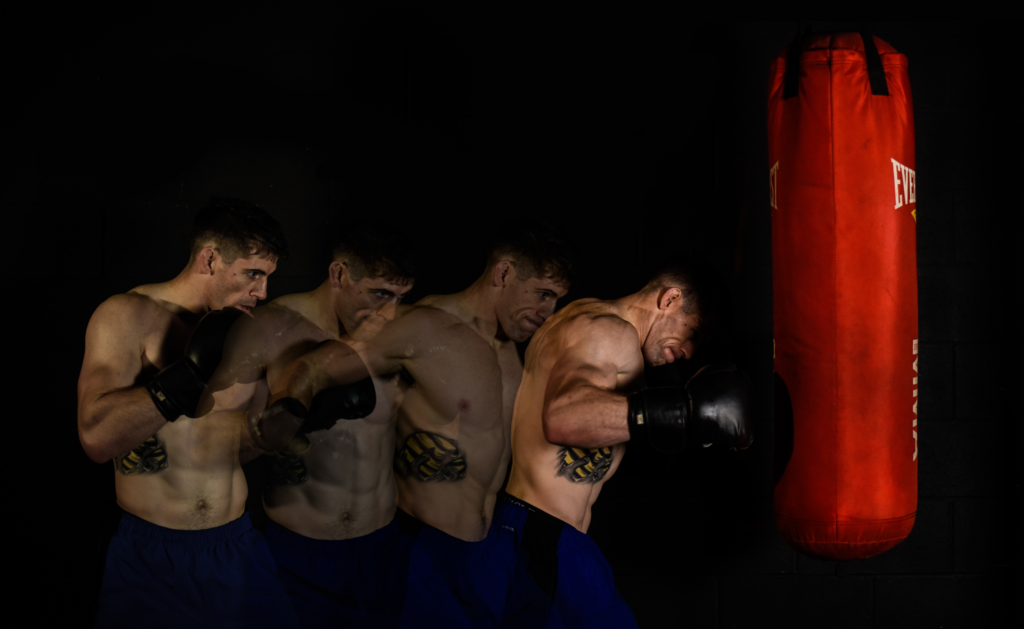
Throwing five or six punches in a row is more than just arm-pumping. It's a delicate dance of weight transfer and rotational force. Each punch should flow into the next, using the momentum of the previous strike to generate power for the current one. If you're off-balance, your volley will lose steam after two or three shots.
Think about how your body rotates. A right cross rotates your hips to the left, which perfectly pre-loads the left hook. A left hook to the body brings your weight down and forward, setting you up for a rear uppercut. The sequence is a chain reaction where energy is transferred, not reset. Mastering this flow allows you to maintain power and balance throughout a long combination, ensuring the last punch is as dangerous as the first.
The Exit Strategy
A combination doesn't end with the last punch thrown. It ends when you are safe. After unleashing a long volley, you are often temporarily stationary and vulnerable to a counter-attack. A good exit strategy is just as important as the combination itself.
Never admire your work. As your final punch lands, you should already be moving. This could be a simple step back out of range, or a lateral pivot to create a new angle. Pivoting off your last hook, for example, swings you out of the direct line of fire while keeping you in range to continue your attack if an opportunity presents itself. Another effective exit is the —a lead hook thrown while pivoting away, designed to catch an opponent who is rushing in to counter.
Always finish combinations by stepping out of range or moving to the side.
Now, let's test what you've learned about stringing these concepts together.
What is the primary strategic advantage of changing levels (attacking both the head and body) within a single combination?
According to the text, what is the main purpose of a 'throwaway' or 'blinding' jab?
Remember, these combinations are not rigid formulas. They are templates. The real art is learning to adapt them in the moment, flowing from one to the next based on your opponent's reactions.