Mastering the SSC GD Constable Exam
Exam Logic and Speed
Beyond the Basics: Speed Is Your Weapon
The SSC GD exam isn't a test of knowledge alone. It's a race against time. With 80 questions to tackle in just 60 minutes, you have about 45 seconds per question. Raw calculation or slow, methodical thinking won't cut it. Success hinges on recognizing patterns instantly and deploying tactical shortcuts. This is about training your brain to see the solution, not just grind through the problem.
Advanced Pattern Recognition
Forget simple letter-for-letter swaps. Competitive exams use multi-layered logic. You'll encounter mixed coding, where letters are shifted based on their position, the value of the preceding letter, or a combination of operations. A common pattern is applying different rules to vowels and consonants within the same word.
For example, in the word 'STADIUM', vowels might be shifted forward by 3 places (A -> D, I -> L, U -> X), while consonants are shifted backward by 2 (S -> Q, T -> R, D -> B, M -> K).
Similarly, non-verbal reasoning moves beyond simple rotation. Expect to see questions where elements are added or removed based on their shape (e.g., a new line is added for every curved shape in the previous box), or where two patterns alternate from one frame to the next. The key is to isolate and track a single element through the series first, rather than trying to process the entire image at once.
The Art of Strategic Elimination
For topics like blood relations and syllogisms, finding the right answer directly can be slow. Option elimination is a much faster approach. Instead of building a complete family tree or Venn diagram from scratch, use the initial statements to disqualify impossible answers immediately.
In blood relations, look for gender and generation gaps first. If the question asks for a 'nephew' and one option is female, eliminate it. If it asks for a 'grandfather' and an option is in the same generation as the starting person, eliminate it.
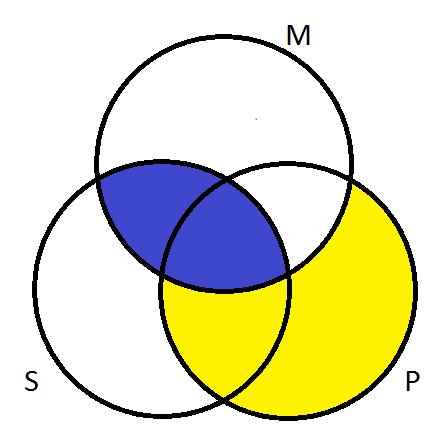
For , focus on definite conclusions. If a statement is "Some A are B," you can immediately eliminate any option that claims "All A are B" or "No A are B." Use keywords like 'all,' 'some,' and 'no' to quickly check for contradictions in the options. Often, you can find the correct answer after eliminating just one or two choices.
Mastering the Clock
Speed comes from targeted strategies. For number and letter series, implement the 15-second rule. Spend no more than 15 seconds looking for the pattern. Check for simple arithmetic (addition, subtraction, multiplication), squares, cubes, or alternating series. If you don't spot it, mark the question and move on. Wasting a full minute on a single series question is a losing strategy.
Finally, let's talk about the 0.25 negative marking. This isn't a penalty; it's a strategic calculation. Guessing blindly is a sure way to lose points. However, if you can confidently eliminate two of the four options, the odds shift in your favor. In this scenario, making an educated guess is often worth the risk.
The core principle is to protect your score. Don't let a difficult question trick you into a random guess that erases the hard work from a question you answered correctly. Knowing when to skip is as important as knowing how to solve.
| Situation | Action | Rationale |
|---|---|---|
| Pattern not found in 15 seconds | Skip & Mark for Review | Protects your time for easier questions. |
| Can eliminate 0-1 options | Skip | High risk of a wrong guess and negative marks. |
| Can eliminate 2+ options | Educated Guess | The probability of being correct is now 50% or higher. |
| Know the answer confidently | Solve | Secure the point quickly and move on. |
Transitioning from foundational knowledge to exam-level speed requires practice with these specific techniques. It's a shift in mindset from just 'solving' to 'outsmarting' the test itself.
In a coding question, you notice that vowels are shifted forward by 2 letters and consonants are shifted backward by 1 letter. This is an example of what type of logic commonly found in competitive exams?
When tackling a blood relations problem that asks you to find a 'maternal uncle', the fastest first step is to build a complete family tree from the given information.