Mastering the Shadow Way
Tactical Flow Transitions
The Mechanics of Flow
You've established your foundation in stances and basic movements. Now, we move beyond the mechanical. The goal is to erase the pauses between actions, to blend techniques into a single, continuous stream of motion. This is the essence of tactical flow.
This seamlessness is called Nagare (流れ), or continuity. It’s the principle that turns a sequence of separate movements into a fluid, efficient response. Instead of thinking 'stance, then block, then strike,' you execute one uninterrupted action. Nagare is about economy of motion, eliminating any action that doesn't directly contribute to your tactical goal.
Nagare
noun
The principle of continuous, uninterrupted, and efficient flow of movement in Japanese martial arts.
A core component of Nagare is Sabaki (捌き), the concept of natural body evasion. While you may have learned specific evasive footwork, Sabaki is more holistic. It's about managing space and angles with your entire body, using subtle shifts, turns, and level changes to disrupt your opponent's timing and positioning. True Sabaki is proactive, not reactive. You move to a superior position as the attack is initiated, not after.
From Stance to Motion
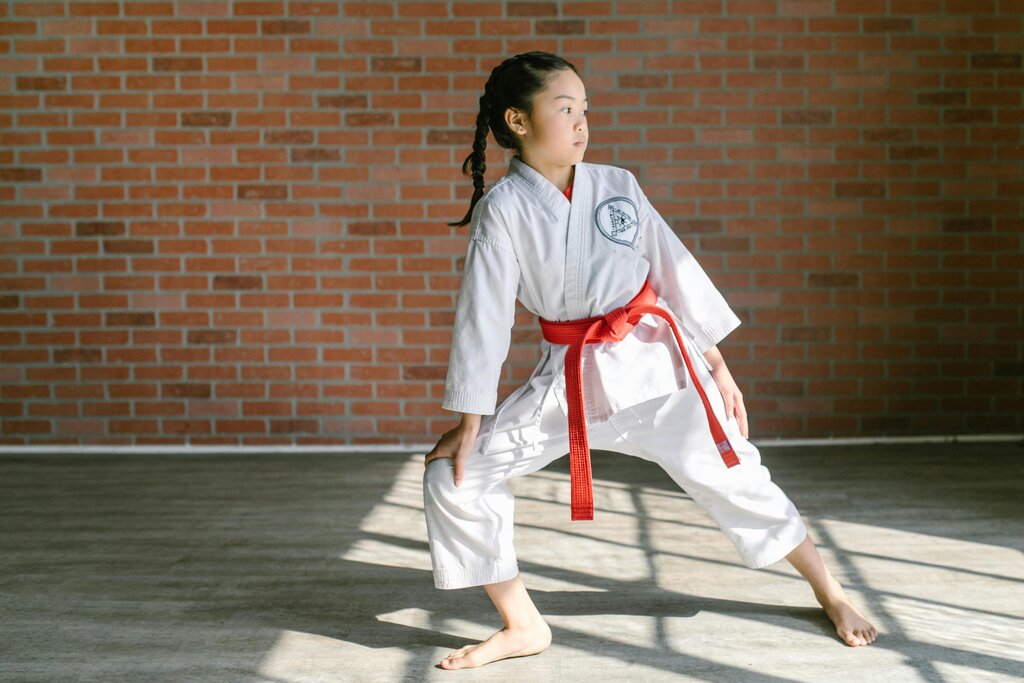
A static posture, or Kamae (構え), is a moment of potential energy. The challenge is converting that potential into dynamic, kinetic energy without telegraphing your intent. The transition from Kamae to a roll, or Kaiten (回転), is a fundamental drill for developing this skill. Think of the transition from a low guard like Hira No Kamae into a sideways leap and roll. It isn't a series of distinct steps; it's a single, explosive release of energy.
This principle applies even under duress. Advanced Taihenjutsu (体変術) isn't just about falling safely; it's about maintaining tactical awareness and capability when your movement is compromised. Practice breakfalls with one arm restricted, simulating an injury or carrying an object. The goal is to absorb impact through your core and legs, using the roll to reposition yourself into a more advantageous Kamae, ready for the next action.
The key is to initiate movement from your center. Instead of pulling with your shoulders or stepping with your feet, drive from your knees and hips. This keeps your center of gravity low and stable, allowing for explosive, balanced, and deceptive motion.
Bridging Armed and Unarmed
The true test of flow is transitioning seamlessly between armed and unarmed states. The body mechanics you learned from Sayoc Kali's blade templates directly inform your Ninjutsu Taijutsu. An angle 1 strike with a blade and a lead hand strike follow the same kinetic chain. Your body doesn't know the difference; it only knows the path of motion.
Practice flowing from a striking combination into drawing a training blade, and then back into empty-hand techniques. The weapon should feel like an extension of your body, not an addition to it. The movement should remain fluid whether your hand is empty or full.
A perfect example of this armed/unarmed synergy is the Jodan Tsuki (上段突き), or high-level thrust. Executed properly, this isn't just a punch. It's a 'gliding force' strike that mimics the piercing power of a spear. The power generates from the ground, travels up through your legs and core, and is focused through your knuckles. The body mechanics are identical to a short spear thrust, allowing it to penetrate defenses as if piercing armor. It's not about arm strength; it's about whole-body connection and kinetic alignment.
Ready to test your understanding of these flow mechanics?
What is the core principle of Nagare (流れ)?
Which statement best describes true Sabaki (捌き)?
Mastering these transitions turns you from someone who knows techniques into someone who can fight. It's the bridge between static knowledge and dynamic application.