Mastering the Scientific Method
Introduction to Empirical Inquiry
Starting with What We Can See
How do we know things? It’s a simple question with a complex answer. For much of human history, we relied on tradition, authority, or pure reason. If an ancient philosopher declared that heavy objects fall faster than light ones, it was accepted because he was a respected thinker. The idea made logical sense to many, so it wasn't questioned.
But what if we just watched what happens? What if we dropped a heavy rock and a light feather at the same time? This simple act of observing the world to gain knowledge is the heart of empirical inquiry. It’s a way of knowing that is grounded in evidence we can gather with our senses.
empirical
adjective
Based on, concerned with, or verifiable by observation or experience rather than theory or pure logic.
Science is built on this foundation. It doesn’t just trust that an idea is true; it demands proof. This proof, or evidence, comes from careful and systematic observation. It’s about looking, measuring, and recording what is actually there, not just what we think should be there.
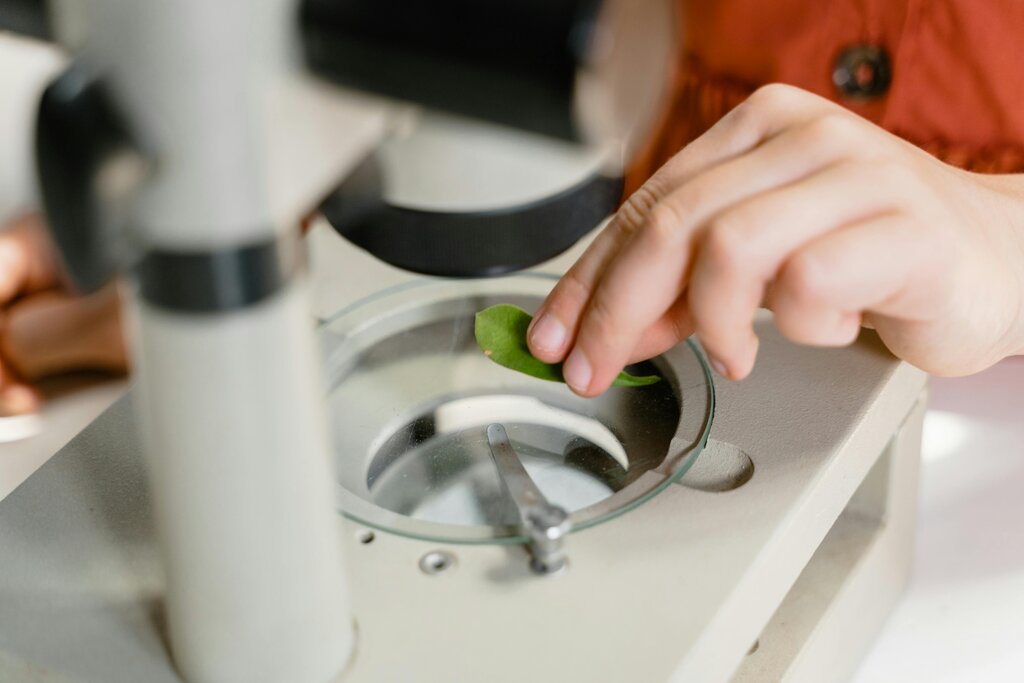
By focusing on what we can observe, we create a common ground for understanding. Two people might disagree on a philosophical point, but they can usually agree on the reading of a thermometer or the color of a chemical reaction. This shared evidence is what allows us to build knowledge reliably over time.
Different Ways of Knowing
To really understand what makes the empirical approach special, it helps to compare it with other ways we form beliefs. We all use a mix of these methods in our daily lives.
| Method | Description | Example |
|---|---|---|
| Authority | Accepting something as true because an expert or trusted source said so. | Believing a news report about a recent scientific discovery. |
| Intuition | Believing something based on a hunch or gut feeling, without conscious reasoning. | Having a feeling that a particular decision is the “right” one. |
| Logic | Using reason and deduction to arrive at a conclusion from a set of premises. | If all birds have feathers, and a robin is a bird, then a robin must have feathers. |
| Empirical | Forming conclusions based on direct observation and experience. | Concluding that a plant needs more water after observing its wilting leaves and dry soil. |
While authority, intuition, and logic are all useful, they have limitations. An expert can be wrong, our intuition can mislead us, and logic is only as good as its starting assumptions. Empirical inquiry provides a crucial check on these other methods. It forces our ideas and beliefs to be tested against reality.
If an idea can't be tested against observation, it isn't a scientific one. Empirical evidence is the ultimate judge.
This doesn't mean logic and reason are thrown out. In fact, they are essential partners to observation. We use logic to interpret our observations, notice patterns, and come up with ideas (hypotheses) to test. But the final verdict always comes back to the evidence. What does the world actually show us?
This commitment to observation is the starting point for the entire scientific method, which provides a structured way to ask questions and find reliable answers.