Mastering the Russian Revolution and European Socialism
Industrialization and Social Change
The Factory's Shadow
The 19th century didn't just invent new machines; it invented a new way of life. Before, Europe was overwhelmingly rural. Suddenly, factories, powered by steam and coal, became the new centers of the world. They acted like magnets, pulling millions of people from the countryside into rapidly growing cities with the promise of steady wages.
This mass migration created a phenomenon the world had never seen before: explosive, unplanned urbanization on an industrial scale. Cities like Manchester, London, and Berlin swelled, their populations doubling and tripling in just a few decades. But they grew too fast. There were no building codes, no sanitation systems, and no social safety nets to handle the influx.
The Cost of a New World
For the new working class, or proletariat, life was brutal. Families crammed into poorly built tenements, often sharing a single room. Streets were filled with filth, and diseases like cholera and typhoid swept through neighborhoods. Inside the factories, conditions were just as grim. A typical workday could last 12 to 16 hours, six days a week, in dangerous environments with no protections. Wages were barely enough to survive, and entire families, including young children, had to work.
This stark inequality between the wealthy factory owners (the bourgeoisie) and the impoverished workers created deep social fractures.
The existing political systems, largely controlled by aristocrats and the newly wealthy, were slow to respond. Liberals of the era championed individual rights and free markets, but their focus was often on political freedoms for the property-owning classes, not on the economic plight of the workers. They argued that government intervention would stifle economic progress. Meanwhile, conservatives wanted to maintain the traditional social order and were wary of any change that might empower the masses.
A Call for Change
Into this gap stepped new ideas. Frustration and despair gave rise to socialism, a political and economic theory advocating for collective ownership and control of the means of production—the factories, mines, and land. Socialists argued that the wealth generated by labor should be shared by the laborers themselves, not concentrated in the hands of a few owners.
This wasn't just a theoretical debate. Workers began to organize. They formed trade unions to collectively bargain for better wages and conditions. They also created political parties to fight for their interests in government. In Germany, the (SDP) was founded in 1875. It quickly became one of the largest and most powerful socialist parties in the world, pushing for reforms like universal suffrage and social welfare programs.
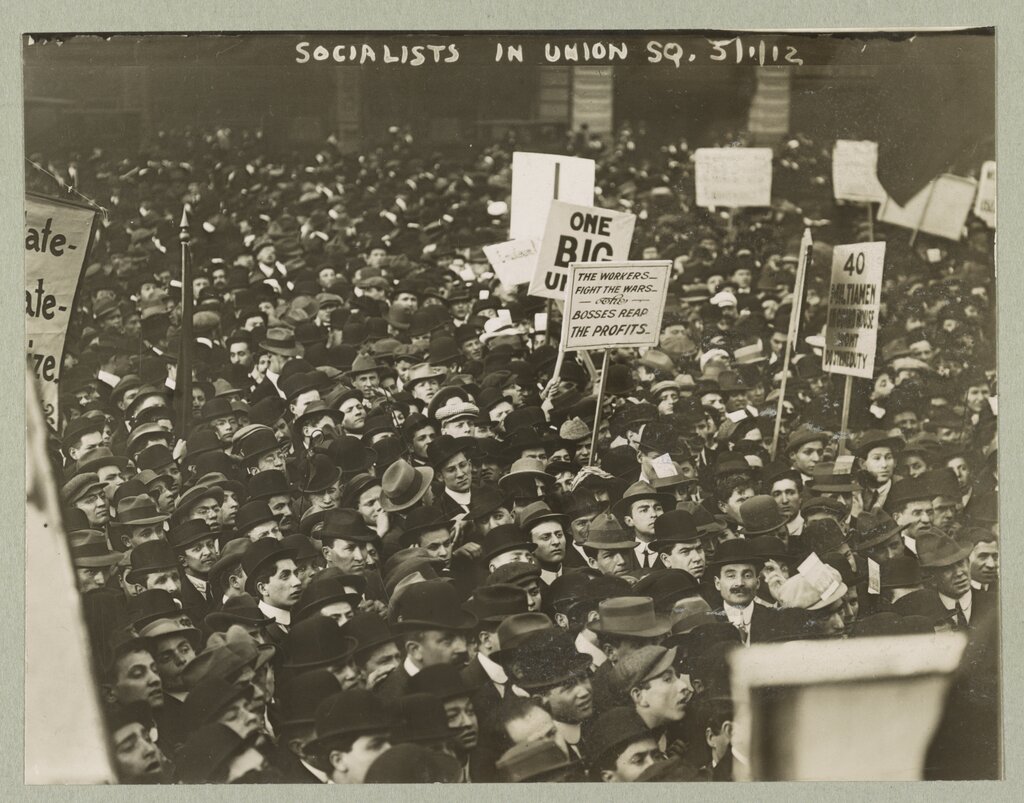
A similar story unfolded in Britain. The trade union movement grew steadily throughout the 19th century. By the end of the century, union leaders and socialist intellectuals decided they needed a dedicated political voice in Parliament. This led to the formation of the in 1900. Unlike the more revolutionary movements elsewhere, the Labour Party pursued a more gradual, democratic path to socialism, focusing on parliamentary reform to improve workers' lives.
These parties weren't just opposition groups; they were the political embodiment of a new class, forged in the factories and tenements of industrial Europe.
And so, the smokestacks and slums of the 19th century did more than just produce goods. They produced a new social and political landscape. The failure of the old order to address the deep inequalities of industrial capitalism directly fueled the rise of movements that would redefine politics for the next century and beyond.
What was the primary driver of the mass migration from the countryside to cities during the 19th century?
Which of the following best describes the living conditions for the new industrial working class (proletariat)?