Mastering the Rubik's Cube
Advanced F2L
Beyond the Basics: Intuitive F2L
You’ve mastered the white cross and can solve the first layer. Now it's time to graduate from the slow, piece-by-piece method. The goal of (First Two Layers) is to solve the first two layers of the cube simultaneously. Instead of inserting corners and then edges, you'll pair them up in the top layer and insert them together.
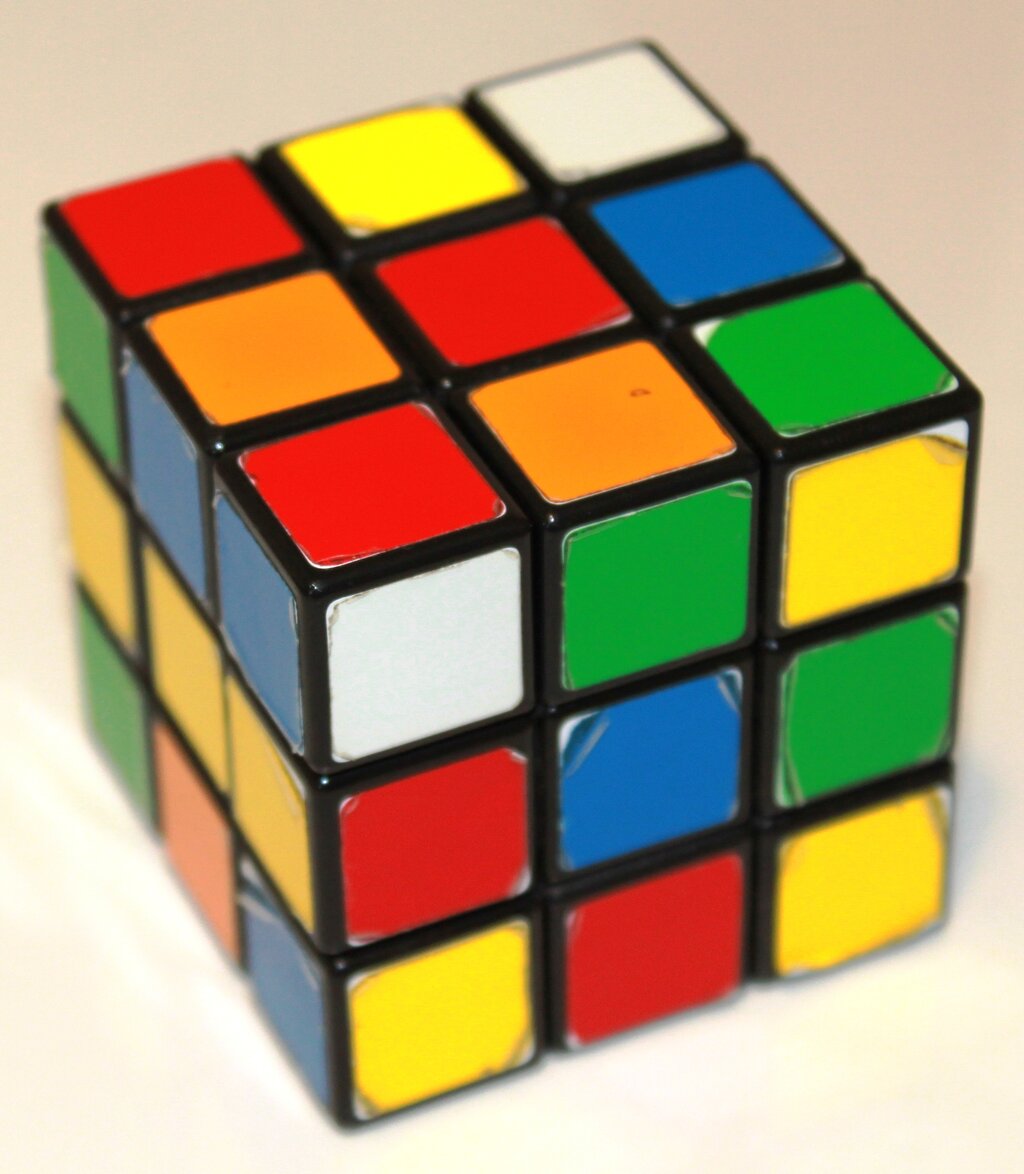
This might sound complicated, but it's more intuitive than you think. The key is pattern recognition. Your first task after solving the cross is to scan the top layer and the upper parts of the side faces for a matching corner and edge piece. These two pieces form an "F2L pair."
CFOP — Cross, F2L, OLL, PLL is the gold standard of competitive cubing.
Recognizing the Three Basic Cases
After you’ve found a pair, you'll notice they can be in one of three basic configurations. We'll look at them from the perspective of their target slot, which is the empty space where the pair belongs.
1. The Pair is Already Formed: This is the ideal scenario. The corner and edge are connected correctly in the top layer. Your only job is to move the pair over its target slot and insert it. A simple 3-move insert like or a 4-move insert like usually does the trick, depending on the orientation.
The key is to insert the pair without disturbing your cross or any other solved pairs.
2. The Pair is Split (Matching Colors on Top): The corner and edge are separate, and their upward-facing stickers are the same color (not white). To solve this, position the corner over its target slot. Then, move the edge piece away, bring the corner up, reconnect the edge to form the pair, and insert.
3. The Pair is Split (Different Colors on Top): The pieces are separate, and one has white on top while the other has a color. This is the easiest case to pair up. You can often connect them with a single move. For example, if the corner is in the front-right position with white on top, and the edge is on the right face, a simple move might be all you need to form the pair.
Thinking Ahead and Staying Smooth
True F2L mastery isn't about memorizing dozens of algorithms. It's about understanding how pieces move and solving pairs intuitively. As you solve one pair, you should already be looking for the next one. This skill is called and it's what separates good cubers from great ones.
Another crucial technique is minimizing cube rotations. Every time you turn the whole cube, you lose time and potentially lose track of pieces. Practice solving pairs from different angles, especially using moves on the back of the cube. Using moves like to insert a pair into the back-right slot is much faster than rotating the cube to face that slot and using .
As you get comfortable, you'll encounter more complex situations, like a pair that's already in the correct slot but oriented incorrectly. In these cases, you'll need to take the pair out of the slot, re-pair it in the top layer, and then re-insert it correctly. This might feel slow at first, but it's a fundamental part of the process.
Ready to test your knowledge of these new techniques? Let's see how well you've grasped the core ideas of efficient F2L.
What is the primary goal of the F2L (First Two Layers) method in solving a Rubik's Cube?
You've identified a matching corner and edge in the top layer. Their upward-facing stickers are the same color (e.g., both are red). This F2L case is known as a __________ pair.
Practice is everything. The more you solve, the more F2L cases will become second nature. Don't focus on speed at first; focus on efficiency and smooth, intuitive solutions.