Mastering the Retail Experience
Customer Engagement Strategies
The Art of the Approach
The classic retail greeting, “Can I help you?,” is often a conversation killer. It’s a closed question that invites a simple “No, thanks, just looking.” While well-intentioned, it doesn’t open the door to a genuine interaction. A better approach starts not with a question, but with observation and a strategy for making customers feel welcome without feeling pressured.
The goal is to shift from a transactional mindset to a relational one. You're not just there to process a sale; you're there to guide an experience, offer expertise, and build a connection that makes people want to return. This begins the moment a customer walks through the door.
Greeting and Observation
A widely used guideline in retail is the “10-foot rule.” The principle is simple: acknowledge any customer who comes within ten feet of you. This doesn’t mean launching into a sales pitch. It can be as simple as a warm smile, a friendly hello, or making eye contact. The aim is to let customers know you see them and are available if they need you. It transforms the store from an anonymous space into a welcoming environment.
The 10-foot rule isn't about selling; it's about acknowledging. A simple, friendly greeting makes the entire shopping experience more personal and comfortable.
This initial acknowledgment is your opportunity to begin observational selling. Before you say anything beyond a simple greeting, take a moment to notice what the customer is doing. Which products are they looking at? Are they reading packaging intently? Are they comparing two different items? This information is crucial for tailoring your approach. You're gathering clues that will allow you to offer relevant, specific help instead of a generic question.
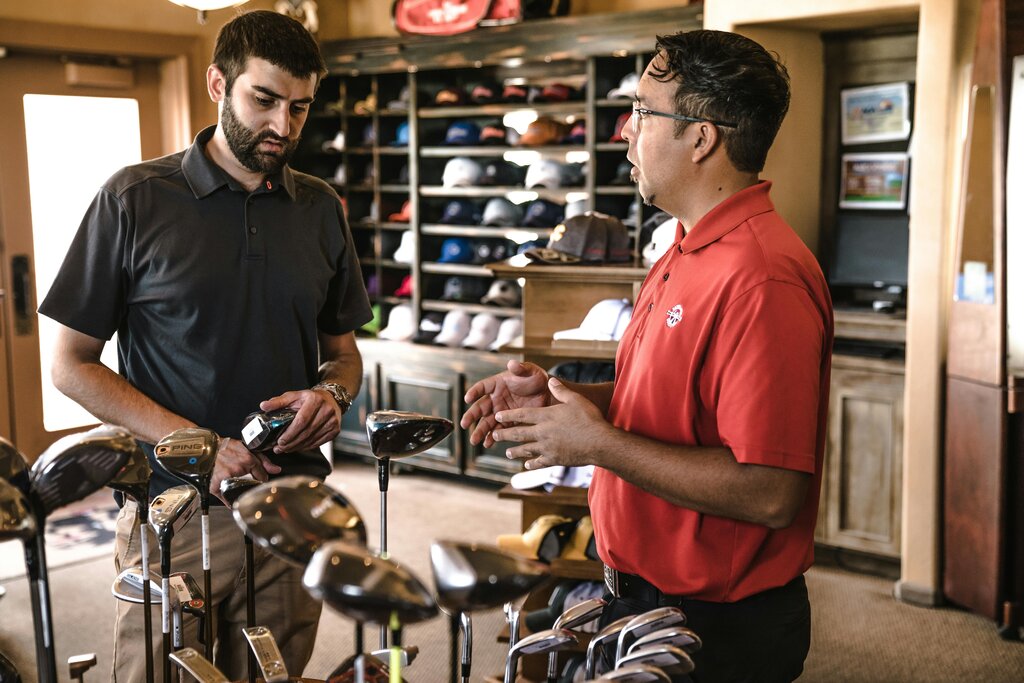
Reading the Signs
Body language provides a wealth of information about a customer’s mindset. Learning to read these non-verbal cues helps you determine the right time to offer assistance and the right time to give them space.
| Open to Help | Just Browsing |
|---|---|
| Making eye contact with staff | Actively avoiding eye contact |
| Repeatedly touching or picking up a specific item | Moving at a steady pace through the aisles |
| Looking around, as if searching for someone | Shoulders and body are angled away from staff |
| Frowning or looking confused at a product | Holding a phone or talking with a shopping companion |
A customer repeatedly examining one item is likely showing purchase intent and may have specific questions. In contrast, a customer moving quickly while scanning broadly is probably getting a feel for the store. Approaching them with a specific question might feel intrusive.
Starting the Conversation
Once you've observed the customer and read their body language, you can choose the right moment to engage. The key is to use open-ended questions. These are questions that can’t be answered with a simple 'yes' or 'no'. They invite a more detailed response and start a real conversation.
Instead of asking, “Can I help you find a size?” (closed), try, “What are some of the features you’re looking for in a new coat?” (open).
Base your opening question on your observations. This shows you’ve been paying attention and are genuinely interested in helping them solve their specific problem.
- If you see them comparing two blenders: “I see you’re comparing two of our most popular models. The biggest difference between them is the motor speed, depending on what you’ll be making most often.”
- If you see them looking at running shoes: “Are you training for a specific race or looking for something for everyday comfort?”
- If you see them in the gift section: “Who are you shopping for today? Sometimes finding the right gift can be tricky.”
This approach builds rapport naturally. You become a helpful resource rather than just a salesperson. It validates the customer’s interest and opens the door for you to share your product knowledge.
Why is the question “Can I help you?” often considered ineffective in a retail setting?
What is the main purpose of the “10-foot rule”?
Mastering these engagement strategies transforms the sales floor. It creates a dynamic, customer-focused environment that builds trust and encourages loyalty.