Mastering the Pull-Up
Understanding Pull-Up Mechanics
The Ultimate Upper-Body Test
The pull-up is a fundamental test of upper-body strength. In simple terms, it's an exercise where you hang from a bar with your arms fully extended and pull your body up until your chin is over the bar. It sounds straightforward, but it requires a surprising amount of strength and coordination.
The pull-up requires lifting one’s entire body weight against gravity, primarily targeting the large muscles of the back, especially the latissimus dorsi.
Unlike exercises that isolate a single muscle, the pull-up is a compound movement. It forces multiple muscle groups to work together in a coordinated effort. This makes it incredibly efficient for building functional strength, which is the kind of strength you use in everyday activities, from lifting a heavy box to climbing a ladder.
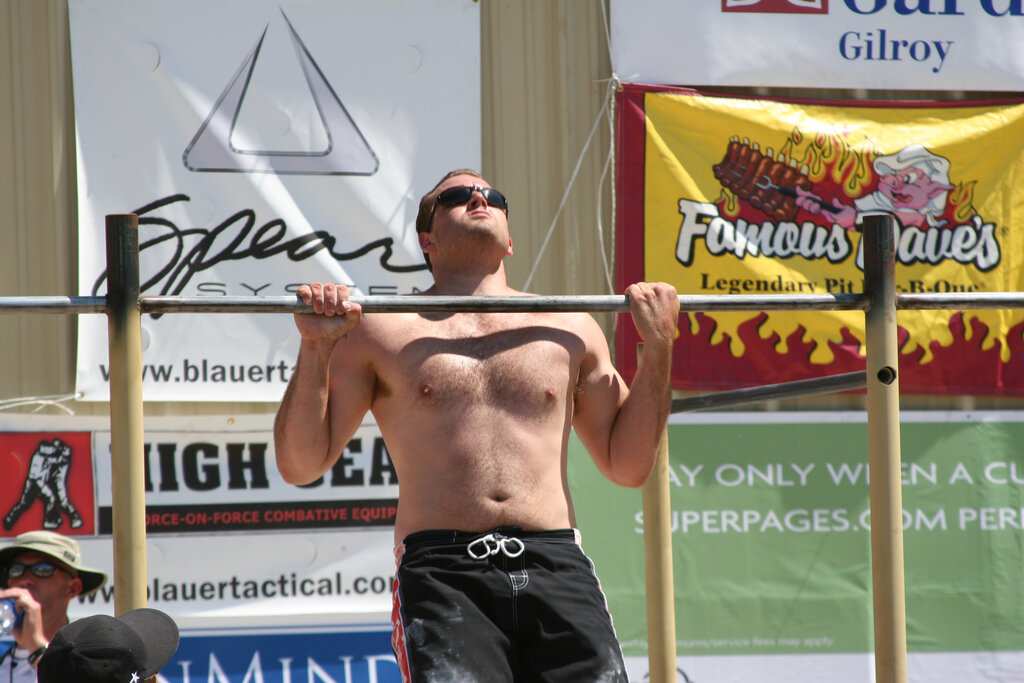
Your Pulling Powerhouse
So, which muscles are doing the heavy lifting? The pull-up is primarily a back exercise. The main engine is the latissimus dorsi, or "lats," the large, fan-shaped muscles that run down the sides of your back. When you see someone with a wide, V-shaped back, you're seeing well-developed lats.

But the lats don't work alone. They get a lot of help from other key players:
- Biceps: Located on the front of your upper arm, these muscles are crucial for bending your elbow and helping to pull your body upward.
- Trapezius: These muscles, often called "traps," are in your upper back and neck. They help stabilize your shoulders and pull your shoulder blades down and back as you rise.
- Rhomboids and Teres Major: These are smaller muscles in your upper back that assist the lats in pulling your arms down and back.
- Core: Your abdominal muscles and obliques work hard to keep your body stable and prevent it from swinging.
Perfecting Your Form
Proper form is non-negotiable. It ensures you're targeting the right muscles and, more importantly, keeps you safe from injury. Bad form, like using momentum or not going through the full range of motion, cheats you out of the exercise's benefits.
Think of form as the foundation. Without a solid foundation, you can't build meaningful strength.
Here’s a breakdown of the key steps for a standard pull-up:
- The Grip: Start by grabbing the bar with an overhand grip (palms facing away from you), with your hands slightly wider than your shoulders. A firm grip is essential.
- The Starting Position: Hang from the bar with your arms fully extended. This is called a "dead hang." Engage your core and keep your legs straight or crossed behind you, but avoid kicking.
- The Pull: Initiate the movement by pulling your shoulder blades down and back. Think about pulling your elbows down towards the floor, not just pulling with your arms. This engages your lats correctly.
- The Ascent: Continue pulling until your chin clears the bar. Your body should remain as straight and still as possible. Avoid swinging or using your legs to create momentum.
- The Descent: Lower yourself back down in a controlled manner until your arms are fully extended again. Don't just drop. The lowering phase is just as important for building strength as the pulling phase.
Mastering these steps ensures that every repetition counts, paving the way for real progress.