Mastering the Psychology of Decision Making and Behavioral Analysis
Dual Process Observation
Reading the Room
You already know the difference between fast, intuitive System 1 thinking and slow, deliberate System 2 thinking. The real skill is spotting which system is running the show in someone else, in real time. Most daily interactions are driven by System 1. People rely on shortcuts, gut feelings, and a process called thin-slicing to navigate conversations, make quick judgments, and keep things moving. System 2 only gets called up when something unexpected happens, a difficult question is asked, or the stakes are high.
Observing these systems in action isn't about mind reading. It's about paying attention to concrete, observable cues. The first and most obvious clue is response speed.
A quick, effortless answer to a question almost always comes from System 1. A pause, a furrowed brow, or a glance upwards often signals that System 2 is booting up.
Physical and Verbal Cues
When System 2 engages, the body often shows it. The effort of deliberate thought is a real, physiological process. One of the most reliable indicators is pupil dilation a subtle widening of the pupils that correlates directly with mental effort. You can't always see this in a casual conversation, but in a focused setting, it's a clear sign that someone is thinking hard.
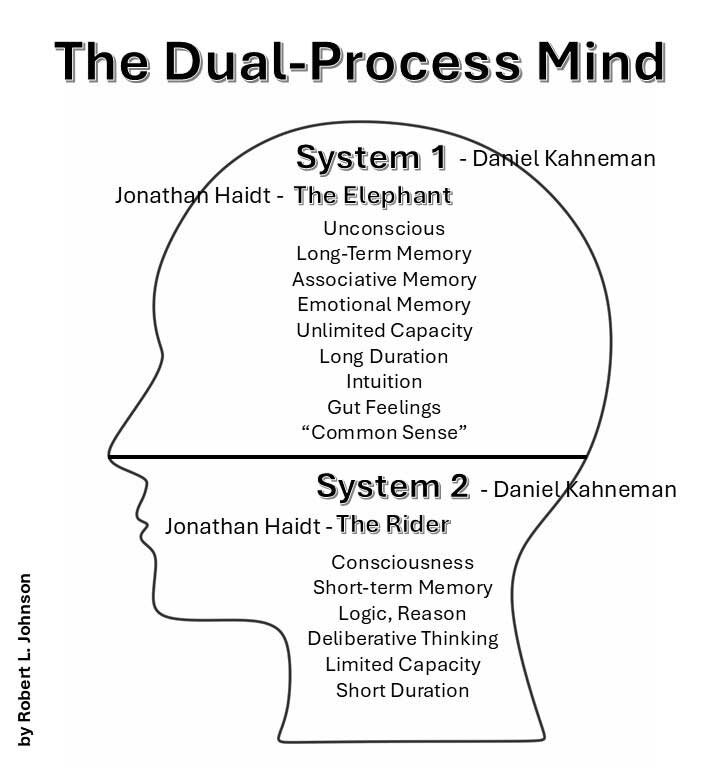
Language provides even clearer clues. System 1 speech is often simple, direct, and confident. It uses familiar phrases and relies on intuition. Think of answers like "It just feels right" or "I've always done it this way."
System 2 speech is more hesitant and complex. It's marked by qualifiers and cautious phrasing. You might hear someone say, "Well, on the one hand..." or "Let me think about the best way to put this." They are actively constructing a logical argument, not just retrieving a pre-packaged thought. Listen for words that suggest analysis: because, if-then, alternatively, however.
Cognitive Strain and Depletion
System 2 is powerful, but it's also a limited resource. When someone is under a heavy cognitive load, their ability to think deliberately is reduced. They might be juggling multiple ideas, processing complex information, or trying to solve a hard problem. In these moments, they are more likely to make mistakes, get distracted, or revert to easier System 1 thinking.
This state of mental fatigue is sometimes called ego depletion While the theory is debated, the core idea is useful: willpower and self-control are finite. In a social context, someone experiencing this might become more irritable, make impulsive decisions, or struggle to follow a complex conversation. They might agree to something just to end the mental effort. This isn't a character flaw; it's a sign that their System 2 fuel tank is running on empty.
| Cue Type | System 1 (Intuitive) | System 2 (Reflective) |
|---|---|---|
| Response Speed | Fast, immediate | Slow, paused |
| Body Language | Relaxed, automatic | Furrowed brow, averted gaze |
| Pupils | Normal | Dilated |
| Word Choice | Simple, confident, absolute | Complex, cautious, conditional |
| Speech Patterns | Fluid, uses heuristics | Hesitant, structured, logical |
By categorizing these cues, you can get a sense of the depth of someone's cognitive engagement. Are they running on autopilot, or are they deeply invested in analyzing the situation? Recognizing this difference is the first step toward understanding and predicting their behavior.
Which thinking system is primarily responsible for navigating most routine daily interactions?
If a colleague explains their decision by saying, 'Well, on the one hand, the data suggests X, but if we consider the long-term impact, then Y becomes a more viable alternative,' which system are they most likely using?
Now you can begin to spot these systems in your daily life.