Mastering the Pineapple Cascade
Pineapple Physical Properties
From Balls to Pineapples
Juggling a standard 130-gram ball is about managing a predictable object. Its center of gravity is dead center, its weight is minimal, and its surface is smooth. A pineapple is none of those things. It's an exercise in controlled chaos.
The most significant challenge is the pineapple's irregular shape and non-uniform density. Unlike a ball, a pineapple's center of gravity is not in its geometric center. It's usually lower down, in the thickest, densest part of the fruit. The leafy crown on top further complicates this, acting like a small parachute and shifting the balance point during flight. As the pineapple spins, this off-center mass causes it to wobble unpredictably.
Managing Weight and Energy
A typical practice pineapple weighs around 1.5 kilograms, more than ten times the weight of a standard juggling ball. This drastic increase in mass means you need to generate significantly more force for each toss. Your muscles need to adapt to propelling and catching a much heavier object.
To safely build this strength and intuition, start with 'object acclimation.' Practice single-hand tosses with one pineapple. Focus on achieving a consistent height and rotation without straining your wrist. Get a feel for the force required and how the object behaves as it leaves your hand and returns.
The heavier weight also means the pineapple carries much more kinetic energy. Dropping it has greater consequences, both for the fruit and whatever is underneath it.
Surface, Safety, and Selection
The pineapple's skin is not your friend. Its rough, spiky texture can be abrasive on your hands after just a few catches, leading to chafing or scrapes. The crown presents another hazard; its stiff, pointed leaves can easily poke you in the eye or face during a catch.
Careful selection and preparation are key. Look for pineapples that are as symmetrical as possible to minimize wobble. Avoid ones that are overly ripe, as they are more likely to be bruised or break apart on impact. A firm, evenly shaped pineapple is your best starting point.
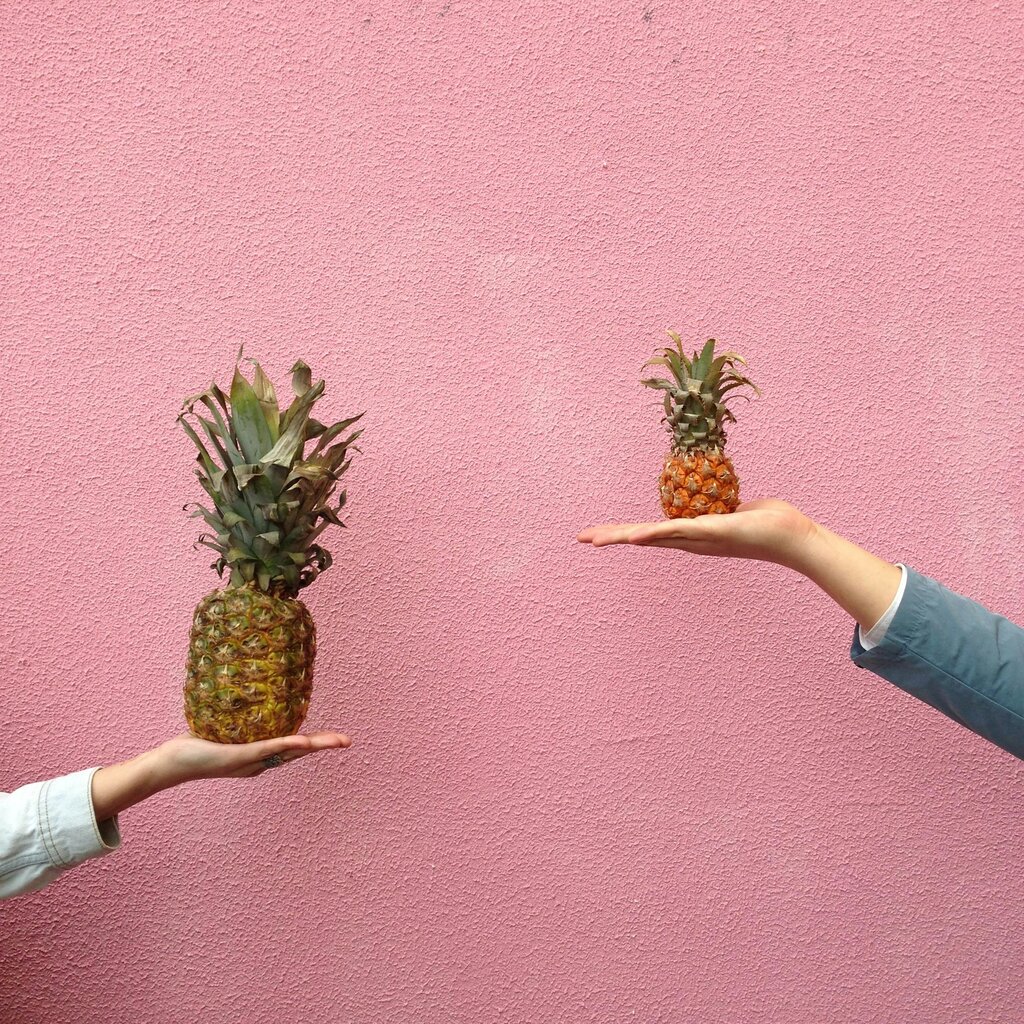
Once you've selected your fruit, you need to prep it. For safety and better aerodynamics, the crown must be dealt with. You can either twist it off completely or use shears to trim the leaves down to dull nubs. Removing it entirely is often the best option, as it creates a more predictable and less hazardous object.
Start with short practice sessions to allow your hands to get used to the pineapple's texture. Catching with flatter palms rather than just your fingers can help distribute the impact and reduce skin irritation.
Ready to check your understanding?
What is the most significant challenge when juggling a pineapple, according to the text?
Why is it recommended to remove or trim the pineapple's crown before juggling?
By understanding these physical properties, you can adjust your technique from juggling simple balls to managing the complex flight of a pineapple. It's a different skill, one that requires more strength, awareness, and preparation.