Mastering the Pillars of Human Psychology
Integrated Neurocognitive Mechanisms
The Brain's Malleable Blueprint
Our brains are not static hardware. They are constantly being rewired by our experiences, a process known as neuroplasticity. Every new skill learned and memory formed creates a physical trace. This is how abstract mental models, or schemas, are built. A schema for “how to drive a car” isn't just a concept; it's a network of neurons that has been strengthened through repeated activation.
The core mechanism behind this is called (LTP). Think of it like creating a path in a forest. The first time you walk it, the trail is faint. But with each trip, the path becomes clearer, wider, and easier to travel. Similarly, when neurons fire together frequently, the connection, or synapse, between them becomes more efficient. Signals travel faster and more reliably across that specific pathway.
This physical rewiring is the foundation for creating and reinforcing complex cognitive maps. When you first learn a new software program, for example, your actions are slow and deliberate. With practice, the neural pathways representing those actions become solidified, allowing you to navigate menus and use shortcuts automatically. The abstract knowledge has become embedded in your brain's physical structure.
The Biology of Bad Decisions
Just as biology enables learning, it can also constrain it. Our cognitive 'software' is highly dependent on the state of our biological 'hardware.' A prime example is the impact of chronic stress on our ability to think clearly.
When we're under sustained pressure, the body is flooded with the hormone cortisol. While useful in short bursts for 'fight or flight' situations, prolonged exposure to high cortisol levels acts like a corrosive agent on the parts of our brain responsible for higher-order thinking. Specifically, it impairs the prefrontal cortex, the hub of our executive functions—the skills that let us plan, focus, and regulate our impulses.
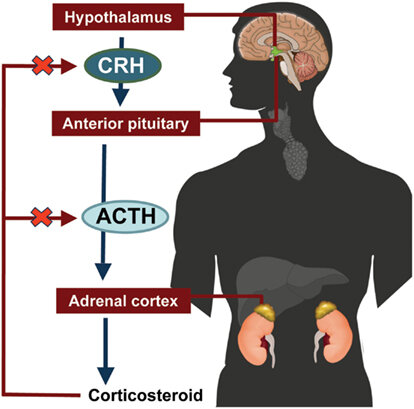
This isn't a subtle effect. High cortisol can weaken synaptic connections in the prefrontal cortex while strengthening those in more primitive, emotion-driven areas like the amygdala. The result is a biological tilt toward reactive, short-sighted, and often biased decision-making. We become more likely to rely on cognitive shortcuts and gut feelings instead of careful analysis. A stressed manager might make a rash hiring decision, or a student cramming for an exam might find they can't think critically about the material.
This creates a dangerous feedback loop: chronic stress impairs judgment, leading to poor decisions that often create more stress, further elevating cortisol.
Sleep, Insight, and Memory
The brain's nightly maintenance cycle—sleep—is crucial for cognitive performance, particularly problem-solving. But it's not just about getting enough hours; the structure of that sleep matters. Different sleep stages perform different cognitive functions.
During Non-Rapid Eye Movement (NREM) sleep, especially the deep 'slow-wave' stages, the brain consolidates declarative memories—facts, figures, and events. It's like a librarian filing away the day's acquisitions. The brain replays neural activity from the day, strengthening important connections and pruning weaker ones.
Later in the night, during , the brain shifts gears. This is a period of wild, seemingly random neural firing, where the brain makes novel connections between distant ideas. This stage is strongly linked to creative problem-solving and insight. It's the reason you might wake up with a solution to a problem that seemed impossible the night before. The brain was busy running simulations and connecting disparate concepts while you slept.
Disrupting this architecture, through either insufficient sleep or poor sleep quality, directly sabotages our cognitive abilities. A single night of poor sleep can impair attention and executive function, while chronic sleep debt hobbles our ability to learn new things and find creative solutions.
Neuroscience in the Workplace
These neurocognitive principles have direct applications in real-world settings like organizational management. A company culture that promotes chronic stress is, from a biological standpoint, actively reducing the cognitive capacity of its workforce.
Instead of simply telling employees to 'manage stress,' an informed approach looks at the systemic causes. This could involve:
- Designing manageable workloads: Preventing the cognitive overload that triggers a chronic cortisol response.
- Promoting recovery: Encouraging regular breaks and adequate time off to allow the brain's 'hardware' to recover and reset.
- Clarifying roles and expectations: Reducing the ambiguity that can be a significant source of psychological stress and cognitive drain.
- Fostering psychological safety: Creating an environment where the brain's threat-detection system (the amygdala) is not constantly activated, freeing up resources for the prefrontal cortex.
By understanding the interplay between our biology and our cognitive functions, we can design environments—whether for work, education, or personal growth—that support our brains instead of working against them.
Let's check your understanding of these integrated concepts.
What is the core biological mechanism described as being responsible for strengthening the connections between neurons when we learn a new skill or form a memory?
According to the text, chronic stress leading to high cortisol levels makes a person more likely to:
Understanding these connections is the first step toward optimizing how we think, learn, and perform.