Mastering the Periodic Table Logic
Atomic Architecture and Shells
An Atom's Architecture
Atoms aren't just a simple nucleus with electrons buzzing around randomly. Think of an atom as a block of flats and the electrons as its residents. Electrons can't just live anywhere; they are restricted to specific floors (energy levels) and specific types of flats (subshells). This structure is the key to understanding why the periodic table looks the way it does.
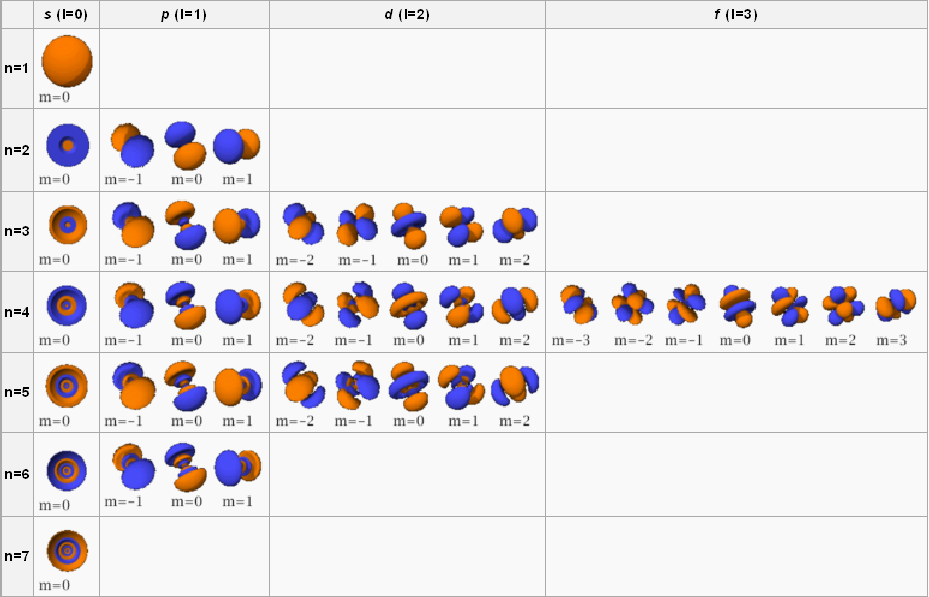
The main floors are called principal energy levels or shells, numbered starting from for the floor closest to the nucleus. Each floor has a limited capacity. As you go up to higher floors (higher values of ), the electrons have more energy and are generally further from the nucleus.
But each floor is also divided into different styles of flats, called subshells. These are labelled s, p, d, and f. Each type has a distinct shape and can hold a specific number of electrons:
- s subshell: Has 1 room (orbital), holds up to 2 electrons.
- p subshell: Has 3 rooms (orbitals), holds up to 6 electrons.
- d subshell: Has 5 rooms (orbitals), holds up to 10 electrons.
- f subshell: Has 7 rooms (orbitals), holds up to 14 electrons.
The first floor () only has an s-flat. The second floor () has s- and p-flats. The third floor () has s-, p-, and d-flats, and so on. The arrangement of electrons within these shells and subshells is called an element's electron configuration.
The Rules of Filling
Electrons are lazy. They always fill the lowest energy orbitals available first. This is known as the (German for "building-up principle"). It doesn't always mean filling the shells in simple numerical order. For instance, the 4s subshell is actually lower in energy than the 3d subshell, so it gets filled first.
Two other rules apply:
- Pauli Exclusion Principle: An orbital can hold a maximum of two electrons, and they must have opposite spins (one 'spin up', one 'spin down'). Think of them as two roommates who must face in opposite directions to fit.
- Hund's Rule: In a subshell with multiple orbitals (like the p, d, or f subshells), electrons will fill each orbital singly before any orbital gets a second electron. Roommates prefer to have their own room before they are forced to share.
Let's see how this works for nitrogen (7 electrons). Its configuration is $1s^2 2s^2 2p^3$. According to Hund's rule, the three electrons in the 2p subshell will each occupy a separate orbital.
Valence and Stability
The electrons in the outermost, highest-energy shell are called valence electrons. These are the most important electrons in chemistry. They are the ones that interact with other atoms, form bonds, and determine an element's chemical properties.
For example, the electron configuration for Sodium (Na, 11 electrons) is . The outermost shell is the third one (), which contains just one electron. Therefore, sodium has one valence electron. This single, lonely electron makes sodium highly reactive.
Atoms are most stable when their outermost electron shell is completely full. For most of the main-group elements, this means having eight valence electrons, an arrangement known as the . The noble gases, like Neon ($1s^2 2s^2 2p^6$), already have this stable octet, which is why they are so unreactive.
Other elements strive to achieve this stability by gaining, losing, or sharing electrons with other atoms. A chlorine atom ($1s^2 2s^2 2p^6 3s^2 3p^5$) has seven valence electrons. It's just one electron short of a full octet, making it eager to gain an electron. This drive to fill the valence shell is the fundamental basis of all chemical bonding.
Let's review the key ideas before we test your knowledge.
Now, let's see if you can apply these rules.
According to the Aufbau principle, which subshell is filled after the 3p subshell?
Which rule states that an orbital can hold a maximum of two electrons, and they must have opposite spins?
Understanding how electrons arrange themselves in an atom is the first step to predicting how that atom will behave and interact with others. This underlying architecture is what gives the periodic table its predictive power.