Mastering the Navy SEAL Training Pipeline
Selection and Readiness
The Paper Gauntlet
Before a candidate ever feels the cold Pacific water, they must pass a series of academic and psychological tests. The first hurdle is the Armed Services Vocational Aptitude Battery, or ASVAB. While many military jobs have minimum scores, SEAL candidates are judged on specific line scores. A competitive score is typically required in the combination of General Science (GS), Mechanical Comprehension (MC), and Electronics Information (EI). This blend ensures a baseline aptitude for understanding the technical gear and complex systems used in modern special operations.
Beyond raw intelligence, the Navy needs to gauge a candidate's mental fortitude. This is where the comes in. This computer-based assessment measures psychological resilience, maturity, and performance under pressure. It presents candidates with scenarios designed to test their decision-making and personality traits. The test helps filter out individuals who, despite peak physical fitness, might lack the mental toughness required to withstand the immense stress of SEAL training and combat.
Forging Tactical Athletes
Passing the initial screening earns a candidate a ticket to the Naval Special Warfare Preparatory School (NSW Prep) in Great Lakes, Illinois. This eight-week course is designed to transform recruits from simply being 'in shape' into tactical athletes. The curriculum focuses on building the specific physical capabilities needed for BUD/S.
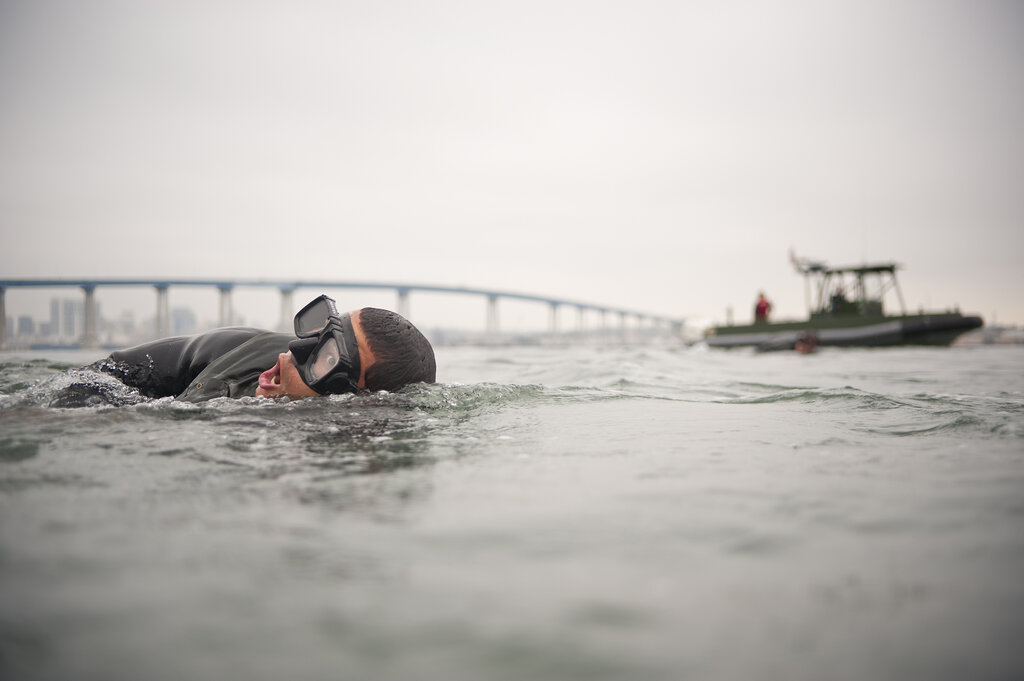
The training at NSW Prep is relentless and methodical. Candidates are introduced to the hallmarks of SEAL conditioning. This includes long-distance swimming with fins, with benchmarks like a 1,000-metre timed swim becoming routine. Running transitions from standard physical training to grueling 4-mile timed runs performed in boots on sand. This shift develops the durability and joint strength necessary for carrying heavy loads over varied terrain. The goal is not just to meet a standard, but to exceed it consistently.
At NSW Prep, candidates learn that the standard is the bare minimum. The culture demands pushing beyond perceived limits every single day.
Throughout the course, candidates are repeatedly evaluated using a 'Modified' Physical Screening Test (PST). The standards are significantly higher than the initial test required for enlistment, and failure to meet them can result in being dropped from the program.
| Event | Competitive Standard |
|---|---|
| 500-yard swim | Under 9:00 (sidestroke) |
| Push-ups (2 min) | 80-100+ |
| Sit-ups (2 min) | 80-100+ |
| Pull-ups | 15-20+ |
| 1.5-mile run (boots) | Under 9:30 |
Arrival at Coronado
Candidates who successfully complete NSW Prep are sent to Coronado, California, for the final introductory stage: the three-week BUD/S Orientation (BO). This is not yet First Phase, but an intense indoctrination period. Here, instructors establish the rigid standards for performance and teamwork that will govern the rest of training. Candidates learn the basics of operating as a boat crew, mastering the Inflatable Boat Small (), and are drilled endlessly on the proper execution of every physical evolution.
The orientation is a deliberate shock to the system. It acclimates candidates to the cold water, the sand, and the constant scrutiny of the instructor staff. Every action, from how gear is stowed to how a candidate addresses an instructor, is formalized. This phase solidifies the muscle memory and team mechanics necessary to even attempt the legendary challenges of First Phase.
What is the primary purpose of the C-SORT assessment in the SEAL selection process?
Where does the eight-week Naval Special Warfare Preparatory School (NSW Prep) take place?
This initial gauntlet of academic, psychological, and physical screening ensures that only the most prepared and resilient candidates begin the formal BUD/S program.