Mastering the National Cadet Corps Journey
Wing Specialization and Training
Beyond the Parade Ground
Every National Cadet Corps (NCC) cadet, regardless of uniform, learns a common set of skills. They master the crisp movements of drill, the precision of firing a rifle, and the art of reading a map. This shared foundation makes up about 70% of the NCC curriculum, building a universal sense of discipline and camaraderie.
But the remaining 30% is where things get interesting. This portion is dedicated to specialized subjects unique to each service wing: Army, Navy, and Air Force. It’s here that cadets move beyond the basics and train in the specific environment of their chosen service, learning skills that are directly applicable to that branch of the armed forces.
The Army Wing: Boots on the Ground
The Army wing focuses on developing skills for land-based operations. Cadets dive deep into infantry tactics, learning how to use the terrain to their advantage. This practical training is known as Field Craft. It covers everything from camouflage and concealment to judging distance and setting up effective patrols.
Weapon training becomes more advanced, and the principles of battle craft are introduced. Cadets learn the fundamentals of small-unit tactics, section formations, and fire control orders. It’s about thinking on your feet and leading a team under pressure in a field environment.
The goal is to cultivate resourcefulness and tactical thinking, preparing cadets for leadership challenges on land.
The ultimate test for an Army cadet is the (TSC). This is not just a camp; it's a grueling, nationwide competition where the best cadets from each state directorate compete. They are pushed to their limits in map reading, obstacle courses, firing, and field craft. Earning a spot at TSC is a mark of exceptional skill and endurance.
The Naval Wing: Masters of the Waves
Naval wing training swaps the field for the water. The curriculum here is built around seamanship, the art of operating a boat or ship. Cadets learn everything from basic knots and rigging to the rules of navigation and naval communication systems like semaphore. It’s a world of nautical terms and precise procedures.
A significant part of their training is hands-on. Cadets get practical experience in boat pulling, a physically demanding activity that requires perfect teamwork to row a boat smoothly and efficiently. They also learn the basics of sailing, understanding how to work with the wind and tides.
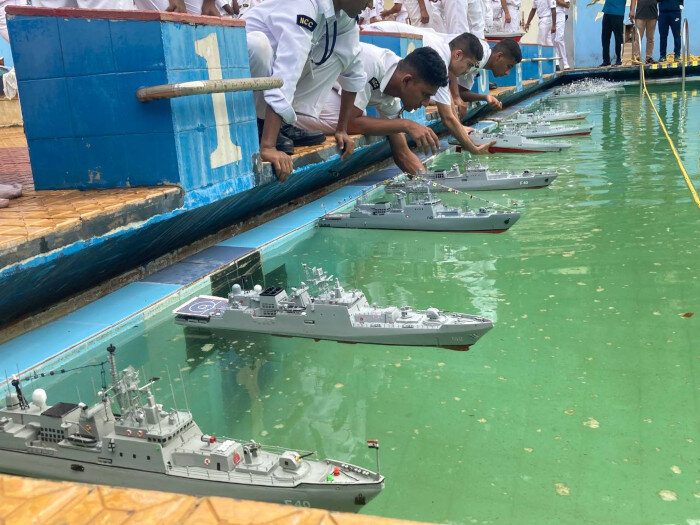
For Naval cadets, the pinnacle event is the Nau Sainik Camp (NSC). Held at a naval base, this camp tests their proficiency in all aspects of their specialized training. Competitions include boat pulling regattas, ship modeling, semaphore signaling, and seamanship practicals. It’s a chance for cadets to prove their mastery of the sea.
The Air Force Wing: Eyes on the Skies
The Air Force wing is designed for cadets with a passion for aviation. Their specialized syllabus covers the principles of flight, aerodynamics, and the inner workings of aircraft engines. They learn about air navigation, meteorology, and the complex rules that govern the skies.
Practical application is key. Cadets engage in aero-modeling, building and flying model aircraft to understand design and flight characteristics. The most thrilling part of their training, however, is the opportunity for flying experience. Selected cadets get to fly in microlight aircraft, taking control under the guidance of an instructor. This gives them a real taste of what it's like to be a pilot.
Training focuses on developing an understanding of aviation technology and the discipline required for flight.
The Vayu Sainik Camp (VSC) is the ultimate goal for Air Force cadets. This camp brings together the best from across the country to compete in events like aero-modeling, skeet shooting, and '.22 firing'. It’s a showcase of the technical knowledge and practical skills that define the Air Wing.
What percentage of the NCC curriculum is common to all cadets, regardless of their service wing?
A cadet learning about camouflage, concealment, and section formations is most likely part of which wing?
Each wing provides a distinct path, building upon a common foundation to create well-rounded cadets with specialized skills. Whether on land, at sea, or in the air, the training is designed to challenge them and prepare them for future leadership roles.