Mastering the Modern Security Operations Center
Modern SOC Architectures
Beyond the Firewall
The traditional Security Operations Center (SOC) was built around a central nervous system: the Security Information and Event Management (SIEM) system. It dutifully collected logs from firewalls, servers, and applications, and analysts would write rigid correlation rules to find the 'known bads.' This was effective for a simpler time, but today's threat landscape, spanning from cloud infrastructure to employee laptops scattered across the globe, generates a deafening amount of data. Legacy SIEMs often struggle, becoming expensive data graveyards where critical alerts are buried under a mountain of noise.
This data overload has forced a fundamental architectural shift. Instead of just collecting logs, modern SOCs are adopting an XDR-first paradigm. The goal is no longer just to aggregate information, but to actively correlate and contextualize it from the start. Think of it as the difference between getting a dozen separate, jargon-filled medical reports versus a single, integrated diagnosis that connects all the symptoms.
XDR
noun
Stands for Extended Detection and Response. It's a security platform that automatically collects and correlates data from multiple security layers – including endpoints, cloud workloads, email, and networks. This provides a unified, single-pane-of-glass view for threat detection and response, unlike traditional tools that operate in silos.
In an XDR-first model, data isn't just dumped into a massive database. It’s ingested with context. An alert from an endpoint detection and response (EDR) agent on a laptop is automatically linked to network traffic from that same device and suspicious login attempts to a cloud application. This pre-correlated data allows analysts to see the entire attack chain without manually piecing together clues from three different systems. Platforms like CrowdStrike Falcon, Palo Alto Cortex XDR, and Microsoft Sentinel are built on this principle, fusing SIEM capabilities with XDR's rich, cross-domain context.
A SIEM delivers visibility into the full kill chain across the entire organization, including third party data, while XDR delivers deeper insights with contextual alerts for multi-cloud and multi-platform resources to reduce false alerts.
The Modern Data Pipeline
The cost of storing and analyzing petabytes of security data in a traditional SIEM can be astronomical. To solve this, modern SOCs have decoupled data ingestion from analysis by creating Security Data Pipelines (SDPP). This is a game-changer. Instead of sending all data directly to an expensive, performance-sensitive SIEM, raw logs and telemetry are first sent to a highly scalable, low-cost data lake.
Inside the pipeline, the data is normalized—meaning it's converted into a common format—and enriched with threat intelligence and business context. Once processed, it lands in the data lake. From there, only the most critical, actionable data is forwarded to the 'hot' analytics layer of the XDR or SIEM for real-time monitoring. The vast remainder stays in the cost-effective data lake, ready for 'cold' analysis during threat hunting or compliance audits. This tiered approach gives SOCs massive-scale visibility without the crippling costs of legacy architectures.
Structuring the Global Team
Technology is only half the equation. How do you staff a SOC to provide true 24/7 coverage against global threats? Two primary models have emerged: the Hybrid SOC and the Virtual SOC.
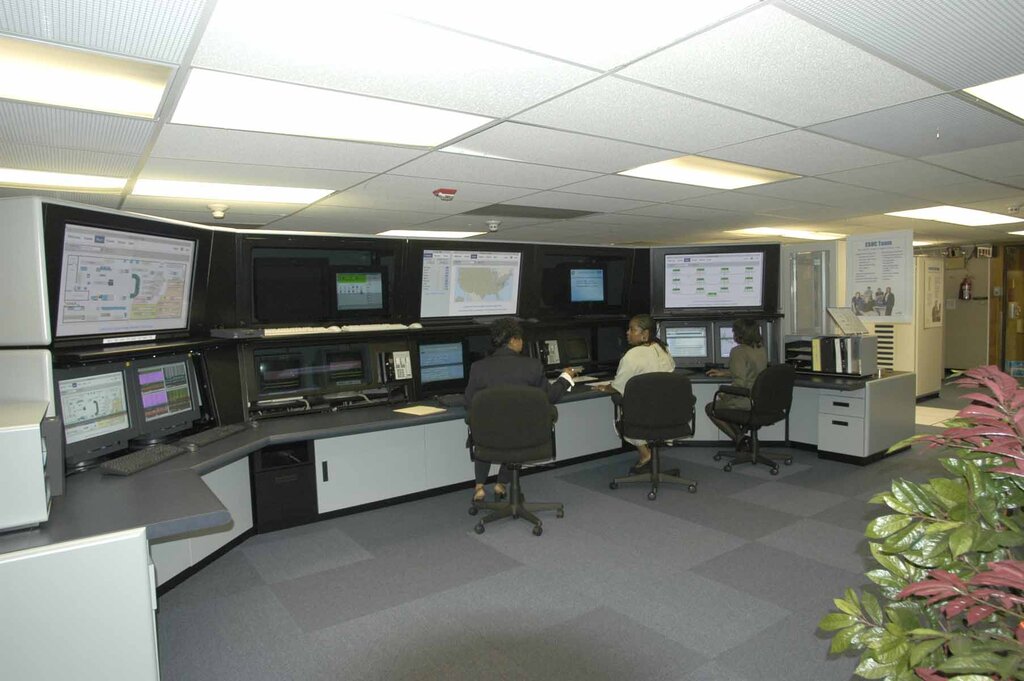
A Hybrid SOC maintains a central, physical command center but supplements it with remote analysts or smaller regional offices. This provides a hub for collaboration and training while offering flexibility. A fully Virtual SOC has no central physical location; analysts are distributed globally and collaborate entirely through digital tools. The choice between them involves significant trade-offs in cost, talent acquisition, and operational security.
| Factor | Hybrid SOC | Virtual SOC |
|---|---|---|
| Cost | Higher (facility, infrastructure) | Lower (no real estate costs) |
| Talent Pool | Limited by geography | Global, access to wider expertise |
| Collaboration | Easier in-person communication | Requires strong digital tools |
| Team Cohesion | Stronger sense of shared identity | Can feel isolating; requires effort |
| Onboarding | Simpler, in-person training | More complex, entirely remote |
Both models often employ a coverage strategy. This isn't just about having people online at all hours. It’s a structured handoff process. For example, a team in London will monitor the alert queue for their eight-hour shift. As their day ends, they conduct a formal transfer of active investigations to the incoming team in New York. When New York's shift ends, they hand off to a team in Singapore. This ensures that critical incidents are always under active investigation by a fresh set of eyes, preventing analyst burnout and reducing response times from hours to minutes.
Now let's check your understanding of these modern SOC architectures.
What is the primary architectural shift distinguishing modern SOCs from traditional SIEM-centric models?
What is the main function of a Security Data Pipeline (SDPP) in a modern SOC?
Modern SOCs blend advanced technology with global operational strategies. By adopting XDR-first architectures, intelligent data pipelines, and structured 24/7 coverage models, they can effectively detect and respond to threats in today's complex digital environment.