Mastering the Model Context Protocol
Introduction to Distributed Systems
What Are Distributed Systems?
A distributed system is a group of separate computers that work together, but appear to the outside world as a single machine. Think of it like a well-coordinated team. Each member is an individual, but they collaborate so seamlessly that you see their collective work as one unified effort.
For example, when you use a search engine, your request isn't handled by one giant supercomputer. Instead, it's processed by thousands of computers working together to find your answer in a fraction of a second. You just see the search engine; you don't see the complex network of machines behind the scenes.
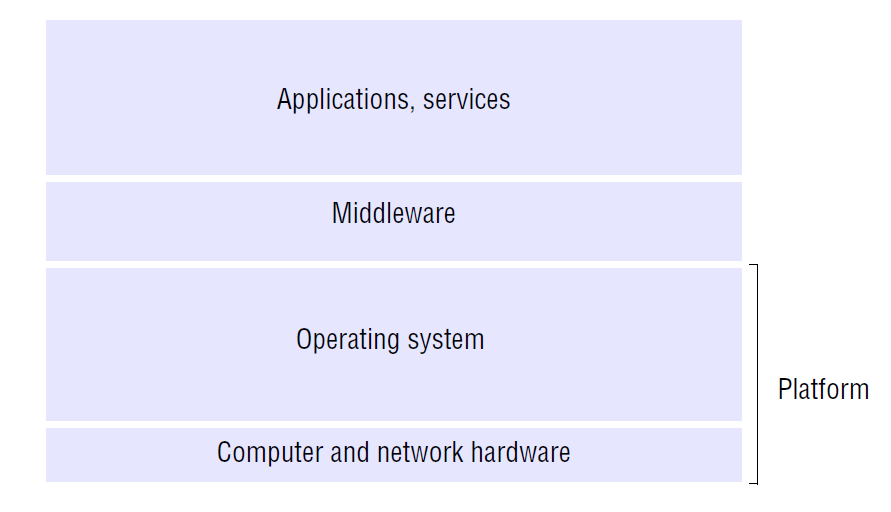
These systems have a few defining characteristics. The computers don't share memory or a clock. Each one has its own resources and operates independently. They communicate with each other by sending messages over a network. This setup allows them to tackle massive tasks that would be impossible for a single computer to handle.
Working in Parallel
One of the biggest advantages of distributed systems is their ability to handle many tasks at once. This involves two related ideas: concurrency and parallelism.
Concurrency is when multiple tasks are making progress over overlapping periods. It's like a chef juggling multiple dishes in a kitchen—they switch between stirring a sauce, chopping vegetables, and checking the oven. The tasks aren't all happening at the exact same instant, but they're all moving forward.
Parallelism is when multiple tasks run at the exact same time. This would be like having several chefs in the kitchen, each one working on a different dish simultaneously. Parallelism requires multiple processors (or in our case, multiple computers) to execute tasks truly at the same moment.
Distributed systems achieve parallelism by breaking down a large problem into smaller pieces and assigning each piece to a different computer in the network.
When Things Go Wrong
What happens when one computer in a network of thousands suddenly fails? In a well-designed distributed system, not much. The system is built to be fault-tolerant, meaning it can continue operating even when some of its components fail.
Imagine an orchestra where one violinist's string snaps. The other violinists continue playing, and the performance goes on without a noticeable interruption. Distributed systems aim for the same resilience.
Two common strategies for achieving this are:
-
Redundancy: This means having backup components. For data, this could involve storing multiple copies on different machines. If one machine holding the data goes down, the system can retrieve it from another.
-
Replication: This involves running the same service or application on several different computers. If one computer running the service fails, another can take its place immediately.
Growing and Balancing
As a service like a website or an app becomes more popular, the amount of work it needs to do increases. A system's ability to handle this growth is called scalability.
| Scaling Type | Description | Analogy |
|---|---|---|
| Vertical Scaling | Making a single computer more powerful (e.g., adding more memory or a faster CPU). | Hiring one super-strong person to lift a heavy box. |
| Horizontal Scaling | Adding more computers to the system. | Hiring more people to lift the heavy box together. |
Distributed systems excel at horizontal scaling. It's often cheaper and more flexible to add more standard computers than to endlessly upgrade a single, expensive one.
But once you have many computers, how do you decide which one handles the next incoming request? That's the job of a load balancer. It acts like a traffic cop, directing incoming requests to different servers to ensure that no single server becomes overwhelmed. This distribution of work keeps the system running smoothly and efficiently for everyone.
While powerful, distributed systems introduce unique challenges. Keeping data consistent across multiple machines, coordinating tasks without a central clock, and handling network failures are all complex problems engineers must solve. Understanding these fundamentals is the first step to appreciating how modern applications work at scale.