Mastering the MMA Integration
Striking to Grappling Transitions
Bridging the Gap
The space between striking and grappling is where many fights are won or lost. It's not enough to be good at one or the other; the real skill lies in the transition. A well-timed punch isn't just for damage, it's a key that unlocks a takedown. A sharp jab can snap an opponent's head back, forcing them to raise their guard. In that split second, their hips and legs are exposed. This is the moment to bridge the distance.
Many MMA fighters use strikes to set up takedowns, forcing opponents to react defensively and exposing themselves to follow-up attacks.
The core mechanic here is the level change a rapid drop in elevation that shifts your body from an upright striking posture to a low, driving wrestling stance. Think of it like a coiled spring. You're not just bending at the waist; you're dropping your hips and bending your knees, loading your legs for an explosive forward drive. A common mistake is to telegraph the shot by dropping your head first. Instead, the level change should be masked by a strike, like a cross or a hook, which draws your opponent's eyes and hands upward.
The goal is to occupy your opponent's mind with the threat of strikes, forcing a reaction that you can exploit. This isn't just about single punches. A quick 1-2 combination forces a defensive shell, creating a perfect window to shoot for a double-leg takedown. Feinting a jab can make them flinch, giving you the space to duck under for a single-leg. This is the essence of a proactive, offensive transition.
Anti-Wrestling
Of course, for every offensive technique, there's a defensive counter. Preventing the takedown starts with managing distance and using strikes that punish level changes. If an opponent is constantly looking to get to your legs, fighting from a long range with jabs and leg kicks keeps them at bay. But when they do shoot in, specific strikes are brutally effective.
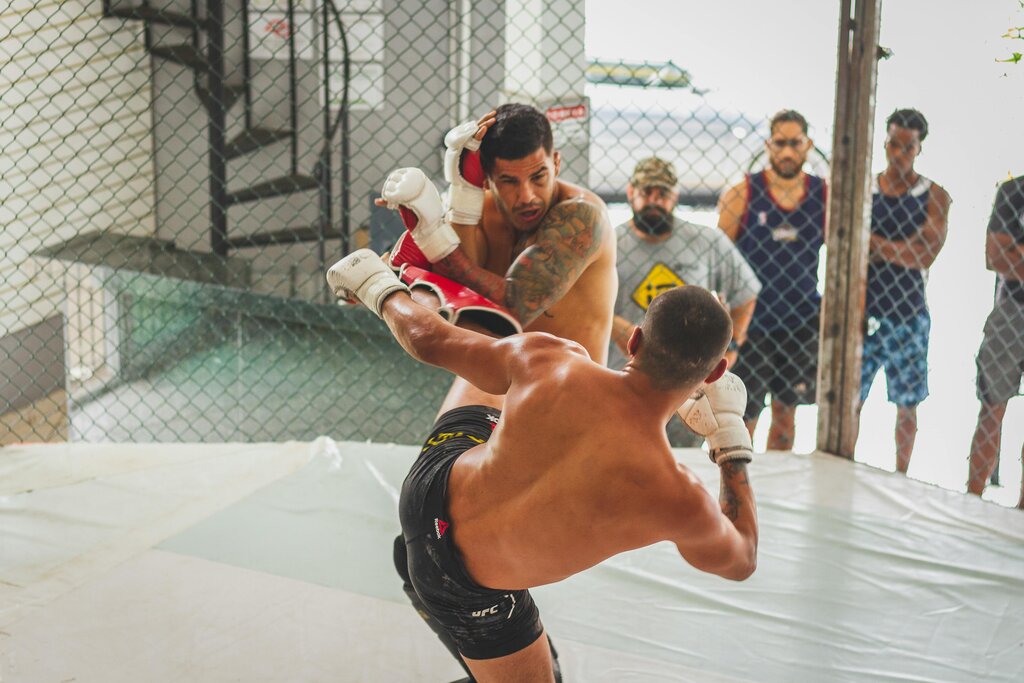
The uppercut is a wrestler's nightmare. As an opponent drops their head to shoot, they are moving directly into the upward path of the punch. A well-timed uppercut can stop a takedown attempt instantly. Similarly, a strong knee strike meets the incoming opponent with incredible force. This strategy of intercepting a charging opponent is a cornerstone of effective sprawl and brawl tactics.
Another crucial tool is the When an opponent gets deep on a single or double leg, you can use your forearm across their face or jaw to create space and break their posture. By driving your forearm horizontally across their head and turning their chin away from you, you disrupt their alignment and leverage. This makes it difficult for them to finish the takedown and creates an opportunity for you to circle away or work for a counter-position, like a front headlock.
Managing entry distance is key. If you're too close, you give up striking power. If you're too far, your takedown shot is easily seen and defended.
Reactive Takedowns
Not all takedowns are initiated offensively. Sometimes the best time to shoot is when your opponent is coming forward. A reactive takedown capitalizes on their aggression. When they step in to throw a heavy punch, they momentarily shift their weight forward and expose their hips. By changing levels and shooting underneath their strike, you use their own momentum against them.
This requires excellent timing and reading your opponent's patterns. It's a high-risk, high-reward maneuver. A successful reactive takedown can completely shift the momentum of a fight, but a poorly timed one can result in you eating a powerful strike on your way in. This is why drilling transitions against a resisting partner is so crucial to develop the instincts needed for seamless offense and defense.
Let's test your understanding of these crucial transitions.
According to the text, what is the primary purpose of throwing a punch like a jab before attempting a takedown?
Which strike is described as being particularly effective for intercepting an opponent who is dropping their level to shoot for a takedown?
Blending these different ranges is what elevates a fighter from a specialist into a complete martial artist.