Mastering the Markets from Fundamentals to Advanced Analysis
Intrinsic Value Analysis
Valuing a business from the inside out
Market price is what you pay, but intrinsic value is what you get. The Discounted Cash Flow (DCF) model is a powerful tool for estimating that intrinsic value. It's built on a simple premise: a company's worth is the sum of all the cash it can generate in the future, with each future rupee discounted to its value today. After all, a rupee in your hand now is worth more than a rupee you might get next year.
A DCF valuation attempts to get at the value of a company in the most direct manner possible: a company’s worth is equal to the current value of the cash it will generate in the future, and DCF is a framework for attempting to calculate exactly that.
The entire process boils down to three core tasks: forecasting a company's future cash flows, determining an appropriate discount rate, and summing up the present value of those flows. Let's start with the cash.
Forecasting future cash flows
The specific cash flow we need is Unlevered Free Cash Flow (UFCF). This represents the cash a business generates before accounting for any debt payments. It gives us a clean look at the company's core operational profitability, independent of its capital structure. We typically project UFCF for a 'forecast period,' usually 5 to 10 years into the future.
Why unlevered? By ignoring debt in the cash flow calculation, we can value the entire company first (its Enterprise Value). Afterwards, we can subtract debt to arrive at the value available to shareholders (Equity Value).
Calculating UFCF starts with Earnings Before Interest and Taxes (EBIT). We then adjust it for taxes, add back non-cash expenses like depreciation, and subtract capital expenditures and investments in working capital. The goal is to build a realistic, data-driven forecast based on historical performance, industry trends, and management's guidance.
Finding the right discount rate
Future cash is risky. We need a discount rate that reflects this risk. For a DCF analysis, this rate is the (WACC). It represents the blended cost of a company's financing from both debt and equity. A higher WACC means a higher risk, which in turn leads to a lower present value for future cash flows.
The Cost of Debt () is relatively straightforward; it's the interest rate the company pays on its borrowings. The Cost of Equity (), however, is trickier. It's the return shareholders expect for their investment. This is often calculated using the (CAPM), which considers the risk-free rate, the stock's beta (a measure of its volatility relative to the market), and the expected market return.
What happens after the forecast?
A company doesn't just cease to exist after 10 years. We need to estimate the value of all its cash flows beyond the forecast period. This is called the Terminal Value, and it often accounts for a huge portion of the total valuation.
| Method | Description | Best Used When... |
|---|---|---|
| Gordon Growth Model | Assumes the company's free cash flows will grow at a stable, constant rate forever. | For mature, stable companies with predictable growth (e.g., utility companies). |
| Exit Multiple Method | Assumes the business is sold at the end of the forecast period at a multiple of its earnings (e.g., EV/EBITDA). | For companies in cyclical industries or when a comparable transaction provides a clear benchmark. |
Once we have the projected UFCF for each year and the Terminal Value, we can discount them all back to today using our WACC. Summing these present values gives us the Enterprise Value. To find the Equity Value, we simply subtract the company's net debt. Dividing the Equity Value by the number of shares outstanding gives us our final prize: the intrinsic value per share.
Testing your assumptions
A DCF model is only as good as its inputs. Since forecasting the future is inherently uncertain, it's crucial to perform a Sensitivity Analysis. This involves creating a table that shows how the intrinsic value changes when you tweak your key assumptions, like the WACC and the terminal growth rate.
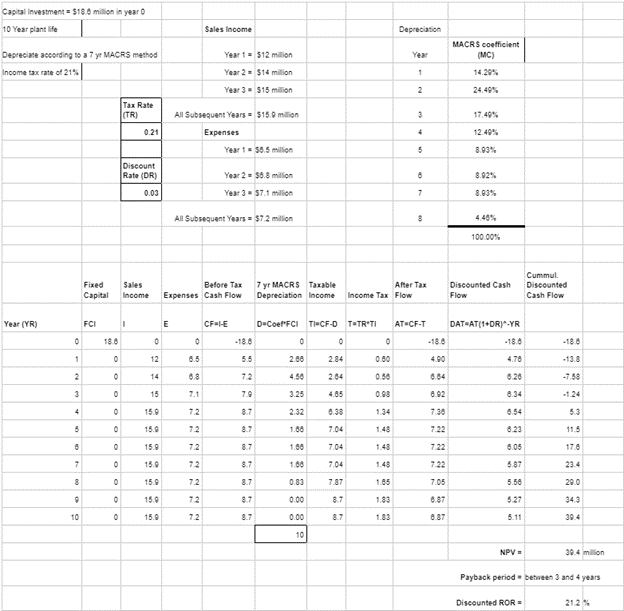
By analysing a range of outcomes, you can better understand the potential risks and rewards. If the company's current stock price looks cheap even under your most pessimistic assumptions, you might have found a compelling investment. If it only looks attractive in the most optimistic scenario, it might be best to be cautious.
Ready to test your understanding? Let's see how well you've grasped these valuation concepts.
What is the primary goal of a Discounted Cash Flow (DCF) analysis?
Which metric represents the blended cost of a company's financing from both debt and equity, and is used to discount future cash flows?
The DCF model provides a structured framework for thinking about a business's long-term value. While it relies on assumptions, the process itself forces you to rigorously analyse the key drivers of a company's success.