Mastering the Major League Rosters
Mapping the Diamond
Building Your Memory Stadium
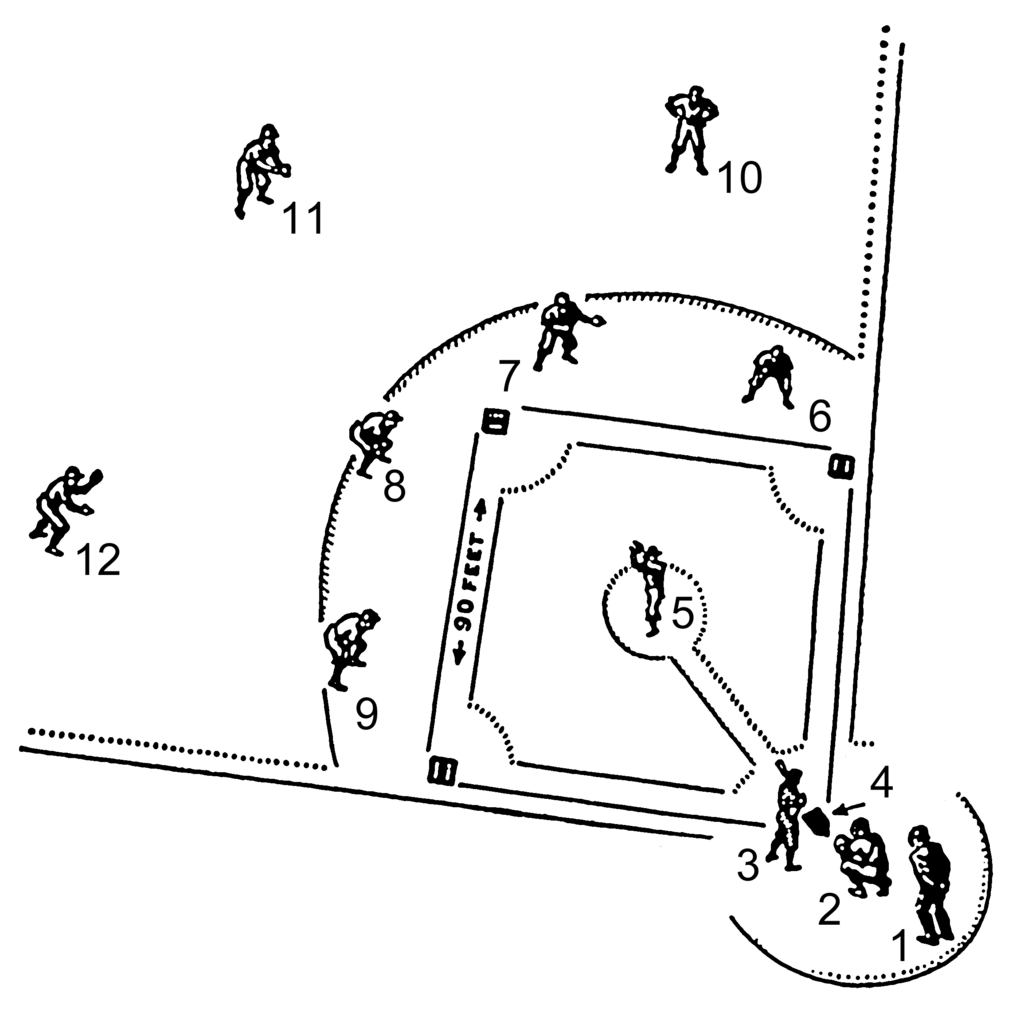
You already know how rosters work, so let's jump straight to a powerful technique for memorizing them: the Method of Loci. Think of it as building a 'Memory Palace.' For our purpose, this palace is a baseball stadium. We'll use the physical layout of the field to create a mental map where every player has a specific, unforgettable spot.
By assigning each player to a distinct location, or 'locus,' within the stadium, you're not just memorizing a name and number. You're creating a vivid mental scene. This turns abstract data into a concrete, navigable space, making recall faster and more reliable.
The stadium is now our blueprint. We'll break it down into four key zones: Infield, Outfield, Dugout, and Bullpen. The Infield and Outfield will house the starting nine, while the Dugout and Bullpen will hold the rest of the 26-man roster.
Placing the Lineups
Now we'll use a 'peg' system. Each position on the field is a memory peg where we'll hang a player. The pitcher's mound is a peg for the starting pitcher, first base is a peg for the first baseman, and so on. Let's start by placing the 2025 Chicago White Sox starters into their positions on our mental field.
| Position | Player (Number) |
|---|---|
| Catcher | Korey Lee (27) |
| First Base | Andrew Vaughn (25) |
| Second Base | Nicky Lopez (1) |
| Third Base | Bryan Ramos (44) |
| Shortstop | Colson Montgomery (8) |
| Left Field | Andrew Benintendi (23) |
| Center Field | Luis Robert Jr. (88) |
| Right Field | Oscar Colás (22) |
| Pitcher (SP1) | Garrett Crochet (38) |
To memorize this, visualize each player at their spot. Picture Luis Robert Jr. (88) patrolling the vast space of center field. See Andrew Vaughn (25) guarding first base. The more vivid the image, the stronger the memory.
Now, let's place the Chicago Cubs. To keep the teams separate in your mind, you can imagine the Cubs as the visiting team. They'll occupy the same positions on the field, but maybe you picture them in their gray road uniforms. For example, you'd place Seiya Suzuki (27) in right field and Dansby Swanson (7) at shortstop.
The Bench and Bullpen
What about the players who aren't starting? We'll assign them to the other zones of our stadium. The dugout is the perfect spot for the bench players—the backup catchers, infielders, and outfielders. You can use a 'Body Peg' system for quick access, associating each player with a specific spot on the bench or a person sitting there.
For instance, you might mentally seat the backup catcher at the far left of the dugout, the utility infielder next to him, and the fourth outfielder after that. The order is yours to decide, but keeping it consistent is key.
The bullpen is another distinct zone, a separate 'room' in our memory palace. This is where you'll house all the relief pitchers. You can line them up in a specific order—perhaps the long reliever first, then middle relievers, the setup man, and finally, the closer at the very end, ready for the call.
With this structure, you have a complete mental file for an entire 26-man roster. Starters are on the field, bench players are in the dugout, and pitchers are in the bullpen. Now you have a clear, organized system to mentally place all 52 players for both Chicago teams.
Let's test your understanding of this new mental framework.
What is the primary memory technique described for memorizing baseball rosters?
According to the system, where in your 'Memory Palace' would you mentally place a team's relief pitchers?
Practice visualizing this stadium and placing players within it. The more you walk through it mentally, the stronger your recall will become.