Mastering the Let Them Theory
Theoretical Synthesis
The 'Let Them' Override
At its core, the 'Let Them' theory is a cognitive override. It's a deliberate mental maneuver that intercepts our deep-seated biological urge to control how others perceive and treat us. Instead of wrestling with external opinions, you simply... let them. Let them misunderstand you. Let them be wrong. Let them underestimate you. This isn't about giving up; it's about radical acceptance.
The constant effort to manage perceptions is exhausting. It's a relentless pursuit of social proof that consumes vast amounts of mental energy. By ceasing this chase, you reclaim that energy. You acknowledge a fundamental truth: you cannot control others' actions or thoughts, but you have absolute agency over your own internal narrative and the decisions that follow. This is the first step toward strategic peace.
This mental shift isn't just a feel-good mantra; it's rooted in established psychological principles.
Adler, Kahneman, and Acceptance
The 'Let Them' theory aligns perfectly with Adlerian psychology, particularly the concept of 'separation of tasks.' Alfred Adler argued that much of our interpersonal friction comes from taking on other people's tasks. Worrying about whether someone likes you is their task. Your task is to live authentically. 'Let Them' is a practical way to enforce this separation, refusing to meddle in the tasks that don't belong to you.
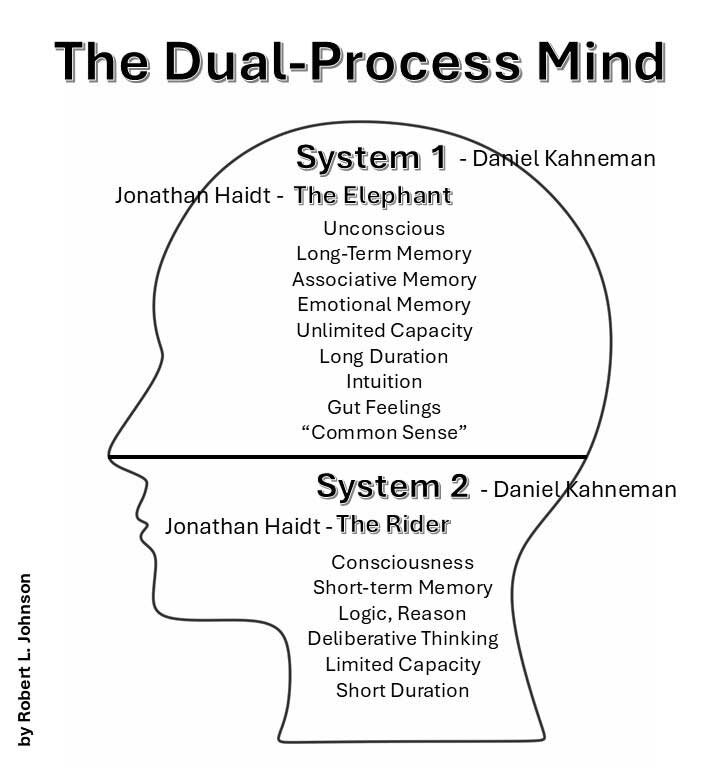
We can also view this through the lens of Nobel laureate Daniel Kahneman's work on dual-process theory. Our immediate, emotional reaction to criticism or misunderstanding is a System 1 response: fast, intuitive, and automatic. It’s the brain’s reflexive attempt to manage a perceived social threat. The 'Let Them' principle is a System 2 intervention. It is the slow, deliberate, and logical override that says, 'Wait. Is this my problem to solve? Or is this just noise I can ignore?'
This creates what can be called 'strategic peace.' It is not passive resignation. Passivity is giving up agency. Strategic peace is the deliberate decision to conserve your cognitive and emotional resources for battles you can actually win, namely those concerning your own actions and mindset.
Reducing Cognitive Overload
Our brains rely on heuristics, or mental shortcuts, to navigate complex social worlds. But these can lead to biases. We fall prey to the spotlight effect, believing we are being noticed far more than we are. We engage in confirmation bias, seeking evidence that people think badly of us. The 'Let Them' approach is a powerful heuristic in itself, one that short-circuits these draining and often inaccurate social calculations.
By detaching from the need to manage external perceptions, you drastically reduce your —the total amount of mental effort being used in your working memory. When you're not constantly running simulations of what others might be thinking, you free up immense mental bandwidth. This newfound capacity can be redirected toward problem-solving, creativity, and focusing on your own goals. You trade the impossible task of controlling others for the empowering task of controlling yourself.
The theory isn't about apathy. It's about efficiency. It's a strategic reallocation of your most finite resource: your attention.
Ready to review the core concepts we've linked together?
Let's see how well you've grasped these ideas.
What is the core principle of the 'Let Them' theory?
The 'Let Them' theory aligns with which concept from Adlerian psychology?
By integrating these psychological frameworks, 'Let Them' transforms from a simple catchphrase into a robust strategy for mental and emotional clarity.