Mastering the Kind of Blue Trumpet Solo
Introduction to Modal Jazz
Fewer Chords, More Freedom
By the late 1950s, jazz was in a fiery, complex phase called bebop. Musicians showcased their incredible skills by navigating lightning-fast tunes with a dizzying number of chord changes. Think of it like a conversation where the topic changes every few seconds. It was brilliant, but some players felt constrained by the constant need to keep up with the harmony.
A new idea began to emerge: what if the music stayed on one chord, or just a few, for a much longer time? Instead of focusing on the harmony, soloists could focus on the melody. This was the birth of modal jazz. Instead of improvising over a rapid-fire sequence of chords, musicians improvised over a single scale, or "mode," for extended periods.
Modal jazz traded harmonic complexity for melodic freedom. It slowed things down, creating a sound that was spacious, meditative, and cool.
Miles Davis Finds a New Way
Trumpeter Miles Davis was at the forefront of this shift. He had played bebop with legends like Charlie Parker, but he was searching for a simpler, more expressive way to play. He wanted to give his improvisations more breathing room.
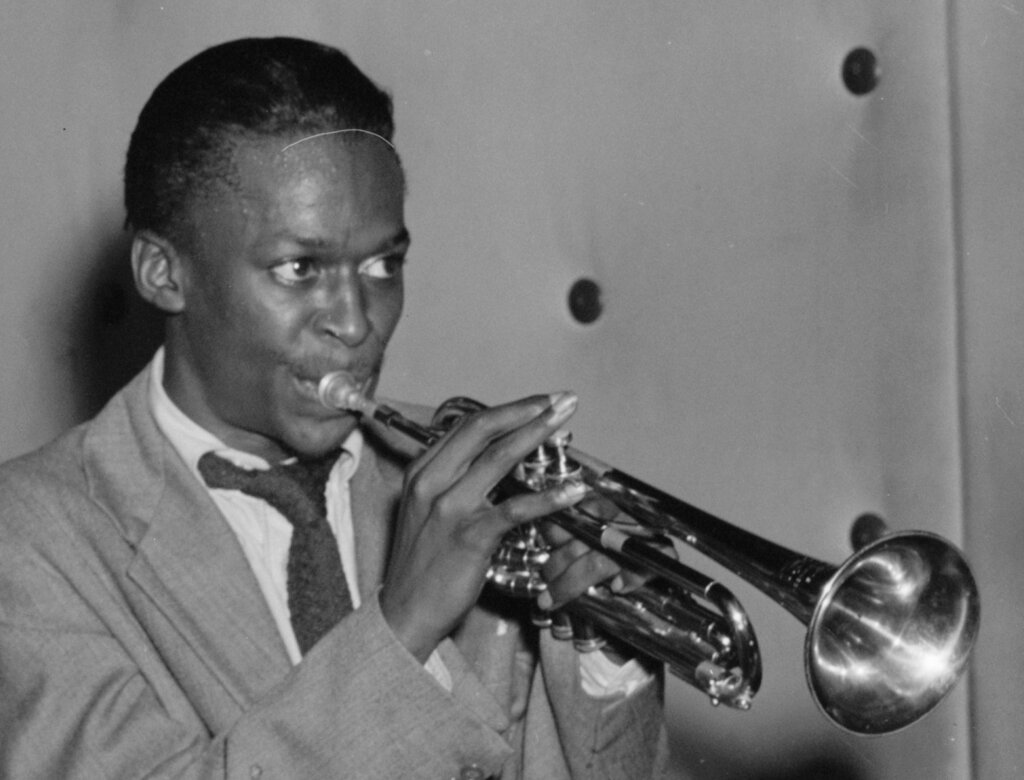
His experiments led to the 1959 album Kind of Blue, a landmark recording and one of the best-selling jazz albums of all time. The music on this album is built on modes rather than traditional chord progressions. The harmonic rhythm—the rate at which chords change—is incredibly slow. On some tunes, a single mode can last for 16 measures, giving the soloist an open canvas to explore.
Coltrane's Powerful Explorations
Saxophonist John Coltrane, who played on Kind of Blue, took the modal concept and pushed it even further. He was a relentless explorer of harmony and melody, and modal jazz gave him a new framework for his powerful improvisations.
His piece "Impressions" is a classic example. It's built on the same simple two-mode structure as "So What" from Kind of Blue, but Coltrane's approach is more intense and fiery. He uses the modal foundation to launch into breathtaking melodic flights, showcasing the style's incredible potential for personal expression.
Jazz improvisation is essentially musical storytelling — a dialogue that occurs in real-time between the soloist, the rhythm section, and the audience.
Modal jazz didn't replace other styles, but it added a vital new color to the palette of jazz. It showed that simplicity could be just as profound as complexity, opening up new paths for musicians to tell their stories.