Mastering the Jhanas and Deep Absorption
First Jhana Mechanics
From Breath to Bliss
You've been watching the breath, letting the mind settle. The initial storm of thoughts has quieted into a gentle stream. Now, something new can happen. This is the doorway from simple mindfulness into a state of deep absorption, known as in the Pāli language.
The first step involves intentionally directing and sustaining your attention. This isn't about forcing focus, but gently guiding it. In classical terms, these are vitakka (placing the mind) and vicāra (keeping it there). Think of it like placing a feather on a specific spot. Vitakka is the initial act of placing it down. Vicāra is the delicate, continuous effort required to keep it from blowing away.
You start by placing your mind on the breath. As you sustain that attention, the breath becomes more refined. The mind, no longer pulled away by distractions, starts to unify. This stability is the necessary foundation for what comes next.
So too, quite secluded from sensual pleasures, secluded from unwholesome states, a bhikkhu enters upon and abides in the first jhāna, which is accompanied by applied and sustained thought, with rapture and pleasure born of seclusion.
Rapture and Joy
As your concentration deepens, a pleasant feeling will likely arise somewhere in your body. It might be a warmth in your hands, a tingling at the crown of your head, or a gentle vibration in your chest. This is the beginning of pīti, often translated as rapture or zest. It's a purely physical energy, a sign that the mind is becoming collected and purified.
Your task now is to shift your attention. Let go of the breath as your primary focus and turn your awareness fully onto this pleasant sensation. This is a key transition. You are moving from a neutral object (the breath) to a pleasurable one. As you place your attention (vitakka) on the pīti and sustain it (vicāra), the sensation will grow and intensify. It might spread through your whole body, feeling like gentle waves or even strong electrical currents.
Following the physical energy of pīti comes the mental feeling of sukha, or joy. While pīti is energetic and exciting, sukha is a state of calm, blissful happiness. It’s the mind's contented response to the pleasantness of pīti. The two arise together, feeding each other. This loop is the engine of the first Jhāna.
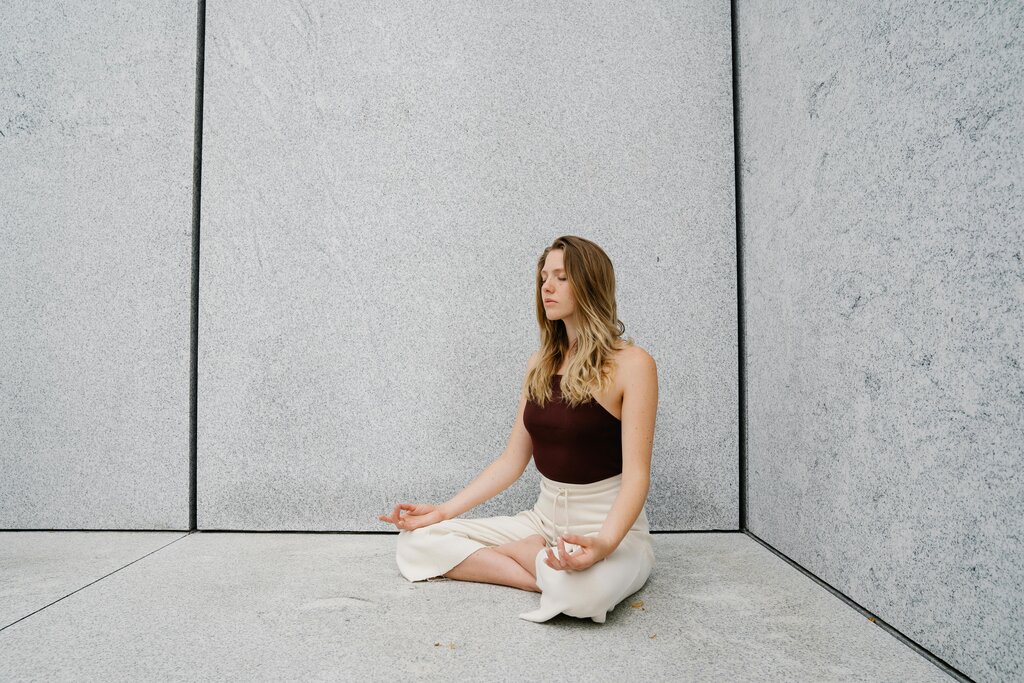
The mind, now absorbed in this feedback loop of pleasure, naturally becomes one-pointed. This state is called ekaggatā. All other sensory input—sounds, other bodily sensations, stray thoughts—fades into the background. The mind is unified, wholly consumed by the experience of pīti and sukha. This is the state of the first Jhāna. It's characterized by these three factors, along with the initial application of thought (vitakka) and its sustaining (vicāra).
The Role of the Nimitta
As concentration deepens on the path to Jhāna, some practitioners report the arising of a nimitta, or mental sign. This often appears as a light in the mind's eye, like a star, a cloud of smoke, or a bright orb. The nature of this sign can be a point of divergence between different meditative traditions.
One approach, heavily influenced by the text, treats the nimitta as the primary object for absorption. In this style, once the nimitta becomes stable, the meditator drops the breath and focuses exclusively on the light, using it as the gateway to Jhāna. Here, vitakka and vicāra are applied to holding the mind on this visual object.
However, other traditions, often called "sutta-style," place less emphasis on a visual nimitta. For them, the primary object for the first Jhāna is the pleasant sensation of pīti itself. The goal isn't to stabilize a light, but to suffuse the entire body with rapture and joy. In this view, a nimitta might arise, but it's considered a side effect of concentration, not the main event. Both paths use the same underlying factors, but they choose different objects to anchor the mind as it transitions into full absorption.
Understanding these mechanics is key. It transforms meditation from a passive act of watching into an active, skillful process. You learn to recognize the arising of pleasant feelings, shift your attention skillfully, and nurture them until the mind unifies into a state of profound peace and stability.