Mastering the Industry Academia Narrative for Magazines
Modern Collaboration Ecosystems
The University as an Engine Room
The traditional view of a university is often one of an isolated institution, a generator of knowledge that occasionally tosses a patent or a research paper over its walls to the commercial world. This model, characteristic of the Third Generation University, centred on 'valorisation'—essentially, cashing in on its intellectual property. But this picture is outdated.
Enter the Fourth Generation University (4GU). This model redefines the university's role. It is no longer just a participant in the economy; it is a central, proactive driver of its regional innovation ecosystem. The focus shifts from simply commercialising research to fostering a dynamic, interconnected environment where knowledge flows freely in multiple directions, creating broad societal and economic impact.
This multidirectional flow is the lifeblood of a modern innovation ecosystem. Industry doesn't just wait for a finished product; it brings complex, real-world challenges directly to campus labs. Academics, in turn, provide not just potential solutions but also a pipeline of skilled talent ready to tackle these problems. This creates a self-reinforcing cycle: the university's research becomes more relevant, its students gain practical experience, and local industry gains a significant competitive edge.
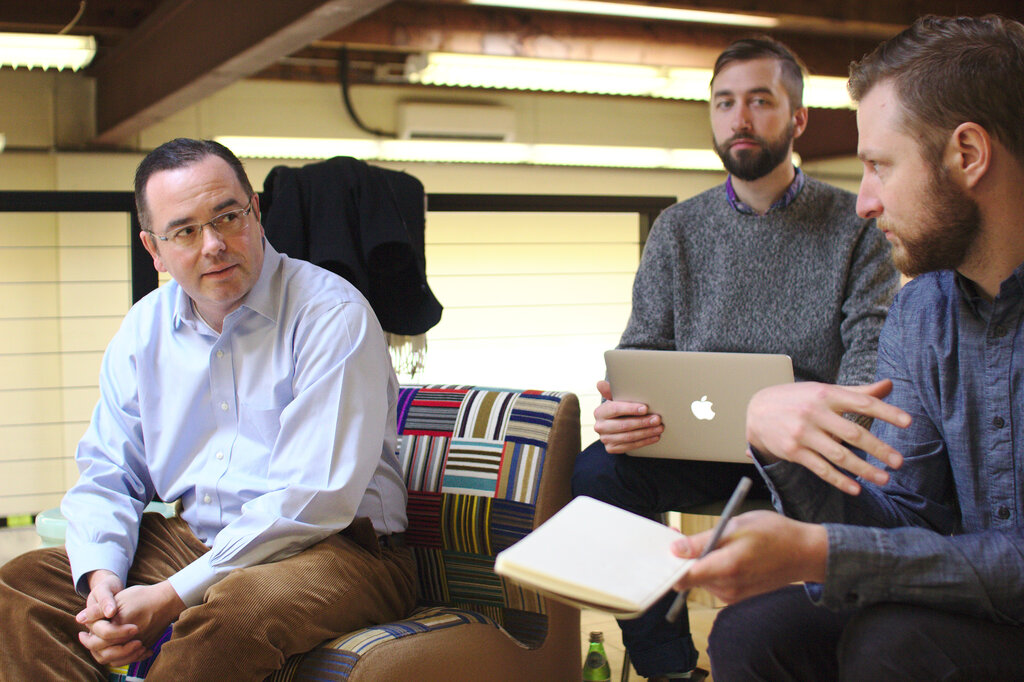
Cross-disciplinary collaboration fosters innovation and helps students develop holistic perspectives on real-world problems.
Open Innovation in Practice
The mechanism that enables this free flow of ideas is known as Open Innovation. It's a simple but powerful principle: not all the smart people work for you. Companies embracing this model actively seek external knowledge and expertise to solve their internal challenges and develop new products.
Think of a company like Coca-Cola needing to develop a more sustainable form of packaging. Instead of relying solely on its in-house R&D team, it might partner with a university's material science department, which has been researching advanced biopolymers for years. This creates a 'win-win' scenario perfect for a compelling business story. The company gets a cutting-edge solution, and the university gets to apply its research to a tangible, high-impact problem, often securing funding and creating opportunities for its researchers and students.
Similarly, a chemical giant like BASF might 'in-source' academic talent by funding a research group to explore a new catalytic process. The firm gains access to specialised knowledge without the overhead of building a new internal team from scratch. The university benefits from industry funding and a direct line of sight into market needs, which helps shape its research agenda to be more impactful.
This synergy is what defines a successful 4GU ecosystem. It's not just about transactions; it's about building relationships and shared infrastructure—physical and intellectual—that benefits the entire region.
Measuring What Matters
How do we know if this model is working? The metrics for a 4GU's success go beyond patents filed or licensing revenue. Assessment frameworks now focus on broader regional impacts.
We look at indicators like the number of start-ups spun out of university research, the growth of local knowledge-based employment, and the degree of cross-sector collaboration on regional challenges, from public health to sustainable urban planning. These metrics paint a fuller picture of a university's value, showing its evolution from a producer of knowledge to a co-creator of a thriving, resilient community.
What is the primary difference in the role of a university between the Third Generation (3GU) and Fourth Generation (4GU) models?
According to the text, the principle that 'not all the smart people work for you' is the foundation of which concept?
As a writer, understanding these frameworks allows you to move past simple partnership announcements and tell a deeper, more compelling story about how innovation really happens today.