Mastering the Indian Constitutional Framework
Fundamental Rights Nuance
The State and Your Rights
Fundamental Rights in the Indian Constitution are primarily a check on state power. But what exactly counts as 'the State'? Article 12 provides a starting point. It defines the 'State' to include the Central government and Parliament, the State governments and legislatures, and all local or other authorities within India or under the control of the Indian government.
This definition is crucial because it sets the boundaries for who can be held accountable for violating your fundamental rights. Initially, the term 'other authorities' was interpreted narrowly. Over time, however, the judiciary has significantly widened its scope. Courts have ruled that the 'State' can include bodies that aren't traditionally governmental, as long as they perform public functions or are heavily controlled by the government. This means entities like public sector undertakings, universities, and even some private bodies acting as an arm of the government can be considered 'State' under Article 12. This ensures that as the government's role in society expands, so does the protection of fundamental rights.
When Laws Clash with Rights
Article 13 acts as the constitutional safeguard for Fundamental Rights. It declares that any law, whether made before or after the Constitution, that is inconsistent with Part III (Fundamental Rights) is void to the extent of that inconsistency. This principle of judicial review gives the courts the power to strike down laws that infringe upon these essential rights. To apply this, the judiciary uses two key principles: the Doctrine of Severability and the Doctrine of Eclipse.
The Doctrine of Severability is straightforward: if an offending part of a law can be separated from the rest without destroying the law's overall objective, only that part is struck down. The rest of the law remains in force. Think of it like removing a single rotten piece from a basket of fruit.
The Doctrine of Eclipse applies to laws that existed before the Constitution came into effect. If such a law conflicts with a Fundamental Right, it isn't completely wiped out. Instead, it becomes dormant or overshadowed—eclipsed—by the Fundamental Right. It remains on the statute books and can even apply to cases that arose before the Constitution. If the Fundamental Right is later amended in a way that removes the conflict, the law can become fully operative again.
The Golden Triangle
At the heart of India's Fundamental Rights are Articles 14, 19, and 21. Article 14 guarantees equality before the law. Article 19 protects key freedoms like speech and expression. Article 21 ensures the right to life and personal liberty. For a long time, the Supreme Court viewed these rights as separate and distinct. A law affecting personal liberty under Article 21, for example, didn't necessarily have to meet the standards of fairness under Article 14.
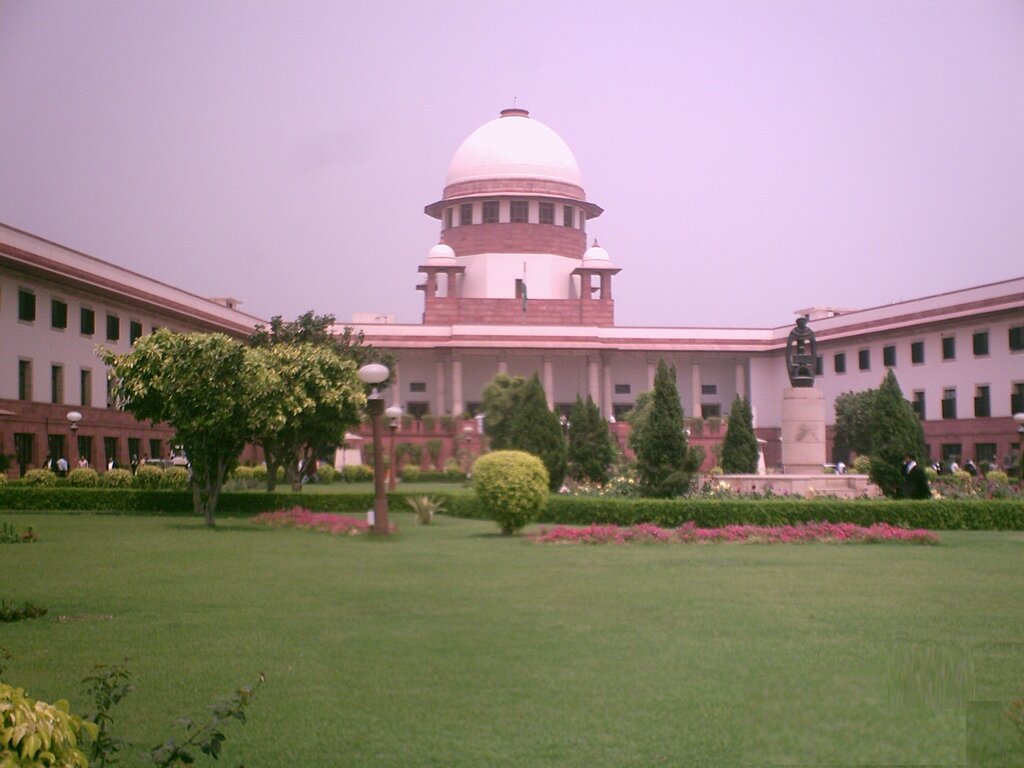
This compartmentalised view was established in the early case of A.K. Gopalan v. State of Madras. The court held that 'procedure established by law' in Article 21 simply meant a procedure prescribed by any validly enacted law, regardless of whether that procedure was fair, just, or reasonable. This formalistic approach created silos, limiting the protective scope of these rights.
Everything changed with the landmark 1978 judgment in . The Supreme Court dismantled the silo approach, ruling that Articles 14, 19, and 21 are not mutually exclusive. They form a 'golden triangle,' and any law that affects life or personal liberty must satisfy the tests of all three articles. A procedure under Article 21 cannot be arbitrary or fanciful; it must be right, just, and fair, thereby satisfying Article 14. It must also comply with the freedoms guaranteed by Article 19.
This shift meant that 'procedure established by law' now has the same effect as the American concept of 'due process of law'. Any law that restricts personal liberty must be reasonable, both in its substance and in its procedure.
| Aspect | A.K. Gopalan (1950) | Maneka Gandhi (1978) |
|---|---|---|
| Interpretation of Article 21 | Narrow and literal. 'Procedure established by law' means any procedure enacted by a legislature. | Broad and liberal. The procedure must be 'fair, just, and reasonable'. |
| Relationship of Articles 14, 19, 21 | Viewed as separate silos. A law passed under Article 21 didn't need to meet Article 14's test of reasonableness. | Interlinked. A law must satisfy the requirements of all three articles. Known as the 'Golden Triangle'. |
| Judicial Scrutiny | Limited. Courts would only check if a law and procedure existed, not if it was fair. | Expansive. Courts can review the law for fairness, reasonableness, and non-arbitrariness. |
| Effect | Established a formalistic approach, prioritising legislative power. | Established substantive due process, prioritising individual liberty and justice. |
The Maneka Gandhi judgment is a cornerstone of Indian constitutional law. It transformed Article 21 from a mere guarantee against arbitrary executive action into a robust protection against unjust laws, ensuring that the state cannot take away life or liberty without following a procedure that is fair and equitable.
Under Article 12 of the Indian Constitution, the definition of 'the State' has been expanded by the judiciary over time. Which of the following would most likely be considered 'the State' based on this expanded interpretation?
A law passed in 1935 is found to be inconsistent with a Fundamental Right established in the Constitution of 1950. According to the Doctrine of Eclipse, what happens to this law?