Mastering the Human Side of Tech Leadership
Emotional Intelligence Essentials
The Four Pillars of EQ
Technical skill gets you in the door, but emotional intelligence (EQ) helps you lead the team. It’s the ability to understand and manage your own emotions, and to recognize and influence the emotions of those around you. This skill isn't just a nice-to-have; it's a critical component of effective leadership, especially in high-pressure technical environments.
Daniel Goleman, a pioneer in the field, broke EQ down into four core competencies. Think of them as building blocks. The first two are about you, and the last two are about how you interact with others.
- Self-awareness: Understanding your own emotions, strengths, and weaknesses.
- Self-management: Controlling your emotional responses and adapting to changing situations.
- Social awareness: Recognizing and understanding the emotions and dynamics of other people.
- Relationship management: Using your awareness of your own emotions and those of others to manage interactions successfully.
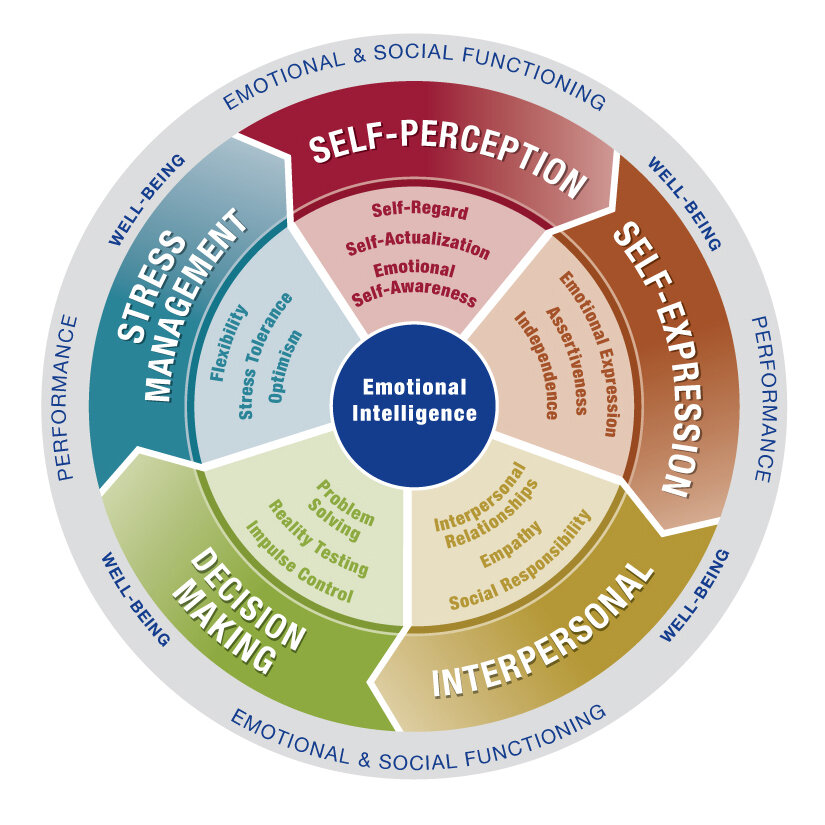
Mastering the first two pillars is the foundation. You can't effectively manage relationships with others until you can understand and manage yourself.
Self-Awareness and Triggers
Self-awareness is the starting point. It's the honest assessment of your own emotional state and how it impacts your thoughts and behavior. In an engineering context, this means knowing your triggers—the specific events or situations that provoke a strong emotional response.
Consider a stressful code deployment. The system starts throwing errors, and the pressure mounts. How do you react? Do you become short-tempered with your team? Do you withdraw and try to solve it all yourself? Recognizing your default reaction is the first step toward managing it. A trigger could be anything: a looming deadline, vague project requirements, or a critical comment during a code review.
Identifying your triggers isn't about avoiding them. It's about preparing yourself to handle them constructively when they inevitably appear.
Once you know your triggers, you can practice self-management. This leads to emotional agility, the ability to experience your thoughts and feelings without letting them dictate your actions. Instead of reacting impulsively when a junior developer pushes buggy code, you can pause, analyze the situation, and respond in a way that is both productive and supportive.
Emotional Agility
noun
A process that enables individuals to navigate life's twists and turns with self-acceptance, clear-sightedness, and an open mind. It's about choosing how you respond to your emotional and mental state.
Understanding Others
Social awareness is about turning your focus outward. It involves empathy—the ability to understand someone else's perspective and feel what they are feeling. It's also about reading the room and understanding the political and social dynamics of your organization.
A common pitfall in technical communication is jumping to conclusions. We see a result and immediately form a story about how it happened. This is where the 'Ladder of Inference' comes in. It's a model that describes the thinking process we go through, often without realizing it, to get from a fact to a decision or action.
Imagine a team member misses a deadline. The observable fact is 'the work is not complete'. Climbing the ladder, you might select that fact, interpret it as irresponsibility, assume they don't care, conclude they are a poor performer, and act by excluding them from future critical tasks. By consciously working through the ladder, you can question your assumptions and instead choose to have a conversation to understand the real situation.
Managing Relationships
Relationship management is where the other three pillars come together. It's about using your self-awareness, self-management, and social awareness to inspire, influence, and develop others. This is the essence of leadership.
In an engineering team, this means giving clear and constructive feedback, navigating disagreements during design discussions, and building a network of allies to get projects approved and unblocked. It's about understanding the motivations of your team members and aligning their work with their strengths and career goals. Effective relationship management builds trust, which is the currency of a high-performing team.
Emotional intelligence (EQ) helps leaders manage their own emotions and navigate social complexities.
By developing your EQ, you build the social skill needed to navigate organizational politics, build strong decision networks, and ultimately, lead your team to not just deliver code, but to innovate and thrive.
Let's check your understanding of these core concepts.
According to Daniel Goleman's model of emotional intelligence, which two competencies must be developed first as a foundation for the others?
An engineer notices a junior developer has missed a deadline. Instead of immediately assuming the developer is irresponsible, the engineer pauses to consider other possibilities and decides to have a conversation to understand the situation. This is a direct application of which concept?
Developing emotional intelligence is a continuous practice, not a destination. By focusing on these areas, you can transition from a great engineer to an influential leader.