Mastering the Human Mind
Neural Plasticity Foundations
The Brain That Changes Itself
Your brain isn't a static organ, hardwired from birth. It's a dynamic, living network that constantly adapts and reorganizes itself in response to your experiences. This remarkable ability is called neural plasticity. It's the biological basis for learning, memory, and recovery from injury.
Think of it as a physical manifestation of the "use it or lose it" principle. Neural pathways that are frequently used become stronger and more efficient, while those that lie dormant weaken and can eventually disappear. This process occurs at multiple levels, from the tiny connections between individual neurons to large-scale brain networks.
The brain’s neuroplasticity allows it to form new neural pathways in response to repeated behaviors, thoughts, or experiences.
Forms of Plasticity
Neural plasticity isn't a single process. It's an umbrella term for several types of changes in the nervous system. The most fundamental of these is synaptic plasticity.
This refers to changes in the strength of synapses, the junctions where neurons communicate. The core principle governing this is Hebbian theory, famously summarized as "neurons that fire together, wire together." When one neuron repeatedly helps to fire another, the connection between them strengthens. This is the cellular basis for forming associations and memories.
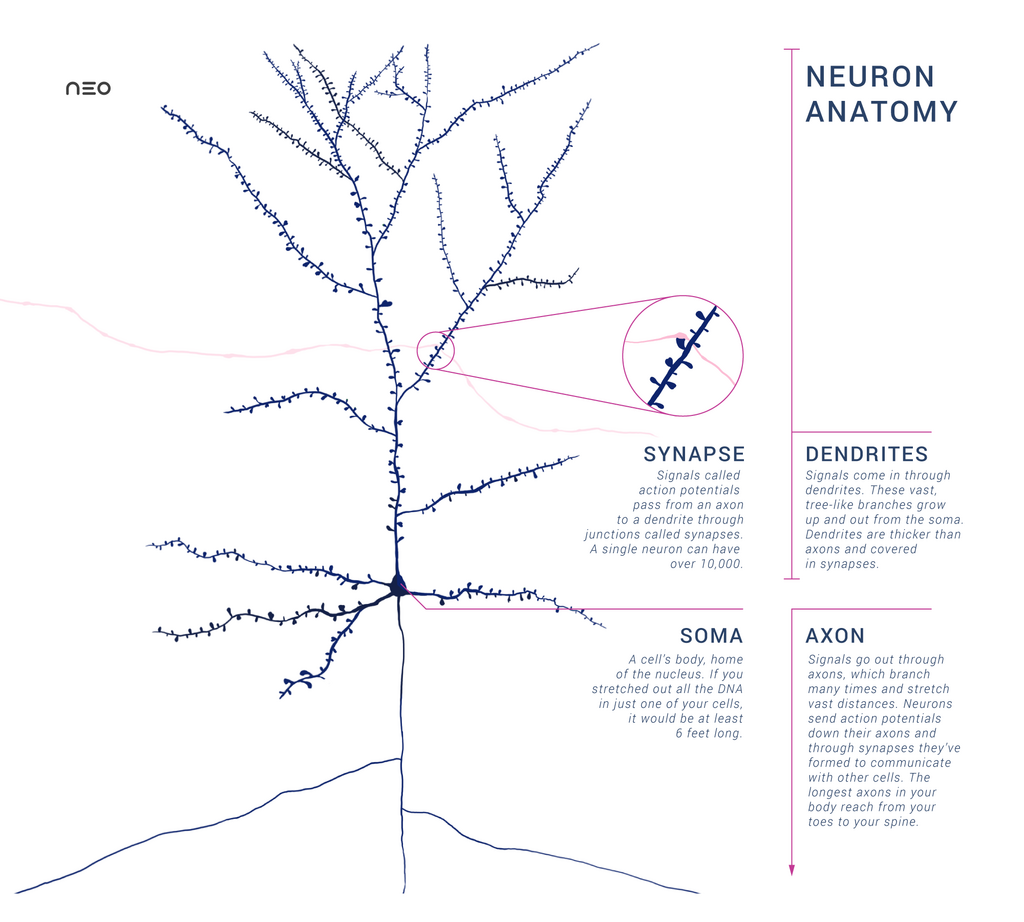
On a larger scale, the brain also exhibits structural and functional plasticity. Structural plasticity involves physical changes to the brain's structure, like growing new dendritic spines (the receivers of synaptic input) or even generating new neurons. Functional plasticity is the brain's ability to shift functions from a damaged area to an undamaged one, a process often seen during recovery from a stroke.
Strengthening and Weakening Connections
Hebbian theory plays out through two key molecular mechanisms: Long-Term Potentiation (LTP) and Long-Term Depression (LTD).
Long-Term Potentiation (LTP) is a persistent strengthening of synapses based on recent patterns of activity. When pre- and postsynaptic neurons are activated at the same time, a series of chemical changes makes the postsynaptic neuron more responsive to the presynaptic one. This makes their connection more efficient and is thought to be a primary mechanism for storing information.
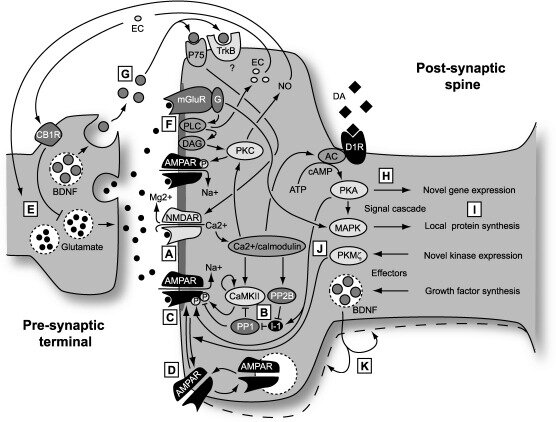
Long-Term Depression (LTD) is the opposite. It's a lasting decrease in synaptic strength that results from a lack of coordinated firing. If a neuron fires but fails to cause a response in its partner, their connection weakens. LTD is just as important as LTP; it allows for the pruning of useless connections and makes memory storage more efficient, preventing our neural circuits from becoming over-saturated.
LTP strengthens important connections, while LTD clears away the noise. Both are essential for learning and memory.
Experience Shapes the Brain
The brain uses plasticity to adapt to two different kinds of experiences. The distinction lies in whether the experience is universal to all members of a species or unique to an individual.
| Type | Description | Example |
|---|---|---|
| Experience-Expectant | The brain is pre-wired to expect certain types of stimulation for normal development. | A kitten's visual system expects to see light and patterns. Without this input during a critical period, vision won't develop properly. |
| Experience-Dependent | Unique individual experiences shape neural connections throughout life. | Learning to play the violin or speak a new language creates and strengthens specific neural pathways. |
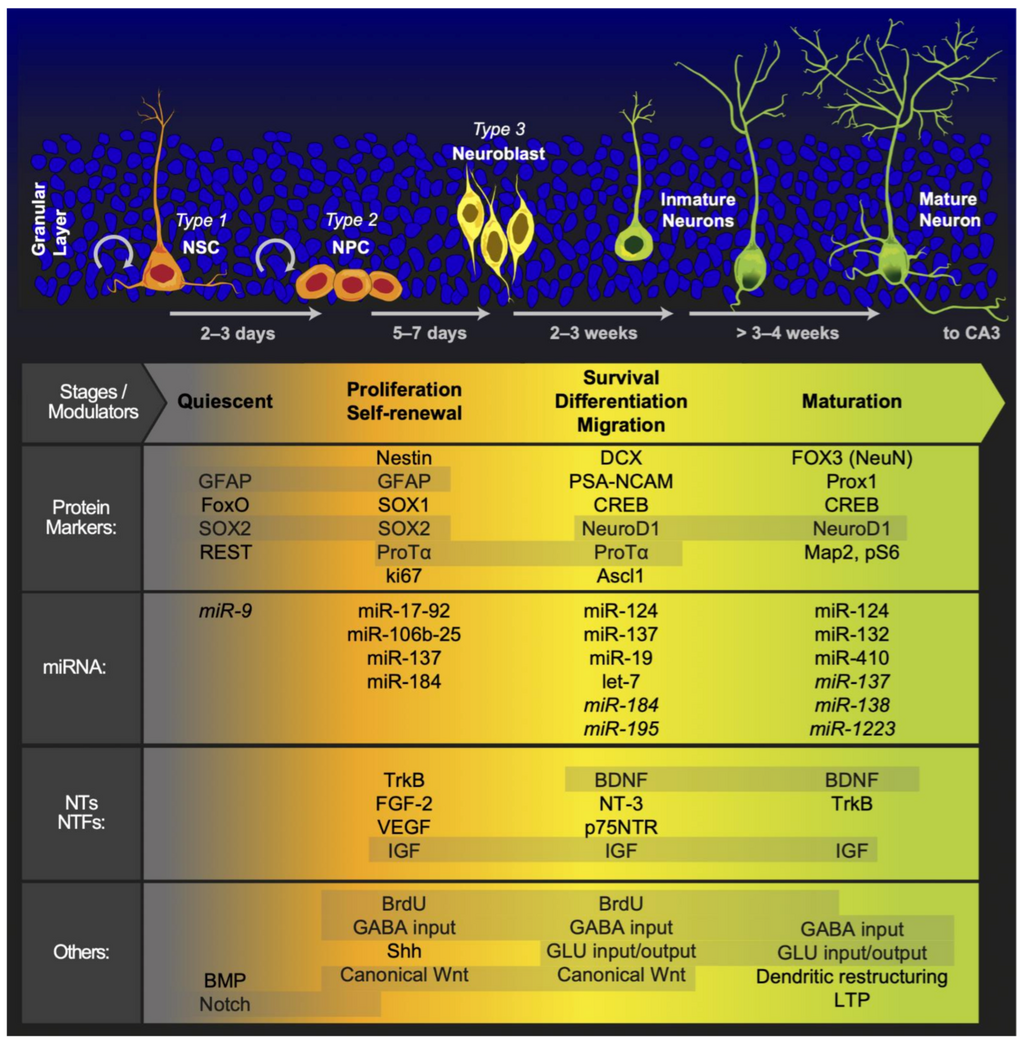
While most of our neurons are formed before birth, some parts of the brain continue to create new ones throughout life. This process is called neurogenesis.
Neurogenesis
noun
The process by which new neurons are formed in the brain.
One of the most active sites for adult neurogenesis is the hippocampus, a brain region crucial for learning and memory. These new neurons integrate into existing hippocampal circuits and are thought to help us form new memories and distinguish between similar ones. Factors like exercise and learning can boost neurogenesis, while stress can suppress it.
Time to review the key concepts from this section.
Let's test your knowledge.
What is the best definition of neural plasticity?
Which scenario is the best example of Hebbian theory's principle, "neurons that fire together, wire together"?
Neural plasticity provides the fundamental mechanism by which our brains learn from experience, form memories, and adapt to an ever-changing world. It is the biological process that allows us to be who we are.