Mastering the Home Espresso Workflow
Extraction Variable Manipulation
Dialing In Your Shot
You already know the classic 1:2 espresso ratio: put 18 grams of coffee in, get 36 grams of liquid out. It's a reliable starting point. But what if you want a richer, more intense shot? Or a lighter, more delicate one? To achieve that, we need to move beyond fixed recipes and start actively manipulating the core variables of extraction: dose, yield, and time.
Think of the 1:2 ratio as a 'normale' or normal shot. By changing the amount of water we push through the coffee, we can create different styles. A shorter, more concentrated shot is called a ristretto (Italian for 'restricted'). A longer, more diluted shot is a 'lungo' (Italian for 'long'). Each style highlights different aspects of the coffee's flavor profile.
| Style | Ratio (Dose:Yield) | Typical Flavor Profile |
|---|---|---|
| Ristretto | 1:1 to 1:1.5 | Syrupy, intense, sweet, less bitterness |
| Normale | 1:2 to 1:2.5 | Balanced, a mix of sweetness and acidity |
| Lungo | 1:3+ | Thinner body, more bitterness, tea-like |
Controlling the Dose
Your dose, the dry weight of your coffee grounds, is the foundation of your recipe. Consistency here is non-negotiable. Even a half-gram difference can change the shot's timing and taste. Use a scale that's accurate to at least a tenth of a gram.
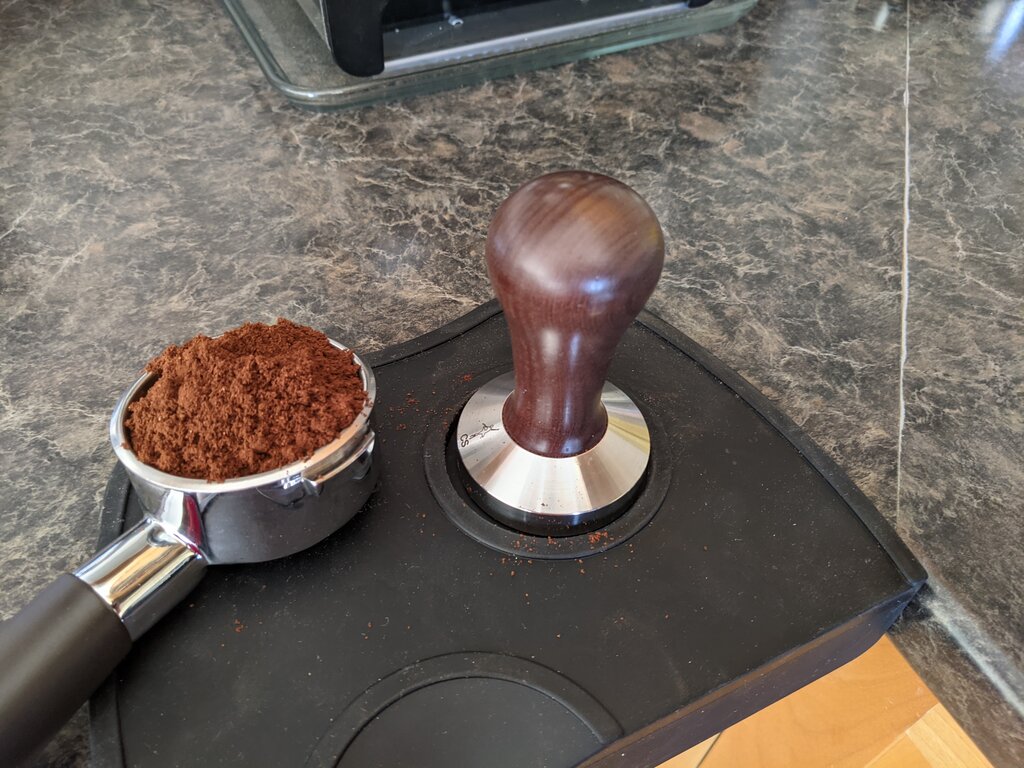
The dose you choose also affects the headspace in your portafilter. This is the small gap between the top of the tamped coffee puck and the shower screen of the espresso machine. Too little headspace can cause the puck to fracture when water enters, leading to uneven extraction. Too much, and you might get a soupy, messy puck. The right amount allows for a gentle pre-infusion and promotes even water flow.
Yield, Time, and Flow Rate
While we often talk about a shot taking "25-30 seconds," time is an outcome, not an input you directly control. The primary variables you control are dose and grind size. These create resistance for the water, which in turn determines the flow rate and the total time it takes to reach your target yield.
For consistency, it's better to target a specific yield (e.g., 36 grams) and let the time fall where it may. Then, if the time is too fast or slow, you adjust your grind size. A faster flow (shorter time) generally leads to a sour, under-extracted shot. A slower flow (longer time) often results in a bitter, over-extracted shot.
For practical tuning, start with grind: finer increases soluble extraction and bitterness; coarser lowers extraction and emphasises acidity and clarity.
Let's walk through an example. You're aiming for an 18g dose and a 36g yield. You pull the shot, and it hits 36g in just 15 seconds. The taste is incredibly sour. What do you do?
The quick time tells you the water flowed through the coffee too easily. To increase resistance and slow the flow, you need to make your grind finer. Don't change the dose or yield. Just adjust the grinder one step finer and pull the shot again. This time, it might take 28 seconds to reach 36g, resulting in a much more balanced and sweet flavor.
Conversely, if your shot took 45 seconds and tasted bitter, you'd make the grind coarser to allow the water to flow more freely. This systematic approach, changing only one variable at a time, is the key to mastering espresso. You're not just following a recipe; you're actively steering the extraction to produce the exact flavor profile you want.
Time to test your knowledge on manipulating espresso variables.
What is a 'ristretto' shot of espresso?
You pull an 18g shot that produces 36g of espresso in only 18 seconds, and it tastes unpleasantly sour. What is the single best adjustment to make for the next shot?
By methodically adjusting dose, yield, and grind size, you gain precise control over your espresso. Every coffee is different, but this framework allows you to find the sweet spot for any bean.