Mastering The Hero's Journey for Storytelling
Introduction to The Hero's Journey
The Universal Story
Have you ever noticed how many stories feel familiar? From ancient myths to modern blockbusters, many tales follow a similar path. A hero gets a call to adventure, faces challenges, and returns home changed. This powerful storytelling template is known as the Hero's Journey.
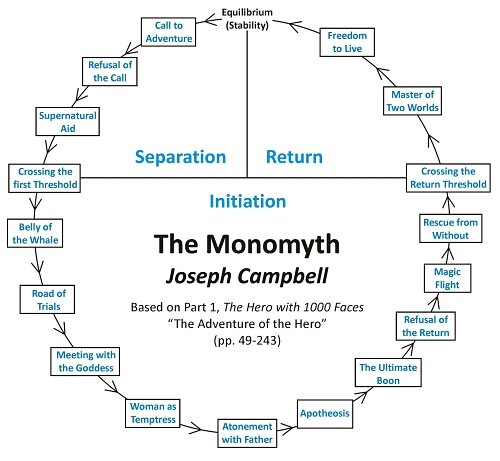
The Hero’s Journey is a pattern of narrative identified by the American scholar Joseph Campbell that appears in drama, storytelling, myth, religious ritual, and psychological development.
Scholar Joseph Campbell studied myths from all over the world and discovered this common structure. He called it the "monomyth" in his book The Hero with a Thousand Faces. The idea is that there's really only one great story, told over and over with different characters and settings. Think of Luke Skywalker leaving his desert home, Frodo taking the Ring to Mordor, or Katniss Everdeen volunteering for the Hunger Games. They all walk a similar road.
A Three-Act Structure
The Hero's Journey can be broken down into three main stages. While Campbell identified 17 specific steps, they all fit neatly into this broader framework.
| Stage | Description |
|---|---|
| 1. Departure | The hero leaves their ordinary world. This involves a call to adventure, which they might initially refuse before a mentor figure encourages them. |
| 2. Initiation | The hero ventures into an unknown world, facing a series of trials and tests. They meet allies, confront enemies, and overcome a major ordeal. |
| 3. Return | The hero comes back to their ordinary world, but they're not the same. They bring back a reward or newfound wisdom that benefits their community. |
Why It's So Powerful
The Hero's Journey isn't just a formula for writers. It resonates with us because it reflects the human experience. We all face calls to leave our comfort zones, overcome challenges, and grow from our experiences. This narrative structure taps into a deep, psychological pattern of transformation, trial, and homecoming.
By following this arc, stories create a sense of meaning and satisfaction. We see a character's complete transformation, and it feels both epic and deeply personal.
Understanding this framework gives you a new lens for analyzing stories. You start to see the hidden architecture behind your favorite books and movies, and it provides a powerful tool for crafting your own compelling narratives.