Mastering The Hero's Journey for Storytelling
Introduction to The Hero's Journey
What Is the Hero's Journey?
Have you ever noticed how many stories feel strangely familiar? From ancient myths to modern blockbusters, countless tales follow a similar blueprint: a hero leaves their ordinary life, faces great trials, and returns home transformed. This recurring pattern is known as the Hero's Journey.
A better framework for storytelling is “The Hero’s Journey.” Introduced in 1949 by Joseph Campbell, the hero’s journey (also known as a monomyth) is a narrative found in classic literature, pop culture, and even religious texts.
The scholar Joseph Campbell didn't invent this structure. He identified it. In his influential book, The Hero with a Thousand Faces, Campbell studied myths from all over the world. He discovered that underneath the unique cultural details, the same basic story was being told again and again. He called this universal template the "monomyth."
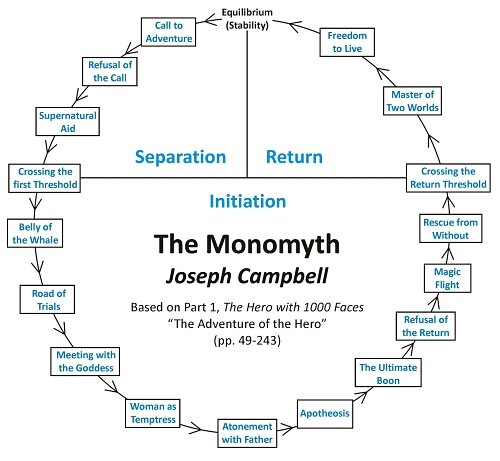
Campbell's full model is detailed, but the core idea is simple. The journey can be boiled down to three essential acts:
- Separation: The hero leaves their familiar world behind.
- Initiation: The hero navigates a strange, new world, facing a series of trials.
- Return: The hero comes back to their old world, but with new wisdom or power.
A Story We All Know
Why is this pattern so powerful and persistent? Because it mirrors the human experience. It’s a story of growth, challenge, and transformation that resonates with our own lives. We may not fight dragons, but we do face our own fears, overcome obstacles, and hopefully, become better versions of ourselves.
Once you know the pattern, you see it everywhere. Luke Skywalker leaving his desert home, Neo choosing the red pill, Harry Potter receiving his letter from Hogwarts, and Frodo Baggins taking the Ring to Mordor are all classic examples of the Hero's Journey in modern storytelling.
The Hero's Journey resonates because it reflects our own struggles and potential for growth. We are all the heroes of our own stories.
This framework provides a reliable structure for a compelling and satisfying narrative. It gives the audience a sense of progression and purpose, making the hero's eventual triumph feel earned and meaningful. It’s a versatile tool used not just in fantasy and adventure, but in dramas, comedies, and even marketing to create a connection with the audience.
Understanding this fundamental structure is the first step to recognizing the deeper patterns in the stories we love and learning how to craft more powerful narratives yourself.