Mastering the Handstand
Handstand Fundamentals
The Handstand Blueprint
A handstand isn't about raw strength. It's a skill of balance and alignment. Think of your body as a tower of blocks. If the blocks are stacked perfectly, one on top of the other, the tower is stable. If they're offset, it will fall. The same principle applies to holding your body upside down.
The fundamental position of balance in handstand is stacking the hips over the shoulders over the wrists.
Your goal is to create a straight line from your hands to your feet. Spread your fingers wide for a solid base, and keep your arms locked straight at the elbows. Your head should be in a neutral position, with your gaze falling somewhere between your hands. Avoid looking forward, as this can arch your back and throw you off balance.
Your Core is Your Anchor
Proper alignment is impossible without an engaged core. Your core muscles—the abs, obliques, and lower back—are what hold your body together in that straight line. A weak or disengaged core is the primary cause of the dreaded "banana back," where your back arches and your legs fall behind you.
To engage your core, imagine pulling your belly button in toward your spine. At the same time, slightly tuck your pelvis under, as if you're trying to flatten your lower back. This action, known as a posterior pelvic tilt, straightens your spine and stabilizes your entire body.
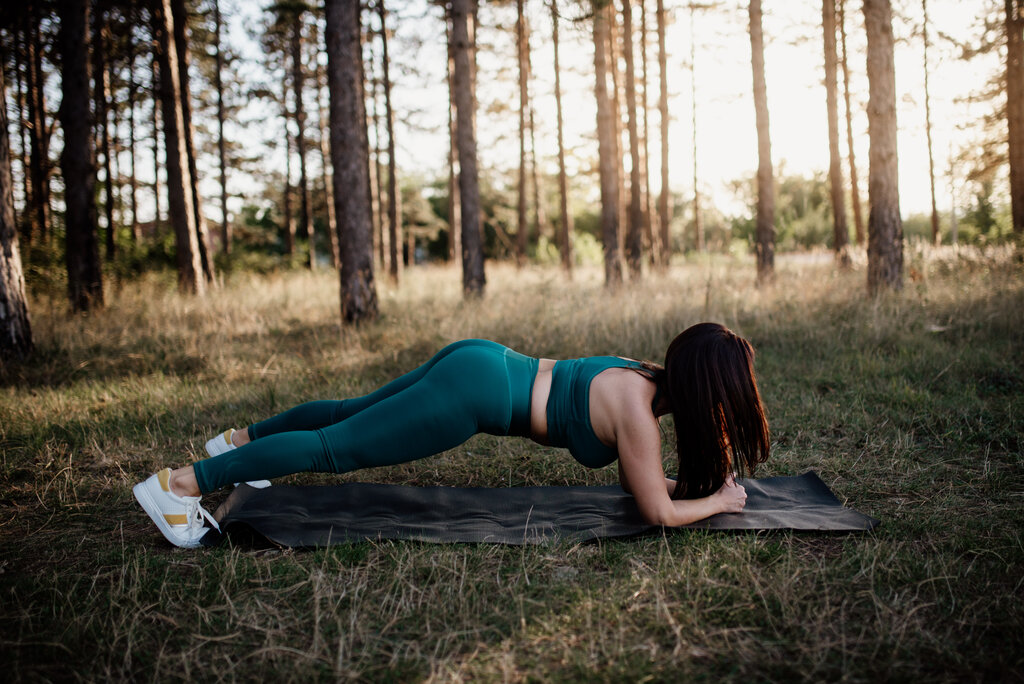
A tight core is the difference between a wobbly attempt and a solid hold. It connects your upper and lower body into a single, stable unit.
Shoulder Strength and Stability
In a handstand, your shoulders become your hips. They bear your entire body weight and are responsible for fine-tuned balance adjustments. Building both strength and stability here is non-negotiable.
Strength comes from exercises that mimic the handstand position. But it's not just about being strong. You need active shoulders. This means constantly pushing the ground away from you, creating space between your shoulders and your ears. This engagement prevents your shoulders from collapsing and protects the joints from injury.
Keeping your shoulders active throughout the handstand will prevent you from collapsing, which is one of the main reasons for failed attempts.
Exercises like pike push-ups, wall walks, and hollow body holds are fantastic for building the specific strength needed. They train your body to support itself while inverted and teach you how to maintain that active shoulder position.
The Mental Game
Being upside down can be scary. Your brain isn't used to it, and the fear of falling is completely natural. The key is to approach this fear logically and build confidence through safe practice.
Start by getting comfortable with being inverted near a wall. A wall provides a safety net, allowing you to focus on alignment and strength without worrying about crashing down. Learn how to fall safely, too. The easiest way is to cartwheel out. If you feel yourself losing balance to one side, simply bend one arm, let your feet come down to the side, and land like you're finishing a cartwheel.
Falling is part of handstands. Once you’re not scared of falling, progress skyrockets.
With a solid grasp of alignment, core engagement, and shoulder stability, you have the foundation to build a confident handstand. Remember that consistency is more important than intensity. A little practice each day will build the strength and body awareness you need.
What is the primary cause of the "banana back" posture in a handstand?
What does it mean to have "active shoulders" in a handstand?