Mastering the Handpan
Handpan Basics
The Handpan’s Voice
The handpan is a relatively new instrument, but its sound feels ancient. It produces resonant, meditative tones that can be both percussive and melodic. Each strike creates a rich, layered sound that hangs in the air.
Its story begins in Bern, Switzerland, around the year 2000. Two inventors, Felix Rohner and Sabina Schärer, created an instrument called the Hang. They were inspired by the steelpans of Trinidad and other percussive instruments from around the world. The Hang was not sold in stores; you had to write a letter to its creators to be considered for one. Its scarcity and unique sound created a mystique. Over time, other makers began creating similar instruments, and the term "handpan" emerged to describe this growing family of sound sculptures.

Anatomy of a Sound Sculpture
A handpan is made of two convex steel shells glued together. It looks a bit like a UFO. The top shell contains the notes, while the bottom shell has a sound hole. Let's break down the main parts.
The central note, called the Ding, is the lowest note and often serves as the bass or root of the scale. The notes arranged in a circle around it are the tone fields. Each tone field is carefully hammered to produce a specific pitch. The hole on the bottom is the Gu, which acts as a resonant chamber, similar to the sound hole on a guitar.
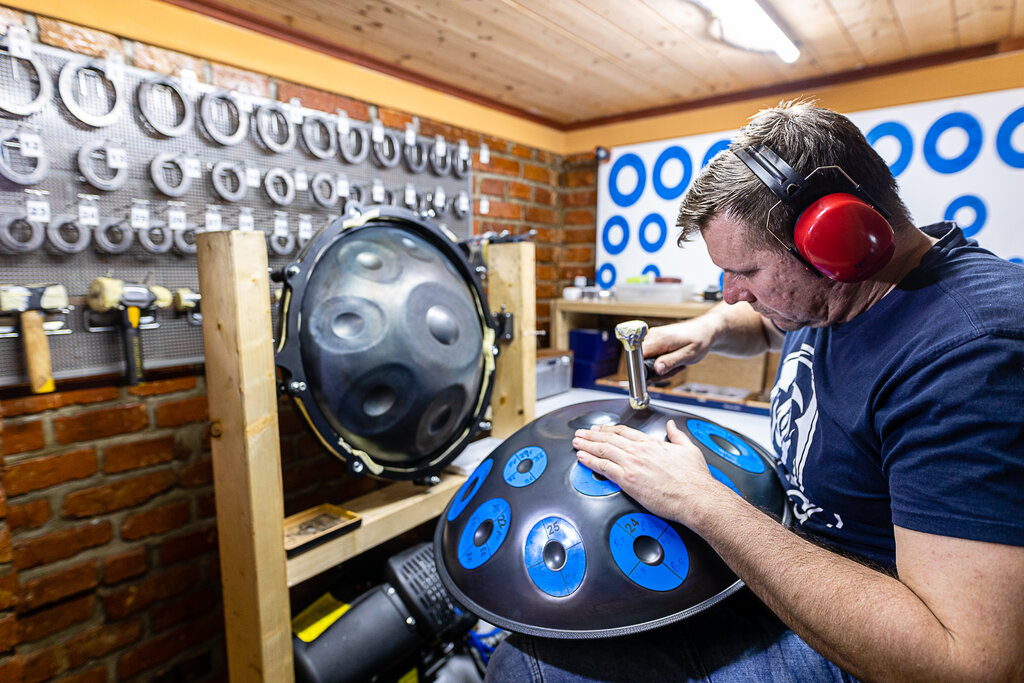
Creating a handpan is a painstaking process of shaping and tuning. A builder uses hammers to carefully sculpt each note, heating and cooling the metal to stabilize the pitch. It's as much an art as it is a science.
Finding Your Position
Your posture is the foundation of good playing. Sit comfortably in a chair without arms, with your feet flat on the floor. Place the handpan on your lap, with the lowest note, the Ding, facing away from you. The instrument should feel stable and balanced.
Your hands are your mallets. They should be relaxed, not stiff. Imagine you are cupping water in your hands; they should have a gentle curve. This shape allows your fingers to strike the notes cleanly.
Relaxed wrists and fingers are key. Tension kills resonance. Your goal is to let the sound ring out, and that only happens with a light, fluid touch.
Making Your First Sounds
The key to producing a good tone on the handpan is a quick, bouncing strike. You don’t want to press into the note or leave your finger on the surface. Think of touching a hot stove—a fast touch on and off. This allows the note to vibrate freely.
There are a few basic ways to strike the instrument.
| Technique | Description | Best For |
|---|---|---|
| Finger Tap | Use the firm pad at the tip of your index or middle finger. Strike the center of a tone field. | The most common strike for playing melodies. Clear and precise. |
| Thumb Strike | Use the fleshy pad of your thumb. This produces a softer, warmer tone. | Good for playing the Ding or for a gentler sound on the tone fields. |
| Palm Strike | Use the heel of your palm to strike the area between tone fields, known as the shoulder. | Creates a percussive, bass-like sound without a specific pitch. Good for rhythm. |
Start by practicing the finger tap on each tone field. Focus on getting a clean, ringing sound from every note. Experiment with the thumb strike on the Ding. Notice how the sound is different—deeper and more mellow.
Most handpans are tuned to a specific musical scale, like D minor or C major. This means all the notes on the instrument are designed to sound good together. You can't really play a "wrong" note. The notes are usually arranged in a zigzag pattern, ascending in pitch as you go from side to side.
Tap the Ding, then find the next lowest note and move up the scale. Don't worry about music theory for now. Just explore the landscape of sounds. Let your ear guide you from one note to the next and get a feel for the instrument's layout.
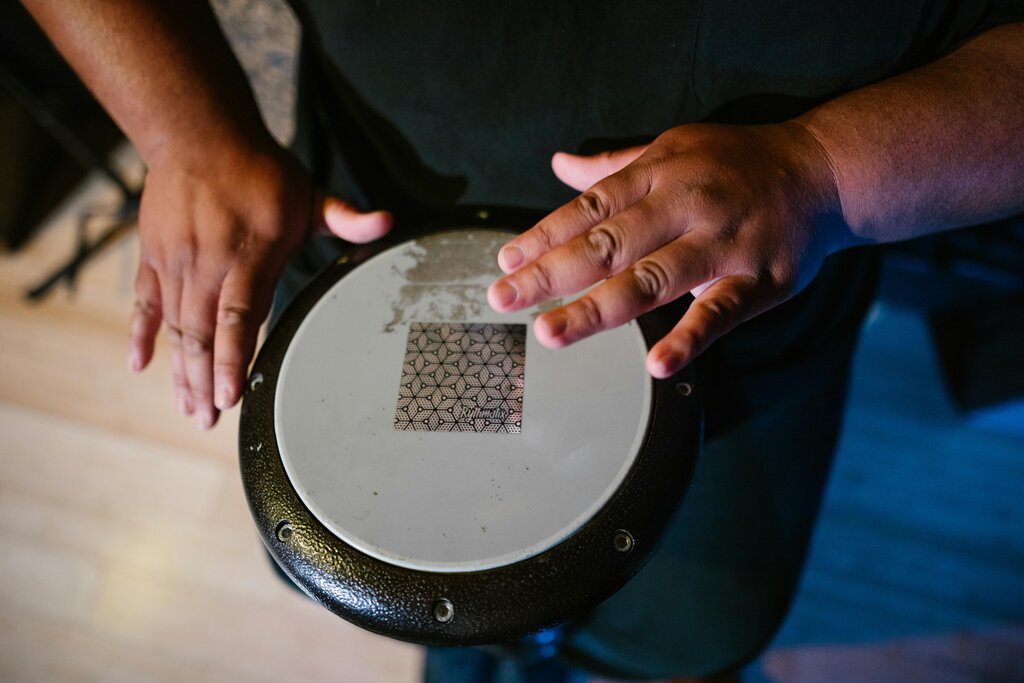
Learning proper hand positions is the first step to mastering frame drum playing.
Time to check what you've learned.
The original handpan, known as the Hang, was created in which country?
What is the name of the central, lowest-pitched note on the top shell of a handpan?
With these basics, you have a solid foundation. The next step is simply to play, explore, and let the unique voice of the handpan inspire you.