Mastering the Habit Loop Swap
Mapping Neurological Loops
The Brain's Habit Center
You already know that habits run on a simple loop: Cue, Routine, Reward. But to truly change a behavior, you need to look under the hood. The real work happens in a deep, ancient part of your brain called the basal ganglia. Think of it as the brain's operations manager, responsible for taking conscious, effortful actions and turning them into automatic, unconscious routines.
When you first learn a new skill, like driving a car, your prefrontal cortex is working overtime, consciously processing every turn, signal, and pedal press. With repetition, the basal ganglia steps in. It encodes that sequence of actions into a single, efficient chunk of behavior. Soon, you can drive home from work without even thinking about the route. The basal ganglia isn't deciding whether to act; it's just running the program when triggered. That trigger is the cue, and the program is the routine.
Auditing Your Cues
To change a habit, you must first become a detective and identify the specific trigger. Cues almost always fall into one of five categories. The key is to isolate the consistent pattern that launches your routine. This is where a 'Habit Diary' becomes essential. For the habit you want to change, track the following five points every time it occurs:
| Category | Question to Ask Yourself |
|---|---|
| Location | Where are you when the urge hits? |
| Time | What time of day is it? |
| Emotional State | How are you feeling right before? (bored, anxious, tired) |
| Other People | Who is around you? |
| Preceding Action | What action immediately preceded the urge? |
Let’s audit a common habit: mindlessly checking your phone. For a week, every time you find yourself scrolling without a clear purpose, you pull out a notebook (or a notes app) and jot down the answers. After a few days, a pattern will emerge.
Example Habit Diary: Mindless Scrolling
Entry 1: Location: Desk. Time: 2:30 PM. Emotion: Bored, stuck on a hard problem. People: Alone. Action: Just closed a spreadsheet.
Entry 2: Location: Couch. Time: 9:00 PM. Emotion: Tired, unwinding. People: Partner in the room, but watching TV. Action: TV commercial came on.
Entry 3: Location: Waiting in line at the store. Time: 11:15 AM. Emotion: Impatient. People: Strangers. Action: Staring into space.
In this example, the consistent trigger isn’t the time or location, but the emotional state: feeling under-stimulated or bored. That’s the cue you need to target.
The Chemistry of Craving
The reward is what locks the habit loop in place. It's the neurological payoff that tells your brain, "Hey, remember what you just did? Do it again next time." This process is driven by a neurotransmitter you've likely heard of: . When you experience a reward, your brain releases dopamine, creating a feeling of pleasure or satisfaction.
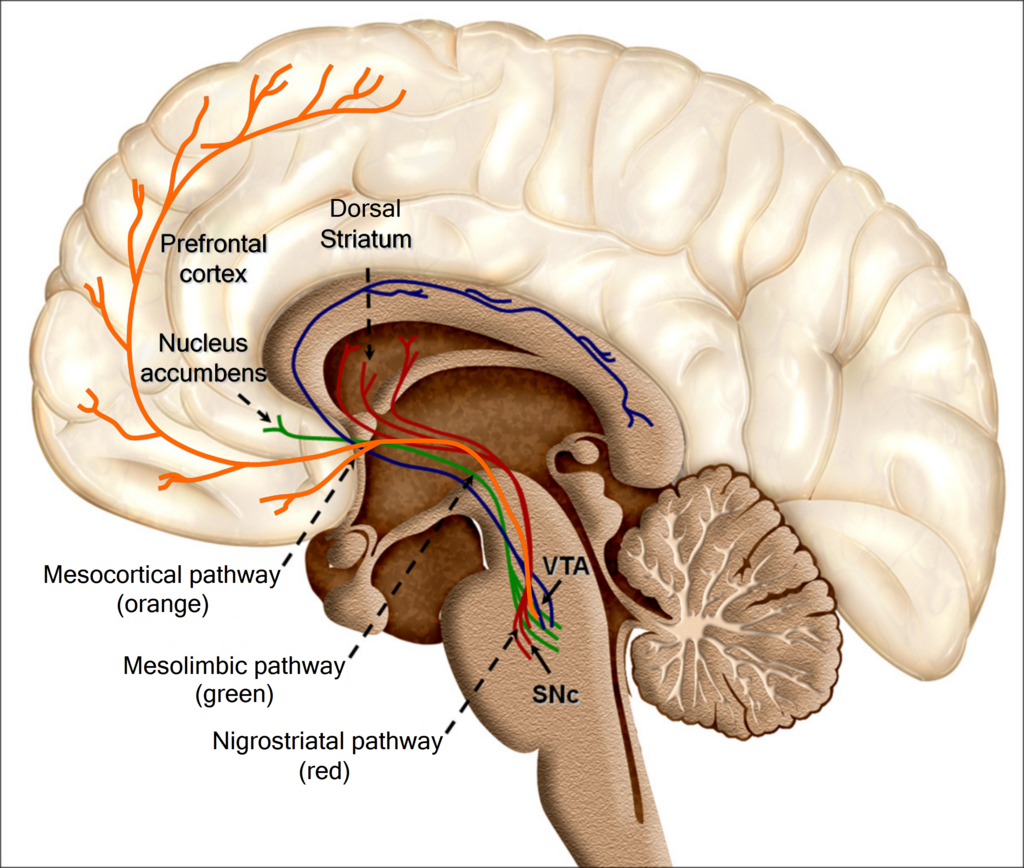
Critically, the brain doesn't just release dopamine upon receiving the reward. It starts releasing it in anticipation of the reward as soon as it detects the cue. This anticipatory release is what we experience as a craving or an urge. The basal ganglia detects the cue, and the dopamine system starts saying, "The reward is coming! Do the thing!"
To figure out the true reward, ask yourself: What am I really craving in that moment? With the phone-scrolling habit, the reward isn't 'looking at my phone.' It's likely the distraction from boredom, a momentary relief from a difficult task, or a quick hit of social connection. Identifying this underlying craving is the final piece of the puzzle you need to remap the loop.
Ready to test your knowledge?
What is the primary role of the basal ganglia in habit formation?
According to the text, when does the brain's dopamine system become most active in the habit loop?
By moving beyond a surface-level understanding and auditing the specific cues and rewards, you gather the data needed to intelligently redesign your habits.