Mastering the Game of Mahjong
Mahjong Basics
The Tiles of Mahjong
Mahjong is a game of skill, strategy, and a bit of luck, played with a set of 144 tiles. Think of them like a deck of cards, but with more variety. The tiles are divided into three main categories: suits, honors, and bonuses.
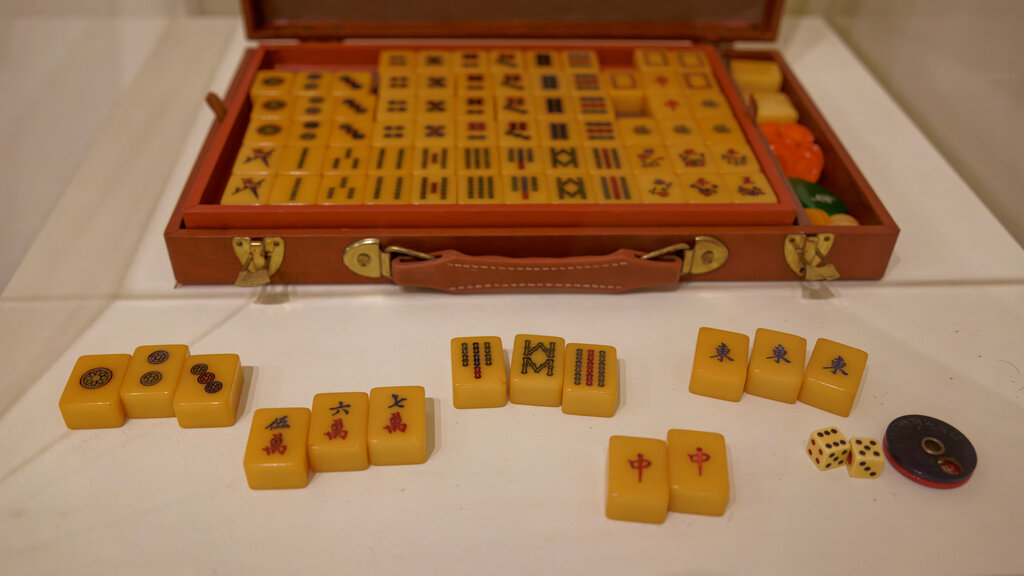
The majority of the tiles belong to three suits. Each suit is numbered one through nine, with four identical copies of each tile.
- Circles (or Dots): These tiles feature small circles, representing coins.
- Bamboo (or Bams): These show sticks of bamboo. The 1 Bamboo is often depicted as a bird, like a sparrow or peacock.
- Characters (or Craks): These tiles feature the Chinese character for a number, from one to nine. The character at the bottom is 萬 (wàn), which means 10,000.
Honors and Bonuses
Next are the Honor tiles. Unlike suits, these tiles are not numbered. They are split into two groups:
- Winds: East (東), South (南), West (西), and North (北). There are four of each wind.
- Dragons: Red (中), Green (發), and White (白). The White Dragon is often a blank tile or has a simple blue frame. There are four of each dragon.
Finally, there are Bonus tiles. These are Flowers and Seasons. There's only one of each, and they provide extra points but aren't used to form a winning hand. They are immediately set aside when drawn, and a replacement tile is taken.
| Category | Type | Tiles |
|---|---|---|
| Suits | Circles | 1-9 (4 of each) |
| Bamboo | 1-9 (4 of each) | |
| Characters | 1-9 (4 of each) | |
| Honors | Winds | East, South, West, North (4 of each) |
| Dragons | Red, Green, White (4 of each) | |
| Bonuses | Flowers & Seasons | 4 Flower tiles, 4 Season tiles (1 of each) |
The Goal of the Game
The main objective in Mahjong is simple: be the first player to form a complete, or winning, hand. A standard winning hand consists of 14 tiles arranged into four sets and one pair.
A pair is two identical tiles. A set can be one of two things:
- Pung: A set of three identical tiles (e.g., three 8 Circles).
- Chow: A sequence of three tiles in the same suit (e.g., 4, 5, 6 of Bamboo).
Honor tiles can only form Pungs, as they don't have numbers for a sequence.
There is also a special set called a Kong, which is a set of four identical tiles. If you form a Kong, it still only counts as one of the four sets you need, but you must draw an extra tile to keep your hand at the right size for a win.
Game Flow
To start, all 144 tiles are shuffled face down. Players build four walls, two tiles high and 18 tiles long. Dice are rolled to determine where to break the wall to begin dealing.
Each player starts with 13 tiles. The player designated as the East Wind starts the game by drawing the 14th tile from the wall.
The basic turn sequence is straightforward:
- Draw one tile from the wall.
- Look at your hand to see if the new tile helps you form a set.
- Discard one tile from your hand, placing it face up in the center of the table.
The game continues with players drawing and discarding, trying to complete their hand. The first person to form a valid hand of four sets and a pair declares "Mahjong!" and wins the round.
Ready to test what you've learned? Let's see.
A standard winning Mahjong hand consists of what combination of tiles?
Which of the following tile combinations is a 'Pung'?
That covers the absolute basics. You now know the tiles, the objective, and how a turn works. Next, we'll dive into how to claim discarded tiles to complete your sets.