Mastering the Freemium Model
Introduction to Freemium
The Freemium Model
Many of the digital tools we use every day, from music streaming services to productivity apps, have a common pricing strategy. They let you use a basic version for free, hoping you'll eventually pay for more features, more storage, or an ad-free experience. This approach has a name: freemium.
The term “Freemium” is a blend of “free” and “premium.” At its core, the Freemium model offers a basic version of a product or service at no cost while charging for advanced features, premium tools, or an ad-free experience.
The core idea is simple. By removing the initial cost, companies can attract a massive user base. People can try the product without any commitment. A small fraction of these free users will find the product so valuable that they'll choose to upgrade to the paid, or "premium," version. The revenue from these paying customers then supports the entire service, including all the free users.
An Old Idea, Reimagined
The concept of offering something for free to attract paying customers isn't new. Think of a grocery store offering free food samples or a company giving away free razor handles to sell razor blades. These are classic examples of using a free product to drive sales of a paid one.
However, the rise of the internet and digital goods supercharged this strategy. Before the web, the cost of producing and distributing physical items, even samples, was significant. Every free razor handle or food sample had a real, tangible cost attached.
Digital products changed the equation. The cost to create one more copy of a software application or grant access to an online service is virtually zero.
This economic shift made the freemium model viable on a massive scale. Companies could give away their core product to millions of users at a negligible cost. The term "freemium" itself was coined in 2006 to describe this modern business model, blending the old-school marketing tactic of a free giveaway with the new economics of digital distribution.
A Pillar of the Digital Economy
Freemium is more than just a pricing trick; it's a fundamental part of the modern digital economy. It has become the default business model for countless software-as-a-service (SaaS) companies, mobile apps, and online platforms.
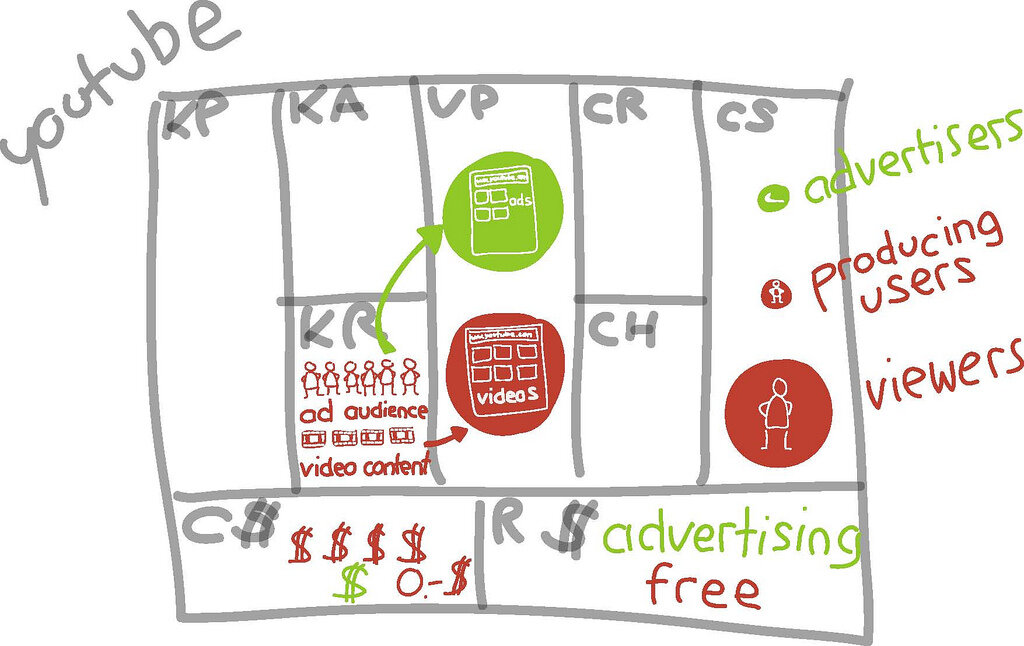
Why is it so significant? First, it dramatically lowers the barrier to entry for users. Anyone with an internet connection can try out new tools and services without financial risk. This accelerates adoption and allows new ideas to spread rapidly.
Second, it shifts the focus of marketing. Instead of just telling people how good a product is through advertising, freemium lets the product speak for itself. The user's experience with the free version becomes the most powerful sales tool. A well-designed freemium product essentially markets itself every time someone uses it.
In the digital marketplace, freemium serves as a primary engine for user acquisition and a powerful way to demonstrate value directly to the consumer.
From individual developers to large tech giants, this model allows businesses to build a large user base, gather feedback, and create a sustainable revenue stream from a dedicated core of paying customers. It has reshaped how we discover, use, and pay for digital products.