Mastering the First Year Seminar
Transition Pedagogy Frameworks
Beyond the Welcome BBQ
Early strategies for helping first-year students, often called First Generation FYE (First Year Experience), focused on things outside the classroom. Think orientation weeks, mentoring programs, and social clubs. These are valuable, but they treat the academic transition as separate from the social one.
A more effective approach, the 'Second Generation' of FYE, puts the curriculum front and center. It argues that the most powerful tool for helping students adjust and thrive isn't an optional workshop, but the very courses they take every day. This is called Transition Pedagogy—an intentional approach where the syllabus, assessments, and daily class activities are designed to guide students through the shift from high school to university-level thinking.
Instead of just adding support services around the edges, Transition Pedagogy embeds support directly into the learning experience.
This model acknowledges a simple truth: the classroom is where students spend most of their time and form their primary connection to the institution. It's where they decide if they belong. By making the curriculum the main site for transition, we create a more cohesive and impactful experience.
A Blueprint for Belonging
Australian academic developed a foundational framework for this curriculum-led approach. Her Six First Year Curriculum Principles provide a comprehensive blueprint for designing courses that don't just teach content, but actively manage the student transition. These principles work together to create an environment where new students feel capable, connected, and confident.
Here’s a quick breakdown of the principles:
- Transition: The curriculum explicitly acknowledges students' prior experiences and helps bridge the gap between their previous learning environment and the expectations of higher education.
- Diversity: Course design recognizes that students come from varied backgrounds. It provides multiple ways for them to engage with material and demonstrate their learning.
- Design: The curriculum is thoughtfully structured and , with clear connections between topics and a logical progression of skills. Nothing is arbitrary.
- Engagement: Learning is an active process. The curriculum prioritizes activities that foster student-to-student and student-to-instructor interaction.
- Assessment: Tasks are relevant, varied, and spread out. Crucially, feedback is timely and aimed at helping students improve (feed-forward) rather than just justifying a grade.
- Evaluation: The curriculum itself is subject to review. Data and student feedback are used to continuously refine the course and improve the transition experience for future cohorts.
From Learner to Scholar
Applying these principles does more than just help students pass their first semester. It facilitates a crucial psychological shift: from seeing oneself as a passive recipient of information (a learner) to an active participant in a community of inquiry (a scholar).
When a curriculum is intentionally designed for transition, it demystifies the hidden rules of academia. A first-year seminar might explicitly teach students how to read a journal article, formulate a research question, or participate in academic debate. Assessments might mimic the work of professionals in the field, asking students to write a policy brief instead of a generic essay.
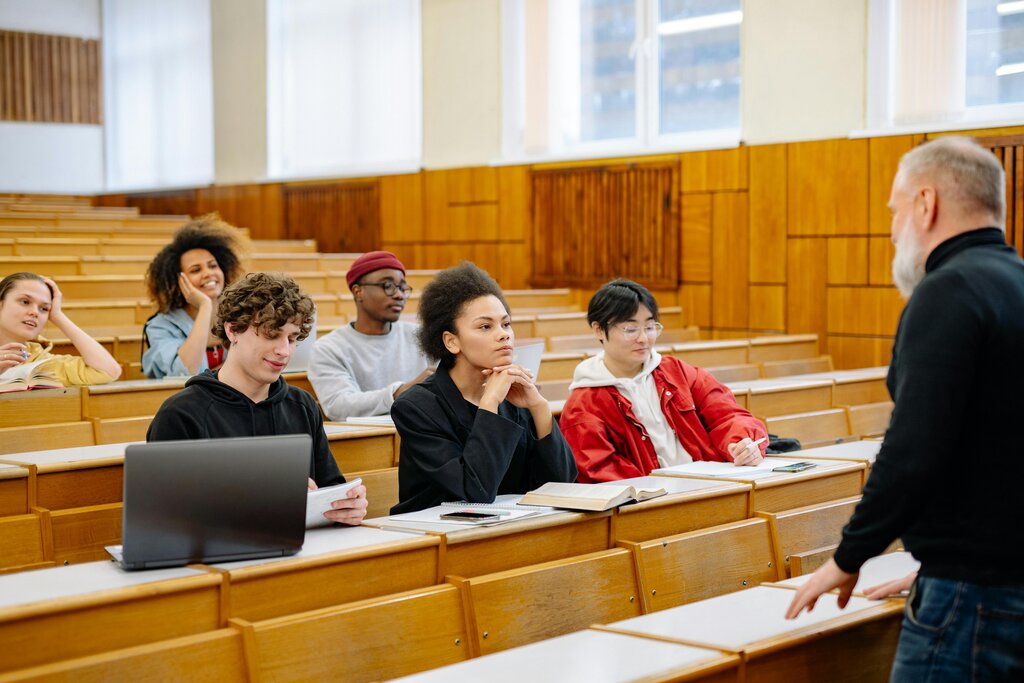
This approach directly fosters a sense of belonging and academic identity, which research consistently shows are the strongest predictors of whether a student will persist and ultimately graduate. When students understand the purpose of their work and see a clear path for their own development, they are more motivated and resilient. They stop feeling like outsiders and start feeling like they are part of the academic enterprise.
Design underpins all of the first-year transition principles, allowing them to work together in an intentionally scaffolded way for students to be successful in their transition into their university studies.
Ultimately, Transition Pedagogy redefines the purpose of the first year. It's not just a collection of introductory courses, but a deliberately crafted experience designed to build the foundation for a successful academic journey.
What is the primary focus of the 'Second Generation' of First Year Experience (FYE), also known as Transition Pedagogy?
The practice of designing a course with a logical progression of skills, where each new concept builds upon the last, is known as ______.