Mastering the Factorization Method
Understanding Quadratic Equations
The Shape of Quadratics
A quadratic equation is a special type of polynomial equation. Its highest-powered term is squared, like . The standard form looks like this:
Here, is our variable, and , , and are constant coefficients. The one rule is that cannot be zero. If were zero, the term would vanish, and we'd be left with a simple linear equation, not a quadratic one. For example, is just .
The name "quadratic" comes from the Latin word quadratus, meaning square, because the variable gets squared (like ).
Visualizing Quadratics
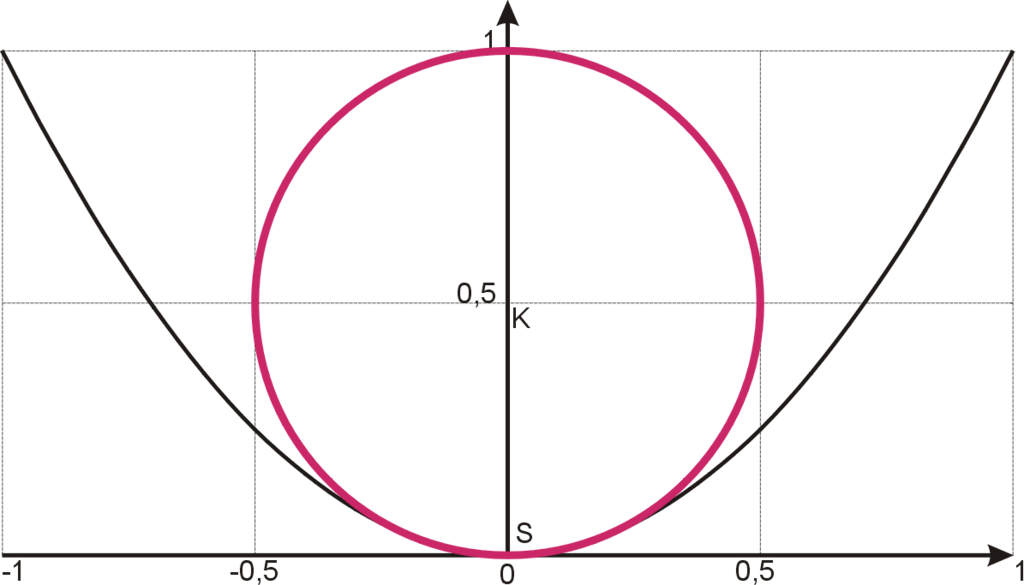
When you graph a quadratic function, like , it doesn't form a straight line. Instead, it creates a graceful, U-shaped curve called a parabola.
The coefficient plays a big role in the parabola's appearance. If is positive, the parabola opens upwards, like a smile. If is negative, it opens downwards, like a frown. The coefficients and also shift the parabola around on the graph, changing its position and the location of its peak or valley, known as the vertex.
Quadratics in the Real World
Quadratic equations aren't just for math class; they show up all over the place. They describe the path of any object thrown through the air, from a basketball heading for a hoop to a stream of water from a fountain. The force of gravity pulls the object down in a perfect parabolic arc.
They're also used in business to model profit. A company might find that its profit increases as it raises the price of a product, but only up to a point. If the price gets too high, sales drop off, and profit declines. This relationship can often be modeled by a downward-opening parabola, where the vertex represents the price that yields the maximum profit.
Now that you can spot a quadratic equation and its parabolic graph, let's test your understanding.
What is the defining characteristic of a quadratic equation?
Which of the following represents the standard form of a quadratic equation?