Mastering the English Language
Introduction to English Sounds
The Building Blocks of Sound
Every word in English is built from a small set of basic sounds. Think of them like Lego bricks for language. Understanding these sounds is the first step to clear pronunciation. The two main types of sounds are vowels and consonants.
Vowel sounds are made with an open mouth and a continuous flow of air, like water flowing smoothly in a river. Consonant sounds are different. They're created by blocking or restricting that airflow in some way, like a rock or a bend in the river changing the water's path.
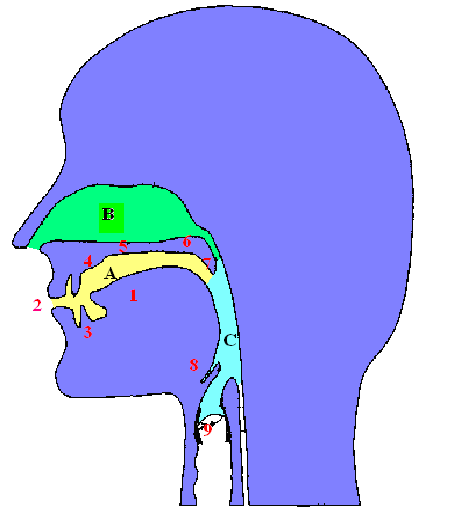
Open-Sounded Vowels
While the English alphabet has only five vowel letters—A, E, I, O, U—they represent about 20 different vowel sounds. This mismatch is a big reason English spelling can be tricky. Vowel sounds are often grouped into two main categories: short and long.
Short vowels are clipped, punchy sounds. You'll find them in words where the vowel is followed by a consonant, like in 'cat' or 'sit'.
| Vowel Letter | Example Word | Sound Like... |
|---|---|---|
| a | cat | a in apple |
| e | bed | e in egg |
| i | sit | i in igloo |
| o | top | o in octopus |
| u | sun | u in up |
Long vowels, on the other hand, often sound like you're saying the name of the letter itself. They have a more drawn-out quality.
| Vowel Letter | Example Word | Sound Like... |
|---|---|---|
| a | cake | ay in pay |
| e | feet | ee in see |
| i | bike | i in ice |
| o | boat | o in go |
| u | cute | u in use |
Sometimes, two vowel sounds glide together to create a single, new sound called a diphthong. You can hear this in the 'oi' of 'boy' or the 'ou' of 'cloud'.
Air-Stopping Consonants
Consonant sounds are made by interrupting the flow of air from your lungs. This interruption can be a complete stop, a narrow squeeze, or a redirection through your nose. Unlike vowels, the sounds of consonants are usually more consistent with their spellings.
Let's look at a few types:
- Stops: The airflow is stopped completely and then released in a small puff of air. Try saying 'p' in pat, 't' in top, or 'k' in kit.
- Fricatives: Air is forced through a very narrow opening, creating friction. This happens with sounds like the 'f' in fan and the 's' in sun.
- Nasals: The air is blocked from leaving your mouth and redirected through your nose. The main nasal sounds are 'm' in map, 'n' in nap, and the 'ng' sound in sing.
Certain sounds can be challenging for non-native speakers. The 'th' sound, for example, has two versions: a 'soft' one like in think and a 'buzzy' one like in this. The 'r' and 'l' sounds also require precise tongue placement.
Practice phonetic exercises that target difficult sounds, such as “th,” “v,” and “z.”
Common Sound Patterns
Sounds don't exist in isolation; they team up to form words. Recognizing common patterns can make pronunciation and reading much easier. One of the most basic patterns in English is CVC, which stands for Consonant-Vowel-Consonant.
Words that follow this pattern almost always use a short vowel sound. Once you see this pattern, you can reliably guess the pronunciation.
| CVC Word | Breakdown |
|---|---|
| cat | c (consonant) - a (short vowel) - t (consonant) |
| sit | s (consonant) - i (short vowel) - t (consonant) |
| cup | c (consonant) - u (short vowel) - p (consonant) |
Another common pattern is the 'silent e' rule. When a word ends in a vowel, then a consonant, then the letter 'e', the first vowel usually makes its long sound, and the final 'e' is not pronounced.
Compare cap (short 'a') with cape (long 'a'). The silent 'e' completely changes the vowel sound.
Here's how it works:
| Short Vowel Word | Add 'e' to get a... | Long Vowel Word |
|---|---|---|
| bit | → | bite |
| hop | → | hope |
| cub | → | cube |
Getting comfortable with these foundational sounds and patterns is a huge step toward speaking English clearly and confidently. Let's review some key ideas.
Now, let's test your understanding of these core concepts.
What is the primary difference between how vowel and consonant sounds are produced?
The sounds in words like 'boy' and 'cloud', where two vowel sounds glide together into one, are called what?
Listening to how native speakers pronounce words and practicing these sounds yourself is the best way to improve. With time, these patterns will become second nature.