Mastering the English Language
Historical Language Evolution
From Germanic Roots to French Flair
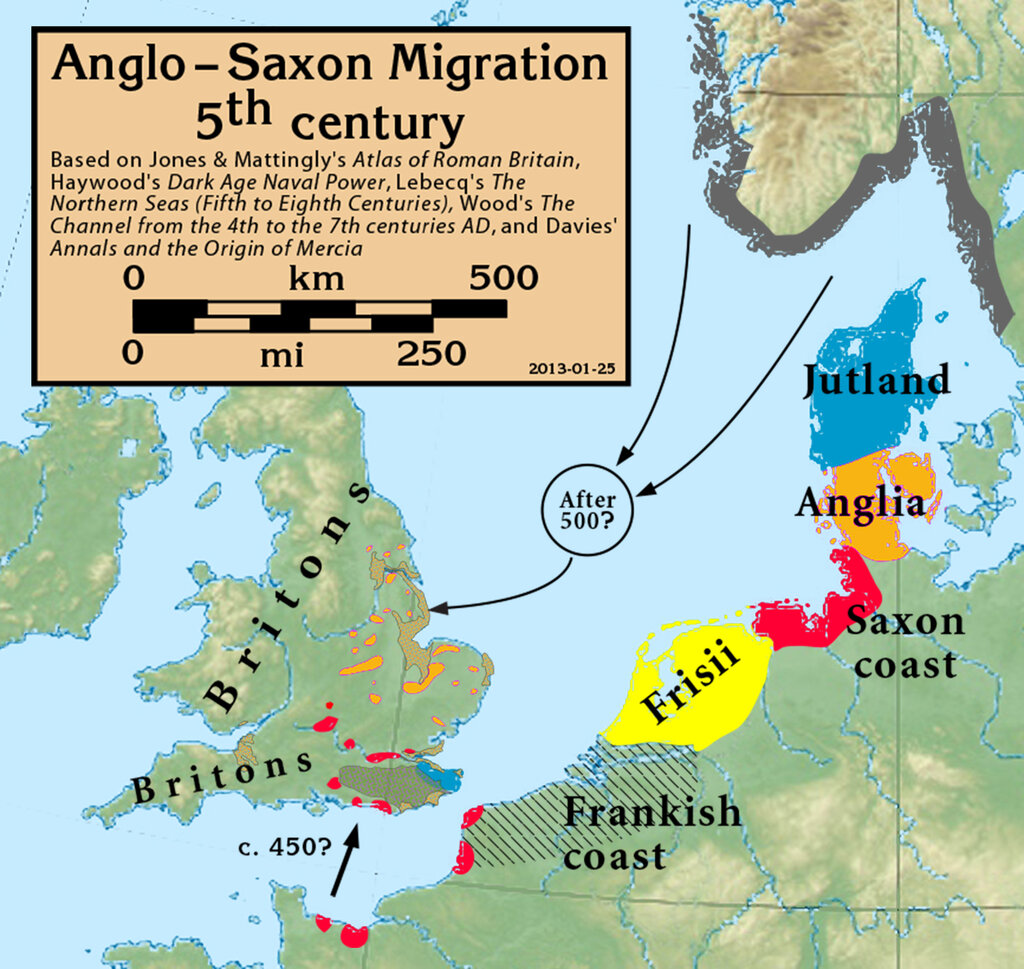
Old English, spoken from roughly 450 to 1150 AD, would be unrecognizable to a modern speaker. It was a Germanic language, brought to Britain by Anglo-Saxon settlers, and it functioned very differently from the English we use today. Its structure was highly synthetic, meaning the function of a word in a sentence was shown by its ending, or inflection, rather than by its position.
Think of it like modern German or Latin. A sentence's meaning was unlocked by deciphering these endings. For example, the word stān (stone) would change to stānes for 'of a stone,' stāne for 'to a stone,' and stānas for 'stones.' Word order was flexible because the inflections did the heavy lifting of conveying grammatical relationships.
Everything changed in 1066. The didn't just alter the course of English history; it fundamentally remade the English language. When William the Conqueror took the throne, Norman French became the language of the court, the government, and the new ruling class.
The Norman Conquest of 1066 CE marked the most significant turning point in English language history.
For the next 300 years, English and French coexisted and mingled. The result was Middle English, a hybrid language that absorbed an enormous amount of French vocabulary. We see this legacy today, especially in words related to power, law, and cuisine. Words like government, judge, jury, beef, pork, and poultry all come from French. Often, the Anglo-Saxon word remained for the live animal, while the French word was used for the meat on the table—a reflection of the social structure.
| Animal (Anglo-Saxon Origin) | Meat (Norman French Origin) |
|---|---|
| Cow (cū) | Beef (bœuf) |
| Pig (picg) | Pork (porc) |
| Sheep (scēap) | Mutton (mouton) |
| Deer (dēor) | Venison (venaison) |
Beyond vocabulary, the grammar began to simplify dramatically. As French speakers and English speakers interacted, the complex system of noun endings and grammatical gender started to erode. These inflections, once crucial for meaning, became less important. As the broke down, word order became fixed. The modern Subject-Verb-Object (SVO) structure we use today became the new standard for creating clear sentences.
The Sound of Change
As Middle English evolved, a massive phonetic change began to sweep through the language, altering how vowels were pronounced. This was the , a series of chain reactions that occurred between the 14th and 17th centuries. It affected all the long vowels in English, fundamentally changing the sound of the language.
This shift is the primary reason for many of the irregularities in English spelling. The word for a building you live in was spelled hūs and pronounced 'hooss'. The Great Vowel Shift moved the vowel sound, but the spelling remained. The same happened with mūs (mouse) and fōt (foot). Written English became a snapshot of a pronunciation that no longer existed.
Standardizing the Language
By the late Middle English period, several dialects were spoken across England. The one that would eventually become the standard was the dialect spoken in London, the center of commerce and government. Writers like Geoffrey Chaucer, who wrote The Canterbury Tales in this London dialect, helped elevate its prestige.
The single most important factor in the standardization of English was the introduction of the printing press to England by in 1476. Printers had to make choices about which spellings and grammatical forms to use. The choices they made, largely based on the London dialect, were then mass-produced and distributed, creating a more uniform written language across the country.
Caxton's press helped to establish a more uniform written English by consistently using certain spellings and grammatical forms.
This move toward standardization marked the transition to Early Modern English, the language of Shakespeare. It continued to absorb words, especially from Latin and Greek during the Renaissance, to express new ideas in science and philosophy. While the language has continued to evolve, the grammatical structure and core vocabulary that emerged from this tumultuous period laid the direct foundation for the English we speak and write today.
Let's check your understanding of how English evolved.
What was a primary characteristic of Old English grammar?
The Norman Conquest of 1066 was the main catalyst for the breakdown of the Old English inflectional system and the adoption of French vocabulary.
From its Germanic beginnings to its modern global form, English has been shaped by invasion, technology, and the everyday interactions of its speakers.