Mastering the Dual Art of Performance
Breath and Core Integration
The Integrated Core
As a performer who sings and moves, your core isn't just for stability; it's your engine for both sound and motion. The goal is an 'integrated core', where your muscles provide steadfast physical support without choking your vocal support. The key player here is the (TVA), the deepest layer of your abdominal muscles.
Think of the TVA as a natural corset that wraps around your torso. When you engage it, you create a stable cylinder of pressure that supports your spine during movement and provides a solid foundation for your breath. The trick is to activate it without locking up your diaphragm or hip flexors. A tense diaphragm restricts breath, and tight hip flexors can pull your pelvis out of alignment, impacting both your posture and vocal freedom.
To find this engagement, try a sharp 'tss' sound. Feel that deep, inward pull just below your navel? That's your TVA. The sensation should be one of cinching, not clenching. Your belly flattens, but your upper chest, shoulders, and, crucially, your throat remain relaxed and open. This is the foundation of dual support: a core that's working hard so the rest of your vocal apparatus doesn't have to.
The goal is to create support from below, allowing your neck, jaw, and shoulders to remain free for resonance and articulation.
Breathing Sideways
Once your core is engaged for movement, deep belly breathing becomes difficult. If you try to push your belly out against a braced TVA, you create tension and lose stability. The solution is to breathe into your ribs, a technique known as or lateral breathing.
Your intercostal muscles, located between your ribs, are designed to lift and expand your rib cage. When you inhale using these muscles, your ribs flare out to the sides and back, creating space for your lungs to fill without disturbing your abdominal engagement. This allows you to take in a full, supportive breath even while your core is maintaining physical stability. It’s the difference between inflating a balloon straight down versus letting it expand in all directions.
Practice this by placing your hands on the sides of your rib cage. As you inhale, focus on pushing your hands outwards. As you exhale, feel your ribs return to their starting position. Your shoulders should stay down and your abdomen should remain gently engaged.
Freedom in Motion
Integrating these skills into movement requires dynamic control. You can't just brace your core and hold it. Your body needs to adapt. During a transition, like landing a jump before singing a quiet phrase, you need a moment of diaphragmatic release. This allows the diaphragm to reset, preventing it from becoming locked and rigid.
One of the biggest challenges during intense choreography is the – that sudden, sharp intake of air when you feel breathless. This is often a sign that you're holding your breath or breathing inefficiently from the chest. The key to managing it is to focus on the exhale. By ensuring a steady, controlled exhalation on exertion (e.g., during a lift, turn, or sharp gesture), your body will reflexively inhale the right amount of air without gasping. It keeps the breath cycle smooth and controlled.
Ultimately, the goal is to separate the functions of your lower and upper body. Your lower body, supported by your integrated core, provides a powerful, stable base. This stability travels up the spine, but it stops at the diaphragm. From the ribs up, your body should be a free, resonant chamber for your voice. Think of a ballerina's effortless port de bras – her arms flow freely from a completely stable torso. Your voice should have that same freedom.
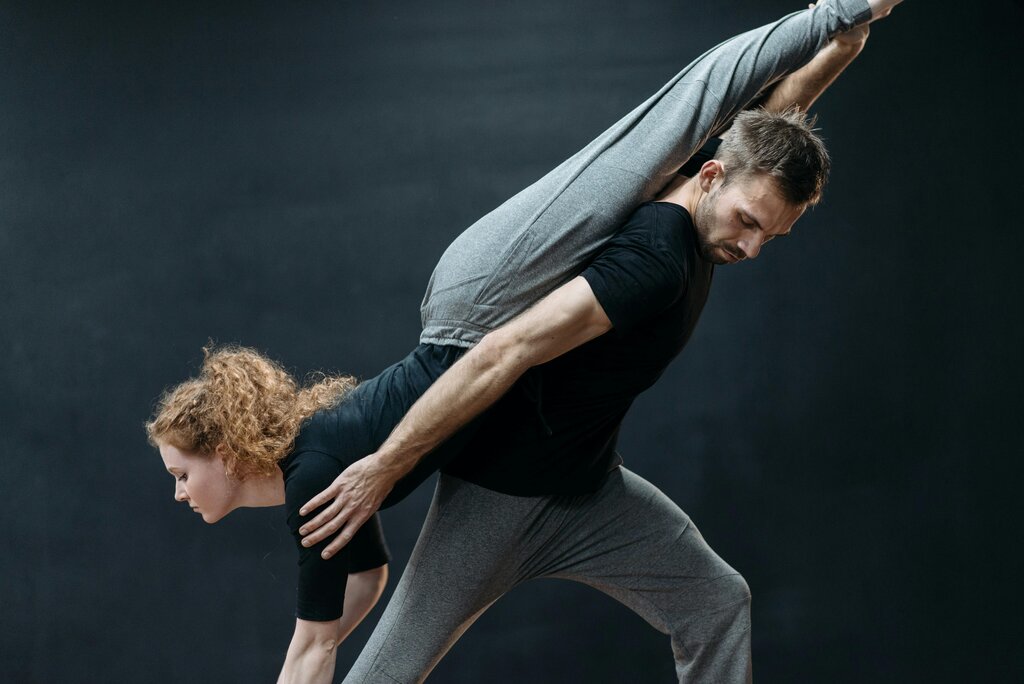
Here are a few exercises to begin integrating these concepts:
Weight Shifts: Stand with your feet shoulder-width apart. Sing a single, sustained note on an 'ah' vowel. Slowly shift your weight from one foot to the other. Your goal is to keep the tone perfectly steady, without any wavering or change in quality. Your lower body is working, but your core and breath are providing consistent vocal support.
Arm Movements: While singing a simple five-note scale up and down, raise your arms slowly out to the sides and up overhead, then lower them. Focus on keeping your ribcage expanded and your TVA engaged. Don't let the movement of your arms cause your chest to collapse or your shoulders to rise.
Ready to test your understanding? This quiz will cover the key connections between your core, your breath, and your voice in movement.
What is the primary function of the Transverse Abdominis (TVA) for a singer who also moves on stage?
When a performer's core is braced for movement, deep belly breathing becomes difficult. What is the recommended breathing technique in this situation?
Mastering this integration takes time and repetition. Be patient and focus on the feeling of connected, efficient effort. With practice, these coordinated actions will become second nature, freeing you to perform with power and artistry.