Mastering the Double Diamond for Design Thinking
Introduction to Design Thinking
What is Design Thinking?
Design Thinking is a method for solving complex problems by focusing on the people you're trying to help. It’s less about aesthetics and more about understanding human needs. Instead of starting with a business goal or a new technology, you start with empathy for the user.
Design Thinking is a human-centered approach to problem-solving.
This approach grew out of the methods designers have used for decades. They realized that to create truly useful products, they had to step into their users' shoes. Today, this mindset isn't just for designers. It's used by businesses, educators, and organizations of all kinds to create innovative solutions, from new apps to better public services.
The Core Principles
Design Thinking is guided by a few key principles that work together in a flexible, iterative cycle. It’s not a rigid, step-by-step formula, but a way of thinking that keeps the user at the center of the process.
Finding a solution to a problem includes the following five phases: Empathize Learn about the people for whom you are designing. Conduct research to develop a deeper understanding of your users. Define Create a point of view that is based on user needs and insights. Ideate Brainstorm and come up with as many creative solutions as possible. Generate a range of potential solutions by giving yourself and your team total freedom. Prototype Build a prototype (or series of prototypes) to test your hypothesis. Creating a prototype lets designer see if they’re on the right track, and it often sparks different ideas that you wouldn’t have come up with otherwise. Test Return to your users for feedback.
Let's look at these core ideas.
Empathy is the foundation. It’s the effort to understand the world from another person's perspective. This means observing, engaging, and listening to uncover their real needs, which might be different from what they say they want.
Ideation is the creative phase. Once you understand the user and the problem, it's time to generate ideas. The goal is to go for quantity over quality at first. No idea is too wild. This judgment-free brainstorming helps you explore possibilities you might otherwise miss.
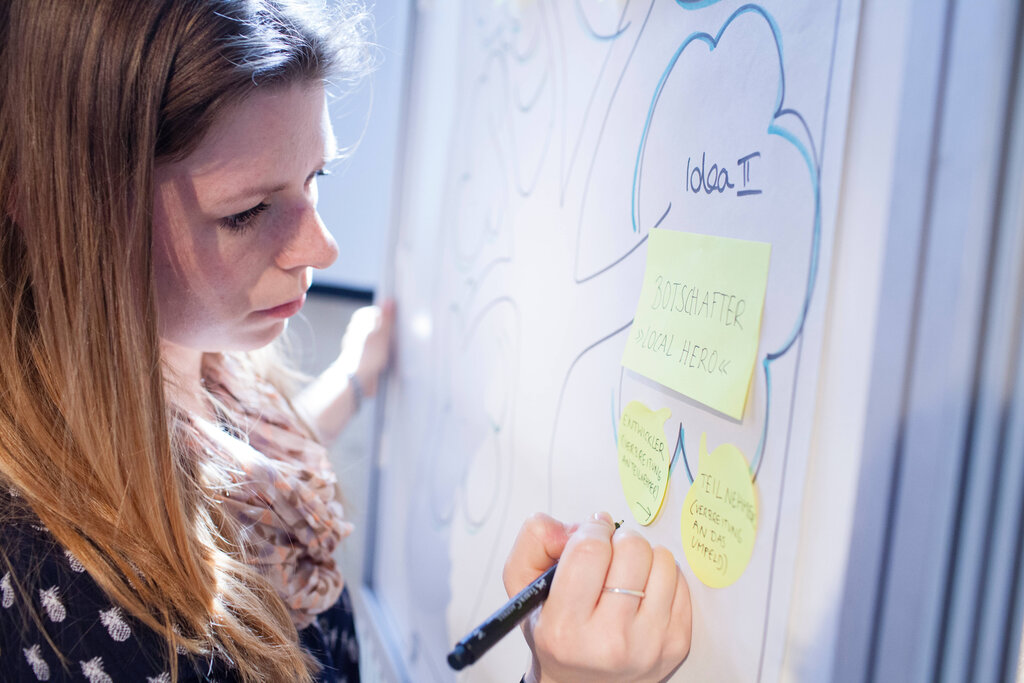
Prototyping and Testing go hand-in-hand. A prototype is a simple, low-cost version of an idea—it could be a sketch, a cardboard model, or a basic app interface. The purpose is to make your idea tangible so you can test it with real users. Testing isn't about proving you're right; it's about learning what works, what doesn't, and why. This feedback loop of building, testing, and learning is what drives the process forward.
Why It Works Everywhere
The power of Design Thinking lies in its focus on human experience. By starting with people, you're more likely to create something they'll actually find valuable. This reduces the risk of building something based on incorrect assumptions.
Instead of guessing what people need, Design Thinking pushes you to find out directly from them.
This user-centered approach is valuable in countless fields. A software company can use it to build an app that's intuitive and solves a real problem for its users. A hospital can redesign its patient experience to reduce stress and improve communication. A city government can create more effective community programs by understanding its residents' daily challenges.
In each case, the process helps teams tackle vague, ill-defined problems and arrive at concrete, human-centered solutions. It provides a framework for navigating uncertainty with creativity and collaboration.
What is the primary starting point for the Design Thinking process?
During the Ideation phase, the main goal is to generate only a few highly-refined, practical ideas.