Mastering the CISSP Certification
Security and Risk Management
Building a Security Foundation
Information security is more than just firewalls and passwords. It's a strategic part of how an organization operates, built on a foundation of clear principles, thoughtful risk management, and ethical conduct. Before diving into the tools, we need to understand the blueprint.
At the heart of information security are three core goals, often called the CIA triad.
| Principle | Goal | Example |
|---|---|---|
| Confidentiality | Keeping information private. | Only you and your doctor should see your medical records. |
| Integrity | Keeping information accurate and trustworthy. | The balance in your bank account should be correct. |
| Availability | Ensuring information is accessible when needed. | You can log into your email account whenever you want. |
These three principles guide every security decision. They help organizations protect their information, from customer data to trade secrets, in a balanced and effective way.
Steering the Ship with Governance
Security governance is the system of rules, practices, and processes that an organization uses to manage its information security. Think of it as the leadership and direction for all security efforts. It’s not about the technical details; it’s about making sure security supports the organization’s main goals.
A hospital’s mission is to provide patient care. Its security governance, therefore, must prioritize protecting patient health information. An online retailer's goal is to sell products, so its governance will focus on securing customer payment information and ensuring the website is always available.
Good governance answers key questions:
- What are our security goals?
- Who is responsible for what?
- How will we measure success?
This is where policies and procedures come in. They are the documents that translate governance principles into concrete actions.
A security policy is a high-level statement of intent, like "All employee passwords must be strong." A procedure is the step-by-step guide on how to follow that policy, such as "Passwords must be at least 12 characters and include a mix of letters, numbers, and symbols."
Managing Risk, Not Eliminating It
It's impossible to eliminate all risk. The goal of risk management is to make smart, informed decisions about which risks to address and how. It's a continuous process of identifying, analyzing, and responding to potential threats.
Let's break down the key terms with an analogy:
- A threat is a potential danger, like a burglar in your neighborhood.
- A vulnerability is a weakness, like an unlocked back door.
- The risk is the likelihood that the threat will exploit the vulnerability, resulting in a loss—in this case, getting robbed.
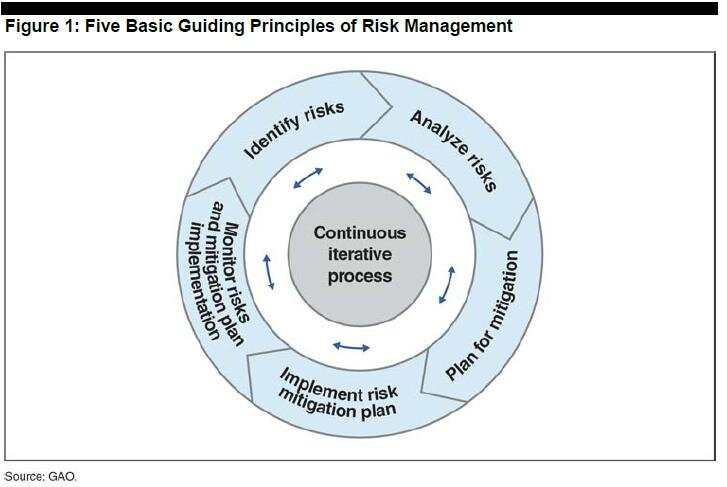
The risk management process helps organizations decide what to do about each identified risk. The four main strategies are:
Mitigate
verb
To reduce the likelihood or impact of a risk. This is the most common strategy. For our home analogy, this means installing a better lock on the back door.
The other options are:
- Avoid: Eliminate the risk by stopping the activity that causes it. If you're worried about your antique vase being broken, you could avoid the risk by selling it.
- Transfer: Shift the financial impact of the risk to a third party. This is what insurance does. You buy a policy to transfer the financial risk of your house burning down to the insurance company.
- Accept: Acknowledge the risk and do nothing. This is for risks where the cost of mitigation is higher than the potential loss. You might accept the small risk of a bird flying into your window because installing bird-proof glass is too expensive.
Laws, Regulations, and Ethics
Security doesn't happen in a vacuum. Organizations must follow a web of laws and regulations designed to protect data and privacy. Failing to comply can lead to massive fines, legal action, and a loss of public trust.
Security and compliance are essential. Protect sensitive data with encryption, control access, and stay updated on regulations like GDPR and CCPA.
Some key regulations include:
- General Data Protection Regulation (GDPR): A European Union law that gives individuals control over their personal data.
- Health Insurance Portability and Accountability Act (HIPAA): A U.S. law that requires the protection of sensitive patient health information.
- Payment Card Industry Data Security Standard (PCI DSS): A set of security standards for organizations that handle credit cards.
Beyond laws, there is professional ethics. Security professionals often have access to sensitive information and systems. A strong code of ethics guides their actions, ensuring they act with honesty, integrity, and in the best interest of the public and their employer. This means protecting privacy, reporting vulnerabilities responsibly, and never using their skills for personal gain or malicious purposes.
What are the three core principles of information security, often referred to as the CIA triad?
A hospital discovers that an outdated software version on its patient record system could be exploited by an attacker. In risk management terms, the outdated software is an example of a...
Strong security is built on these foundational pillars. By aligning security with business goals, managing risks intelligently, and adhering to legal and ethical standards, organizations can create a resilient and trustworthy security posture.