Mastering the Canon of English Literature
Medieval Literary Foundations
The Heroic Code
Old English literature wasn't written down at first. It was spoken, performed by poets called scops in mead halls. The epic poem Beowulf is the most famous survivor of this oral tradition. It tells the story of a great hero, but it also provides a window into the Anglo-Saxon worldview.
At its core is the Germanic heroic code, a set of values that governed society. Loyalty to one's lord was paramount. In return for protection and riches, warriors were expected to fight to the death. Vengeance was not just a right but a duty. If a kinsman was killed, the debt had to be paid in blood. This cycle of violence is a central engine of the poem's plot.
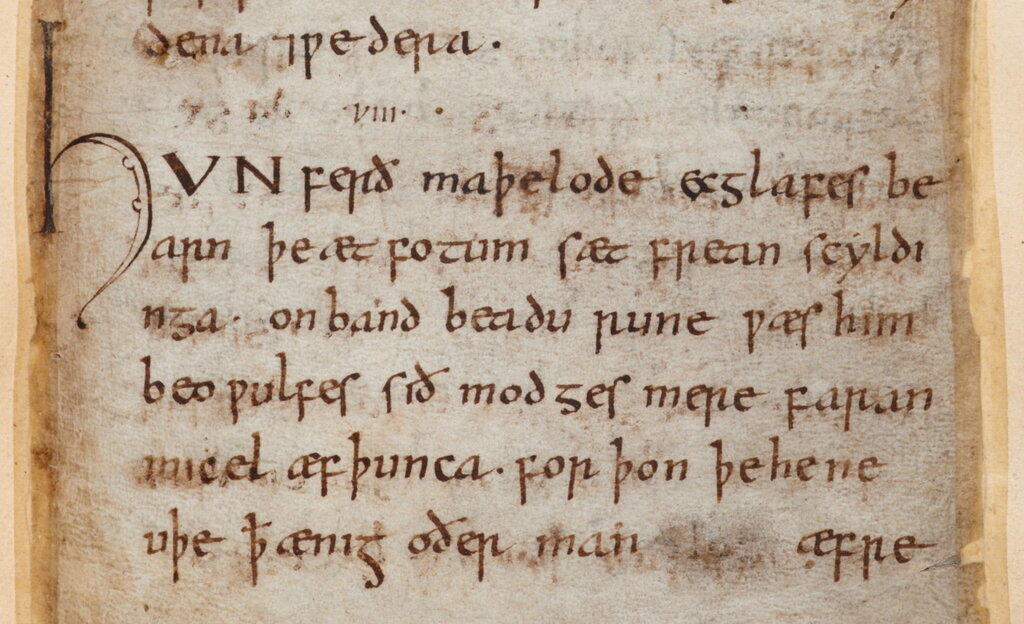
Beowulf is also a story of cultural transition. The characters operate within a pagan framework, believing in a grim, unavoidable fate they called wyrd. Yet the poem was written down by Christian monks, who inserted their own beliefs. The result is a fascinating blend: a pagan hero's tale told with a Christian narrator's awareness of God's providence. Beowulf himself attributes his victories to God, even as he lives by the old warrior code.
From Voice to Vellum
The move from an oral culture to a manuscript culture was slow and transformative. When stories were spoken, they were fluid, changing with each telling. Writing them down on vellum (animal skin) fixed them in place. The idea of an 'author' began to take shape, and literature became a more permanent record.
This work was primarily done in monasteries, where monks painstakingly copied texts by hand. They preserved not only religious works but also the heroic poetry of the past, like Beowulf, which is why it survived at all. This process ensured that a link to the pre-Christian past was not entirely severed, even as it was reinterpreted through a Christian lens.
The shift from oral to written tradition meant that poems were no longer just performances; they became physical artefacts.
Chaucer's New English
After the Norman Conquest in 1066, the English language changed dramatically. French became the language of the court and the ruling class, while Latin remained the language of the Church and scholarship. English, the language of the common people, absorbed thousands of French words and simplified its grammar, evolving into what we now call Middle English.
For centuries, English was not considered a language for serious literature. Geoffrey Chaucer changed that. He chose to write his masterpiece, The Canterbury Tales, in the English vernacular of London. This decision was revolutionary. It helped to standardise and elevate English as a literary language.
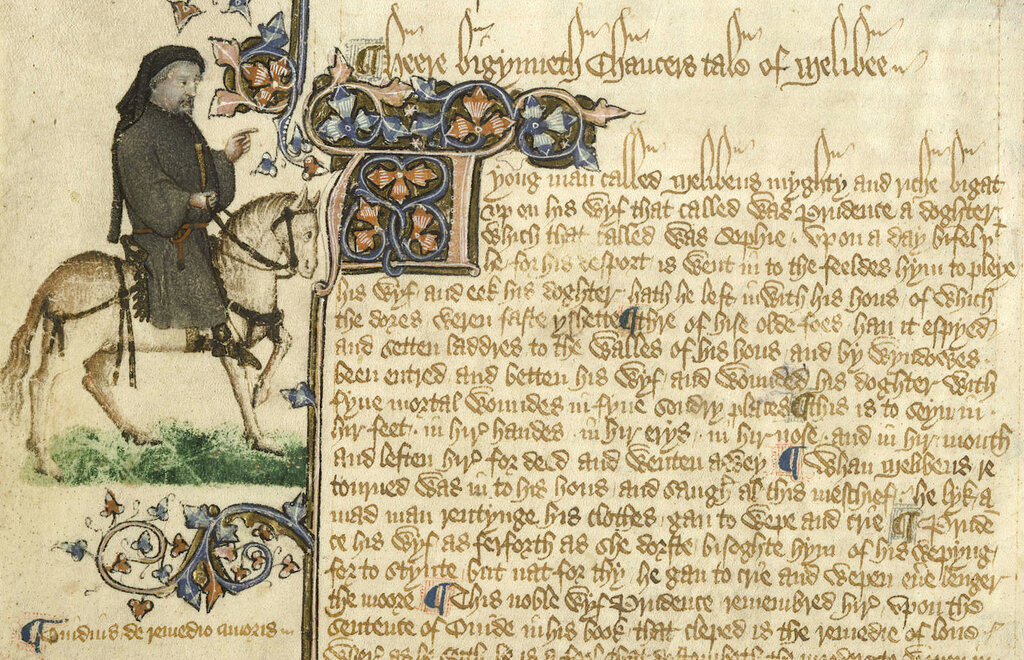
The Canterbury Tales is a collection of stories told by a diverse group of pilgrims on their way to Canterbury. This framing device allowed Chaucer to create a panoramic view of 14th-century English society.
The blending of Norman French with Anglo-Saxon English led to the emergence of Middle English, a language that integrated elements of both linguistic traditions.
A Mirror to Society
Chaucer used his characters to satirise the social structure of his time, a genre known as 'estates satire'. Medieval society was often divided into three estates: the clergy (those who pray), the nobility (those who fight), and the commoners (those who work). Chaucer presents characters from all walks of life, often exposing their hypocrisy.
We meet a noble Knight, but also a corrupt Pardoner selling fake relics. We see a devout Prioress who is more concerned with her little dogs than with the poor. Through these vivid, psychologically complex portraits, Chaucer moves beyond simple stereotypes. He gives his characters individual voices and personalities, a major step forward in characterisation.
| Estate | Ideal Example (in theory) | Chaucer's Character (often satirical) |
|---|---|---|
| Clergy | Pious, devoted to God | The Pardoner (corrupt), The Monk (worldly) |
| Nobility | Chivalrous, brave protector | The Knight (idealised), The Squire (a lover) |
| Commoners | Hardworking, honest | The Miller (crude), The Wife of Bath (assertive) |
Like much medieval art, the Tales are also rich with Christian symbolism and allegory. The pilgrimage itself is an allegory for the journey of life towards spiritual salvation. Characters and their stories often carry moral lessons, reflecting the deeply religious worldview of the period. The Pardoner's Tale, for example, is a stark allegory against greed, where three rioters find death instead of treasure.
These medieval works laid the groundwork for everything that followed in English literature. They established the language, explored new ways of telling stories, and held a mirror up to the society of their day.
Ready to test your knowledge of these foundational texts and concepts?
What was the primary mode of transmission for Old English literature like Beowulf before it was written down?
The epic poem Beowulf is described as a blend of two distinct worldviews. What are they?
From the heroic code of Beowulf to the social tapestry of The Canterbury Tales, the medieval period shaped the very language and narrative structures we use today.