Mastering the Bullet Journal Method
Introduction to Bullet Journaling
What Is a Bullet Journal?
A bullet journal is a simple, flexible system for organizing your life in a single notebook. Think of it as a to-do list, planner, and diary all rolled into one. It’s an analog method in a digital world, designed to help you track the past, order the present, and design the future.
The system was created by Ryder Carroll, a digital product designer who was looking for a way to stay focused and productive despite having learning disabilities. He needed something more adaptable than a traditional planner. The Bullet Journal Method, or BuJo for short, was his solution: a framework that can be tailored to anyone's personal needs.
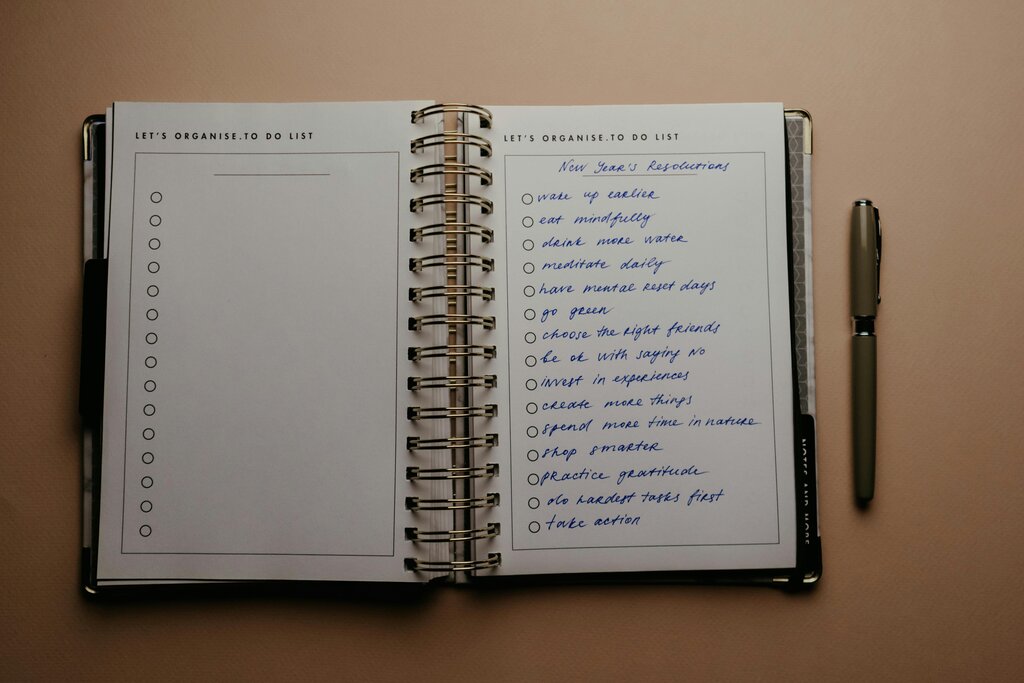
More Than Just a To-Do List
While it's great for managing tasks, the real power of bullet journaling lies in its other benefits. The act of writing things down by hand forces you to pause and think intentionally. This process can bring a sense of clarity and mindfulness that's often lost when we're just tapping on screens.
The goal isn't just to get more done. It's to get the right things done.
By keeping a consistent log of your thoughts, goals, and daily activities, you create a personal record of your life. This makes it an incredibly powerful tool for tracking progress, recognizing patterns, and making more conscious decisions about how you spend your time and energy.
The Core Components
Every bullet journal is unique, but the system is built on four foundational modules. These are the building blocks you'll use to structure your notebook.
1. The Index: This is your table of contents. You leave the first few pages of your notebook blank for the Index. As you add new entries or collections (like a list of books to read or notes for a project), you jot down the topic and page number here. This way, you can always find what you're looking for.
2. The Future Log: This is a year-at-a-glance view. It’s where you’ll record events, deadlines, and goals that are happening months from now. It acts as a holding place for items you need to schedule later.
3. The Monthly Log: At the start of each month, you create a monthly log. This typically includes a calendar page for appointments and a task page for things you want to accomplish that month. It gives you a clear overview of the weeks ahead.
4. The Daily Log: This is where you'll spend most of your time. Each day, you create an entry to quickly log tasks, events, and notes as they occur. It's a space for capturing your thoughts and responsibilities in real-time.
These four parts work together to create a simple yet robust system for managing your life. It's a method designed to grow and change with you.
What is the primary purpose of a bullet journal?
Which core module of a bullet journal serves as a table of contents, helping you locate your entries?