Mastering the Breaststroke
Introduction to Breaststroke
The Frog-Like Stroke
Of all the ways to move through water, one stroke stands out for its unique, rhythmic motion: the breaststroke. If you've ever seen it, you'll recognize it instantly. The arms sweep out in a heart-shaped pattern, while the legs perform a powerful, frog-like kick. Both sides of the body move in perfect sync, a symmetry that sets it apart from the alternating motions of freestyle or backstroke.
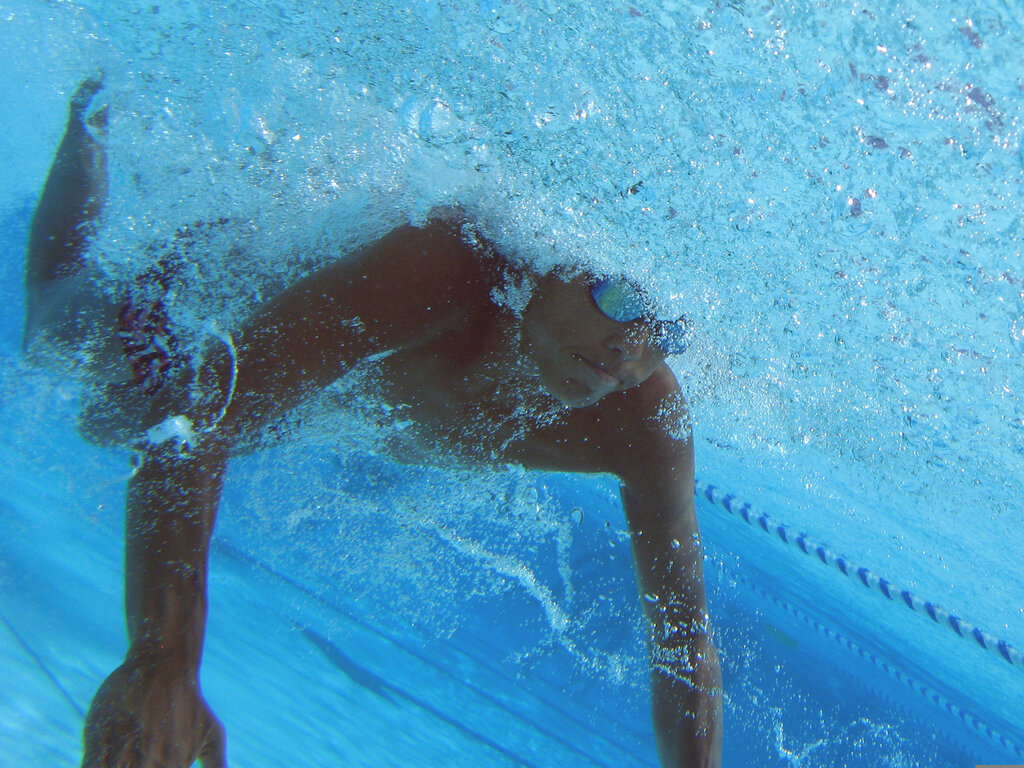
This stroke is often one of the first taught to new swimmers because you can comfortably keep your head above water. It's a relaxed, efficient style perfect for leisurely swims. But don't let its gentle nature fool you. In the world of competitive swimming, breaststroke is a highly technical and demanding event.
A Stroke Through Time
Breaststroke is arguably the oldest swimming style known to humanity. Evidence suggests humans have been using a similar motion for thousands of years. But it wasn't until the 19th century that it was formally studied and adopted in European swimming competitions. For a long time, it was simply considered the proper way to swim.
Early competitive swimming was dominated by the breaststroke. When faster strokes like the front crawl emerged, they were seen as unrefined. Breaststroke was the benchmark of style and technique. Over time, its rules evolved. Swimmers discovered that bringing their arms over the water was faster, a move that eventually developed into its own stroke: the butterfly. This led to stricter rules to preserve the breaststroke's original underwater form.
A Study in Contrasts
In competitive swimming, breaststroke is a fascinating paradox. It's the slowest of the four official strokes, yet it requires immense power and precision. Why the lack of speed? The main reason is drag. Unlike freestyle, where arms recover over the water, the entire breaststroke motion happens underwater. Pushing against the water to move forward also means fighting against it on the recovery, slowing the swimmer down.
| Stroke | Arm Motion | Leg Motion | Key Trait |
|---|---|---|---|
| Freestyle | Alternating | Flutter Kick | Fastest stroke |
| Backstroke | Alternating | Flutter Kick | Swum on the back |
| Breaststroke | Simultaneous | Whip Kick | Slowest stroke |
| Butterfly | Simultaneous | Dolphin Kick | Most powerful |
Despite being the slowest, breaststroke holds a vital place in competition. It's a core part of the individual medley (IM), a race where swimmers must perform all four strokes. A strong breaststroker can often make up significant ground during their leg of the medley, making it a strategic and exciting part of the race.
The breaststroke's combination of power, timing, and technique makes it one of the most challenging strokes to master at a competitive level.
Ready to test your understanding of this historic stroke?
What is the primary reason breaststroke is the slowest of the four main competitive swimming strokes?
True or False: The butterfly stroke evolved from swimmers attempting a faster, over-the-water arm recovery while swimming breaststroke.