Mastering the Bicycle
Bike Selection
Finding Your Perfect Ride
Choosing a bicycle is a bit like choosing a good pair of shoes. The right fit makes all the difference for comfort, control, and enjoyment. A bike that fits your body and your riding style will feel like an extension of yourself, making learning to ride much easier and more fun.
Types of Bicycles
Bikes are designed for different purposes and terrains. While there are many specialized types, most fall into three main categories: road, mountain, and hybrid. Understanding the basic differences will help you narrow down your search.
| Type | Best For | Key Features |
|---|---|---|
| Road Bike | Speed on paved surfaces | Lightweight frame, thin tires, drop handlebars |
| Mountain Bike | Off-road trails and rough terrain | Sturdy frame, wide knobby tires, suspension |
| Hybrid Bike | Versatile, casual riding | Mix of road and mountain features, upright riding position |
Think about where you'll be riding most often. If you picture yourself on smooth city streets or paved bike paths, a road or hybrid bike is a great choice. If you're drawn to dirt trails and bumpy paths, a mountain bike is what you need. Hybrid bikes are fantastic all-rounders, perfect for riders who want to do a little bit of everything, from commuting to leisurely weekend rides in the park.
Getting the Size Right
Once you know the type of bike you want, the next step is finding the right size. This is perhaps the most critical part of the process. Riding a bike that's too big or too small isn't just uncomfortable, it can be unsafe.
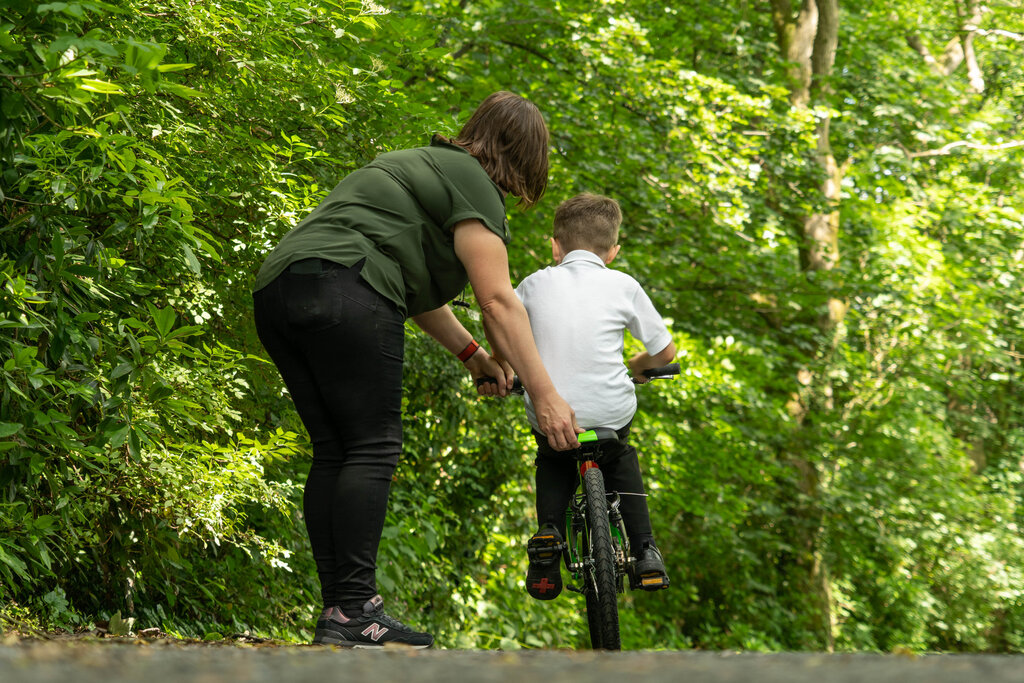
A bike that's too large or heavy can be challenging to control, which is why finding the right fit is essential.
The simplest and most important measurement for sizing a bike is standover height. This is the distance from the ground to the top of the bike's top tube. To check it, straddle the bike frame with both feet flat on the ground. There should be a comfortable amount of clearance between your body and the frame.
For a road or hybrid bike, look for about 1-2 inches of clearance. For a mountain bike, you'll want a bit more, typically 2-4 inches, to give you more room to maneuver on uneven terrain.
Dialing in the Fit
Even with the correct frame size, you'll need to make a few adjustments to make the bike truly yours. The two most important adjustments are the seat height and the handlebar position.
Adjusting Seat Height: Your saddle is at the right height when your leg is almost fully extended at the bottom of the pedal stroke, with just a slight bend in the knee. A good way to check this is to sit on the saddle and place your heel on the pedal. Your leg should be completely straight. When you move your foot to the proper pedaling position (with the ball of your foot on the pedal), you'll have the perfect knee bend.
A seat that's too low will be inefficient and can strain your knees. A seat that's too high will cause your hips to rock from side to side as you pedal, which is unstable and uncomfortable.
Adjusting Handlebars: The handlebar position affects your posture and comfort. For beginners, it’s best to have the handlebars at about the same height as the saddle, or slightly higher. This creates a more upright and relaxed riding position, which is less strenuous on your back, neck, and wrists. As you become more confident, you can experiment with lowering them for a more aerodynamic position.
Taking the time to choose the right type of bike, find the correct size, and make these key adjustments will set you up for success. A well-fitting bike is more comfortable, easier to control, and ultimately, much safer to ride.
You plan to ride primarily on paved city streets for your daily commute, but also want the flexibility to enjoy leisurely rides on park trails over the weekend. Which type of bike is most suitable for you?
What is the most critical measurement for determining the correct bike size, which is checked by straddling the frame with both feet flat on the ground?