Mastering the Bespoke Coat Cutting and Construction
Drafting and Striking
The Rock of Eye Method
Drafting a bespoke pattern isn't about connecting dots. It's an interpretation. The 'rock of eye' method is a traditional technique where a tailor drafts a pattern directly onto paper or cloth, guided by experience and a keen understanding of the client's form. It’s less about rigid formulas and more about translating the three-dimensional reality of a body into a two-dimensional pattern.
This method internalizes the client’s posture, shoulder slope, and unique asymmetries. Unlike tracing a commercial pattern, 'rock of eye' drafting starts with key measurements and builds the garment's shape from there, creating a pattern that is truly one-of-a-kind from its very conception. The goal is to achieve balance and a natural hang before the first piece of cloth is even cut.
From Measurement to Draft
Translating a list of measurements into a functional coat pattern is a nuanced process. The chest, waist, and seat measurements provide the basic circumference, but the details that create a superb fit lie elsewhere. Posture is paramount. A client with a forward-stooping posture requires more length in the back panel and a differently shaped armscye compared to someone with an erect, military posture.
The shoulder slope is equally critical. A square-shouldered person needs a shoulder seam with a shallow angle, while a client with sloping shoulders requires a steeper one. Getting this angle wrong is the difference between a coat that hangs cleanly from the shoulder and one that collapses with wrinkles around the neck and chest.
This diagram shows how the angle of the shoulder seam changes based on the client's build. A small adjustment here has a dramatic effect on how the entire garment drapes from the shoulders, influencing the chest, the sleeve head, and the overall balance.
Striking the Cloth
Once the draft is perfected on paper, or if you're drafting directly onto the material, the next step is to 'strike' the cloth. This is the process of marking the pattern's lines onto the fabric using tailor's chalk and a straight-edge. Precision is key. These chalk lines are your definitive guide for cutting.
A sharp, thin chalk line ensures accuracy. Different colors of chalk can be used to distinguish between seam lines, cutting lines, and temporary balance marks that will be used during construction.
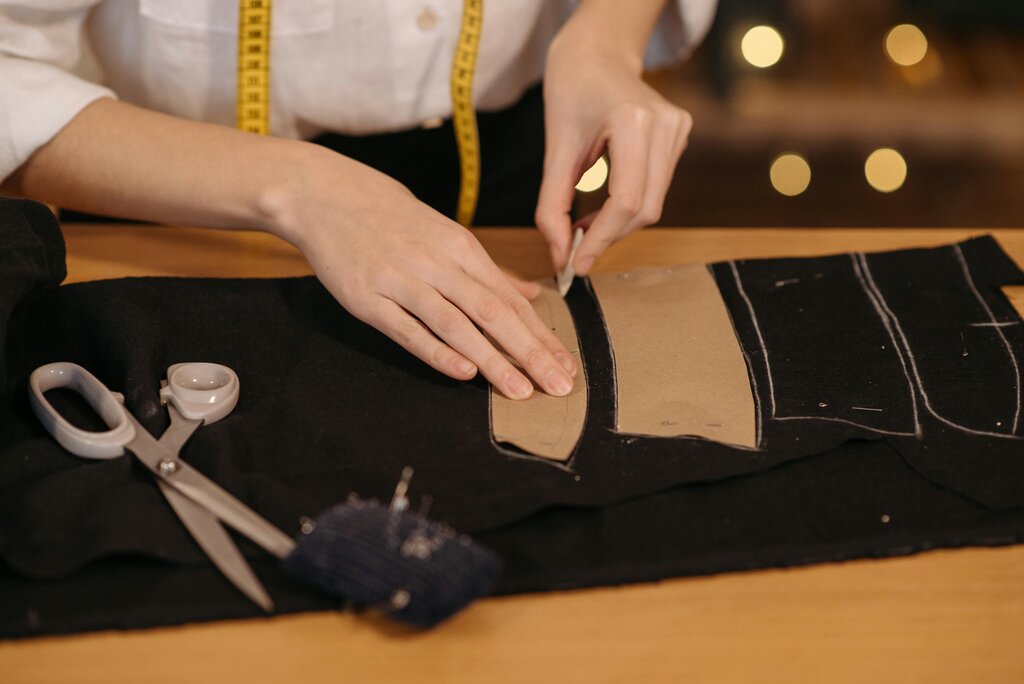
A crucial part of striking the cloth in bespoke tailoring is adding inlays. These are extra fabric allowances added at specific seams, such as the side seams, center back, and shoulders. Inlays are not the same as standard seam allowances.
They are reserves of fabric, typically an inch or more, that allow the garment to be altered in the future. A client's body can change over time, and inlays ensure the coat can be let out or adjusted for years to come, preserving the longevity of the garment.
Inlays are the secret to a garment that lasts a lifetime. They provide the necessary fabric for future adjustments, ensuring a perfect fit even as the body changes.
With the pattern struck and the inlays marked, the final step is to cut the cloth. This is the point of no return. A confident, steady hand is required to cut precisely along the chalk lines, laying the foundation for the entire construction process. Every line and allowance marked on the cloth now translates into the pieces that will be sewn together to create the final coat.
What is the core principle of the 'rock of eye' drafting method?
In bespoke tailoring, what is the primary purpose of an 'inlay'?