Mastering the Basics of Thermodynamics
Heat and Energy
Energy Makes Things Happen
Energy is the power to cause change or do work. Think about lifting a heavy box. To lift it, you need energy. When you kick a football, you transfer energy from your leg to the ball, making it fly across the field. Energy isn't a substance you can hold in your hand; it's a property that objects have that allows them to move, heat up, or change in some way.
In simple terms, energy is the capacity to do work.
This capacity can be stored, like the chemical energy in a battery, or it can be in action, like the light and heat coming from a light bulb. Everything that happens in the world, from a plant growing to a car driving, involves energy changing from one form to another.
Heat Is Energy in Transit
So, what is heat? Heat is simply the transfer of energy from a warmer object to a cooler one. It's not something an object has, but something that moves between objects. Imagine placing a kettle of cold water on a stove. The stove's burner is hot, and the kettle is cold. Energy flows from the hot burner to the colder kettle, and then to the even colder water inside. This flow of energy is what we call heat.
This transfer happens because of the kinetic theory of particles. This theory states that all matter is made of tiny particles (atoms and molecules) that are in constant motion. When you heat something, you're giving its particles more energy, causing them to move faster and vibrate more vigorously. In a solid, they vibrate in place. In a liquid, they move past each other. In a gas, they fly around rapidly.
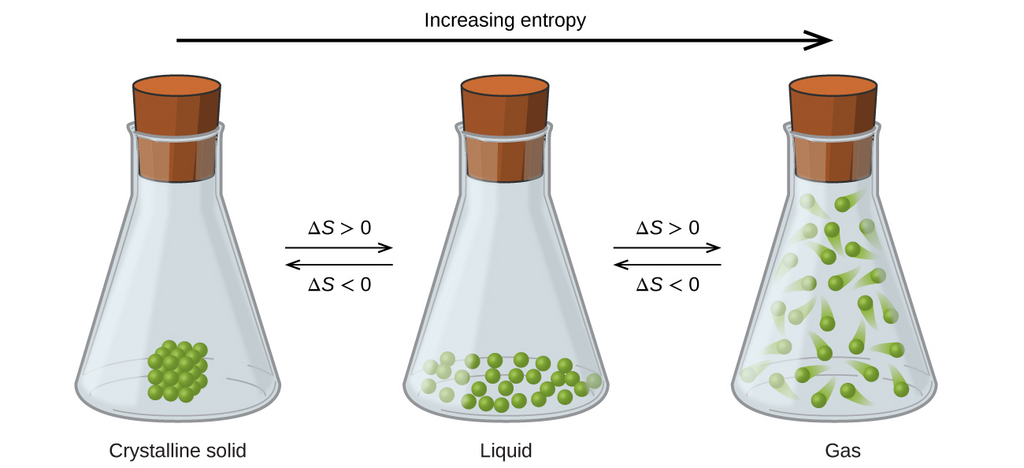
When the energetic particles of a hot object bump into the less energetic particles of a cold object, they transfer some of their energy. This is why a cup of hot tea eventually cools down. Its fast-moving particles transfer energy to the slower-moving particles of the surrounding air and the table it's sitting on. Heat always flows from hot to cold until both objects reach the same temperature.
Temperature vs. Thermal Energy
We often use the words 'heat' and 'temperature' interchangeably, but they mean different things in physics. Temperature measures how hot or cold something is. More specifically, it's a measure of the average kinetic energy of the particles in a substance. If the particles are moving very fast on average, the object has a high temperature. If they are moving slowly, it has a low temperature.
Thermal energy, on the other hand, is the total kinetic energy of all the particles in an object. This means it depends on both the temperature and the amount of matter the object has.
Consider a small cup of boiling water and a large bathtub full of warm water. The boiling water has a much higher temperature (about 100°C) than the bathwater (maybe 40°C). However, because the bathtub contains vastly more water particles, its total thermal energy is much greater than that of the cup of water.
How We Measure Temperature
We use scales to give a number to temperature. The most common scale in daily life is Celsius (°C). The Celsius scale is based on the properties of water, with 0°C being the freezing point and 100°C being the boiling point at standard atmospheric pressure.
In science, the Kelvin (K) scale is preferred. The Kelvin scale is an absolute temperature scale, meaning its starting point, 0 K, is absolute zero. This is the theoretical temperature at which all particle motion would completely stop.
A change of one degree Celsius is the same as a change of one Kelvin, which makes converting between them straightforward. You just need to adjust the starting point.
Which of the following best defines energy?
What is the primary difference between temperature and thermal energy?
Understanding these basic concepts of energy, heat, and temperature provides the foundation for exploring the fascinating world of thermodynamics.