Mastering the Bambu P1S 3D Printer
Introduction to 3D Printing
From Idea to Object
At its heart, 3D printing is about turning digital files into physical things. It builds objects layer by layer from a material, a process known as additive manufacturing. This is the opposite of traditional methods like carving or milling, where you start with a block of material and remove parts of it to create a shape.
additive manufacturing
noun
The process of building a three-dimensional object by adding material layer upon layer, based on a digital model.
This idea isn’t new. The first commercial 3D printer appeared in the 1980s, invented by Chuck Hull. His technique, called stereolithography, used UV light to harden liquid plastic. For decades, the technology was expensive and mostly used by large companies for creating prototypes. But as patents expired and technology improved, 3D printers became smaller, cheaper, and accessible to everyone.
Different Ways to Print
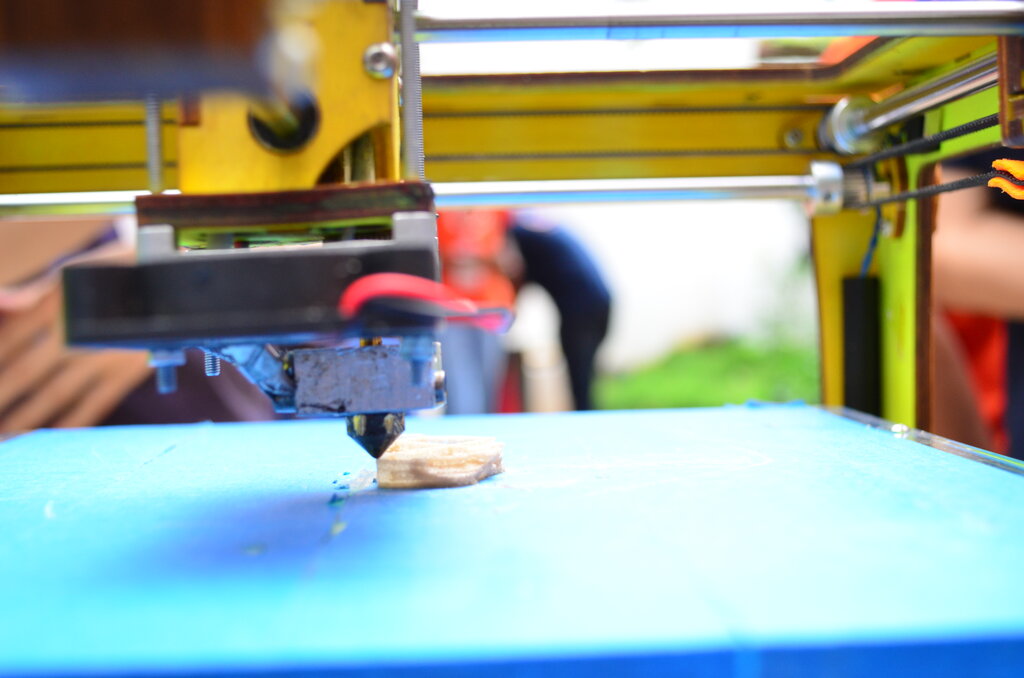
Not all 3D printers work the same way. Several technologies exist, each with its own strengths. The most common type for hobbyists is Fused Deposition Modeling (FDM). An FDM printer melts a plastic filament and extrudes it through a nozzle, drawing one layer at a time onto a build platform.
Think of an FDM printer as a robotic hot glue gun that carefully draws a 2D shape, then moves up slightly and draws another on top of it, repeating until a 3D object is formed.
Other major technologies use different methods to build objects. Stereolithography (SLA) uses an ultraviolet laser to cure and solidify a liquid resin, creating highly detailed prints. Selective Laser Sintering (SLS) uses a laser to fuse together small particles of powder, often nylon or metal, which is great for strong, functional parts.
| Technology | Abbreviation | How it Works | Best For |
|---|---|---|---|
| Fused Deposition Modeling | FDM | Melts and extrudes plastic filament | Hobbyists, rapid prototyping |
| Stereolithography | SLA | Cures liquid resin with a UV laser | High-detail models, jewelry |
| Selective Laser Sintering | SLS | Fuses powder with a laser | Strong functional parts, complex shapes |
Each method opens up different possibilities, from creating custom toys at home to manufacturing parts for rockets.
The Anatomy of a Printer
While designs vary, most FDM 3D printers share a few key components that work together to create a print.
The filament is the raw material, usually a plastic like PLA or ABS, wound onto a spool. The extruder is the mechanism that pulls the filament from the spool and pushes it into the hot end, which melts the plastic at a precise temperature. The hot end has a tiny nozzle where the molten plastic comes out.
The entire hot end and extruder assembly is mounted on a gantry, a system of belts and motors that moves it around in the X (left-right) and Y (front-back) directions. The build plate is the surface where the object is printed. Either the gantry or the build plate also moves along the Z (up-down) axis to create the layers.

This technology has moved far beyond simple prototyping. Doctors use 3D-printed models to practice complex surgeries. Aerospace engineers create lightweight parts for satellites. Architects print detailed models of buildings. On a smaller scale, people at home design and print everything from phone cases and replacement parts to custom board game pieces.
Time to check what you've learned.
Ready for a quick quiz?
What is the fundamental principle behind 3D printing?
In an FDM printer, the component that pulls the filament from the spool and pushes it into the hot end is called the ______.
Understanding these core ideas gives you a solid foundation for exploring the world of 3D printing.