Mastering the Art of Thinking
Introduction to Critical Thinking
What Is Critical Thinking?
Critical thinking isn't about being negative or finding fault. It's the skill of thinking clearly and rationally to understand the logical connection between ideas. In a world overflowing with information, it's your mental toolkit for sorting through the noise.
Think of it as active, not passive, thinking. Instead of simply accepting ideas and assumptions, a critical thinker questions them. They seek to determine whether ideas, arguments, and findings represent the whole picture and are open to finding that they do not.
Critical thinking is the ability to evaluate information objectively and make a reasoned judgment. It’s a way of approaching a question that allows us to carefully deconstruct a situation, reveal its hidden issues, and make the best decision.
This skill is crucial because it allows you to form your own opinions and come to your own conclusions, rather than just taking things at face value.
The Core Components
Critical thinking can be broken down into three fundamental skills: analysis, evaluation, and inference. These work together to help you make sense of complex information.
Analysis
noun
The ability to break down information into its component parts to explore their relationships.
When you analyze something, you're like a mechanic taking an engine apart. You examine each piece to understand how it functions and how it connects to the other parts. For example, when reading an article, analysis involves identifying the author's main argument, the evidence they use, and any underlying assumptions they might have.
Evaluation
noun
The process of making judgments about the credibility, value, or strength of information.
After taking the engine apart, evaluation is judging the quality of each part. Is this piece well-made? Is it reliable? When looking at information, you evaluate its source. Is this website reputable? Is the author biased? You assess the strength of the evidence to decide how much you should believe the claims being made.
Inference
noun
The act of drawing a conclusion based on evidence and reasoning.
Inference is putting the pieces back together to form a conclusion. It's what detectives do. If you see wet umbrellas and raincoats, you infer that it's raining outside. You are using the available evidence to arrive at a logical conclusion that isn't explicitly stated. A strong inference is based on solid evidence and sound reasoning.
Why It Matters
Developing critical thinking skills offers enormous benefits in all areas of life. It’s not just an academic exercise; it’s a practical tool for navigating the world.
In your personal life, critical thinking helps you make better decisions. From choosing a health plan to deciding who to vote for, the ability to analyze options, evaluate evidence, and see through faulty arguments is invaluable. It protects you from misinformation and manipulation, making you a more informed consumer and citizen.
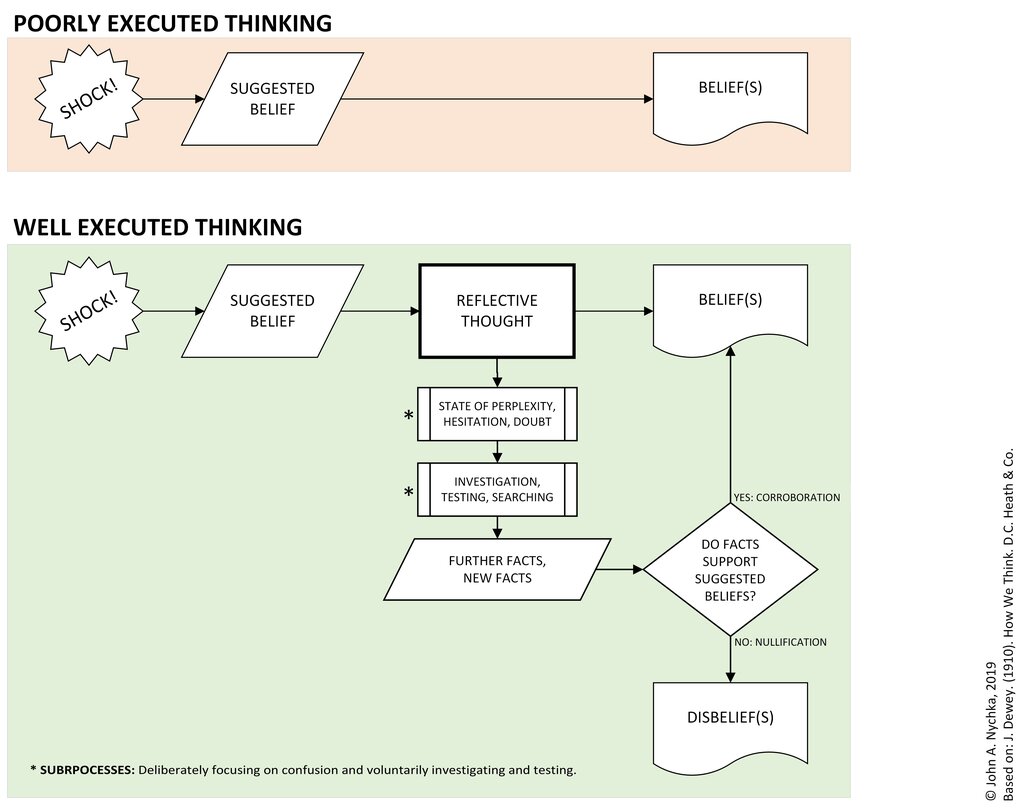
Professionally, critical thinking is one of the most sought-after skills by employers. The modern workplace needs people who can do more than follow instructions. It needs individuals who can solve complex problems, innovate, and adapt to change. By thinking critically, you can identify potential issues before they become major problems, propose creative solutions, and contribute more effectively to your team's goals.
Critical thinking is a fundamental skill that empowers students to analyse information, evaluate arguments, and form reasoned judgements.
Ultimately, it fosters independence. When you can think for yourself, you are less dependent on others for answers and direction. You are empowered to question the status quo, challenge your own biases, and pursue a deeper understanding of the world.
Ready to test your understanding of these core concepts? Let's see what you've learned.
What is the primary goal of critical thinking?
When you assess whether an author might be biased and check the credibility of their sources, which core skill of critical thinking are you using?
Mastering these basics is the first step toward becoming a more effective and independent thinker.