Mastering the Art of the Perfect Egg
Egg Protein Science
The Protein Transformation
An egg starts as two distinct liquids: the clear, viscous albumen (the white) and the rich, emulsified yolk. Each is a complex suspension of water, fats, and proteins. In their raw state, these proteins are like tiny, perfectly folded pieces of origami, balled up and floating independently. The most abundant protein in the white is ovalbumin, while the yolk's structure is largely thanks to proteins like lipovitellin.
Denaturation
noun
The process in which proteins lose their native, folded structure due to external stress, such as heat, acid, or agitation. The protein unfolds from a tightly coiled shape into a long, loose chain.
When you apply heat, you introduce energy that makes these folded proteins vibrate violently. They begin to unravel, or denature, stretching out into long strands. These newly exposed strands then bump into each other and link up, forming a vast, interconnected mesh. This process is called coagulation. It traps water within its network, transforming the liquid egg into a firm, opaque solid. Think of it like a messy tangle of yarn; individual strands become an inseparable clump.
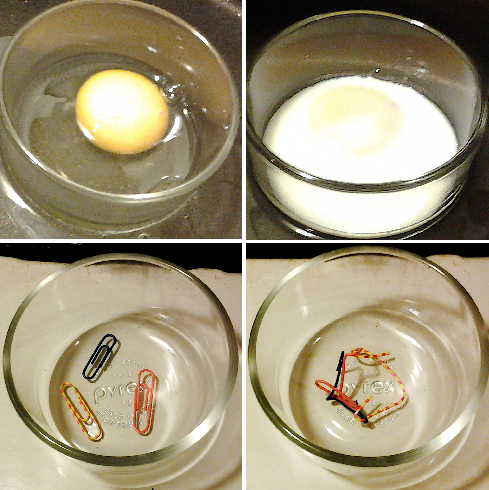
A Matter of Degrees
Not all egg proteins coagulate at the same time. The different proteins in the white and yolk have unique sensitivities to heat. This is why you can have a perfectly set white with a still-liquid yolk. This staggered transformation is central to mastering egg cookery.
Egg whites and egg yolks cook at different rates.
The process is driven by kinetic energy — the energy of motion. As you heat a pan, its atoms vibrate faster, transferring that energy to the egg's molecules. This makes the protein molecules shake, unfold, and eventually bond. The key is that different proteins require different amounts of energy to break their initial bonds.
| Part of Egg | Key Proteins | Coagulation Begins | Coagulation Finishes |
|---|---|---|---|
| Egg White | Ovotransferrin, Ovalbumin | 140°F (60°C) | 149°F (65°C) |
| Egg Yolk | Lipovitellin, Phosvitin | 149°F (65°C) | 158°F (70°C) |
In the white, ovotransferrin is the first to go, starting to set around 140°F. Ovalbumin holds out a bit longer. In the yolk, the lipoproteins begin to set just as the whites are finishing, creating that crucial temperature window for a soft-boiled or perfectly fried egg.
Kitchen Chemistry
You can manipulate coagulation temperatures with common kitchen ingredients. Salt and acid are powerful tools that alter the chemical environment of the proteins, changing how they behave under heat.
Salt helps proteins bond sooner and form a more tender structure. Acid gives proteins a helping hand to coagulate, which is ideal for poaching.
Salt introduces sodium () and chloride () ions into the mix. These charged ions effectively shield the protein molecules from each other, neutralizing some of the repulsive forces that keep them apart. This allows the proteins to get closer and link up more easily, lowering the temperature at which coagulation begins. The result is a more tender, finely-textured curd, as seen in well-seasoned scrambled eggs.
Acid, like the vinegar in poaching water, works similarly. It adds hydrogen ions () which neutralize the negative charges on the protein strands. This reduction in repulsion helps the denatured proteins bond together quickly and tightly, preventing the dreaded 'wisps' of egg white from spreading through the water.
The Freshness Test
The age of an egg dramatically changes its chemical makeup and cooking properties. A fresh egg behaves very differently from one that's been in the fridge for a few weeks. This is primarily due to changes in pH and the breakdown of key structures.
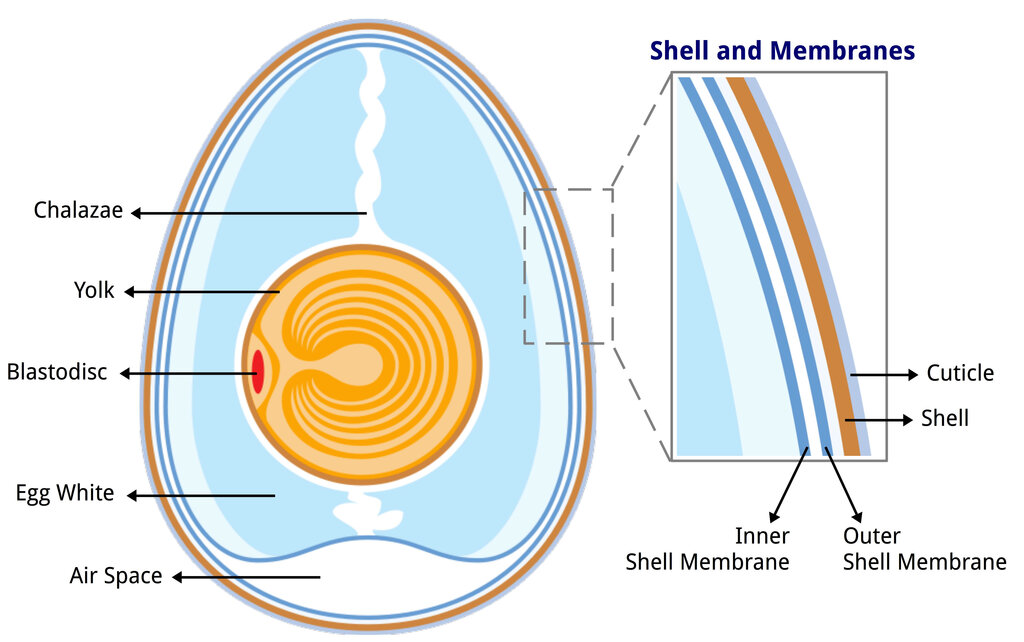
Freshly laid eggs have a relatively neutral pH, around 7.6. Over time, carbon dioxide dissolved in the albumen escapes through the pores of the shell. This loss of carbonic acid causes the pH of the white to rise, sometimes as high as 9.7. The increasingly alkaline environment causes the proteins to repel each other more strongly, thinning the albumen. This is why old eggs spread out in a pan, while fresh eggs stand tall.
Two physical structures also tell the story of freshness. The are rope-like strands that anchor the yolk in the center of the white. As an egg ages, these anchors weaken, allowing the yolk to drift off-center. More importantly, the —the delicate sac enclosing the yolk—loses its elasticity and strength. An older, weaker membrane is more likely to break when you crack the egg or try to separate it.
Understanding these chemical and physical changes allows you to select the right egg for the job and predict how it will behave when cooked.
What is the process called when heat causes the folded proteins in an egg to unravel into long strands?
Adding a little vinegar to the water when poaching an egg helps the egg white set quickly and neatly. This is because the acid...